• Donate
  • Our Purpose
  • Contact Us
Executive Magazine
  • ISSUES
    • Current Issue
    • Past issues
  • BUSINESS
  • ECONOMICS & POLICY
  • OPINION
  • SPECIAL REPORTS
  • EXECUTIVE TALKS
  • MOVEMENTS
    • Change the image
    • Cannes lions
    • Transparency & accountability
    • ECONOMIC ROADMAP
    • Say No to Corruption
    • The Lebanon media development initiative
    • LPSN Policy Asks
    • Advocating the preservation of deposits
  • JOIN US
    • Join our movement
    • Attend our events
    • Receive updates
    • Connect with us
  • DONATE
Hospitality & TourismHotels Overview

Lebanon’s hotels facing a bleak last quarter

by Nabila Rahhal December 18, 2019
written by Nabila Rahhal

During the winter holiday period hotels are typically full of life, from locals dining at the in-house food and beverage outlets, to tourists checking in to their rooms at the lobby—everything and everyone is covered with a festive sheen.

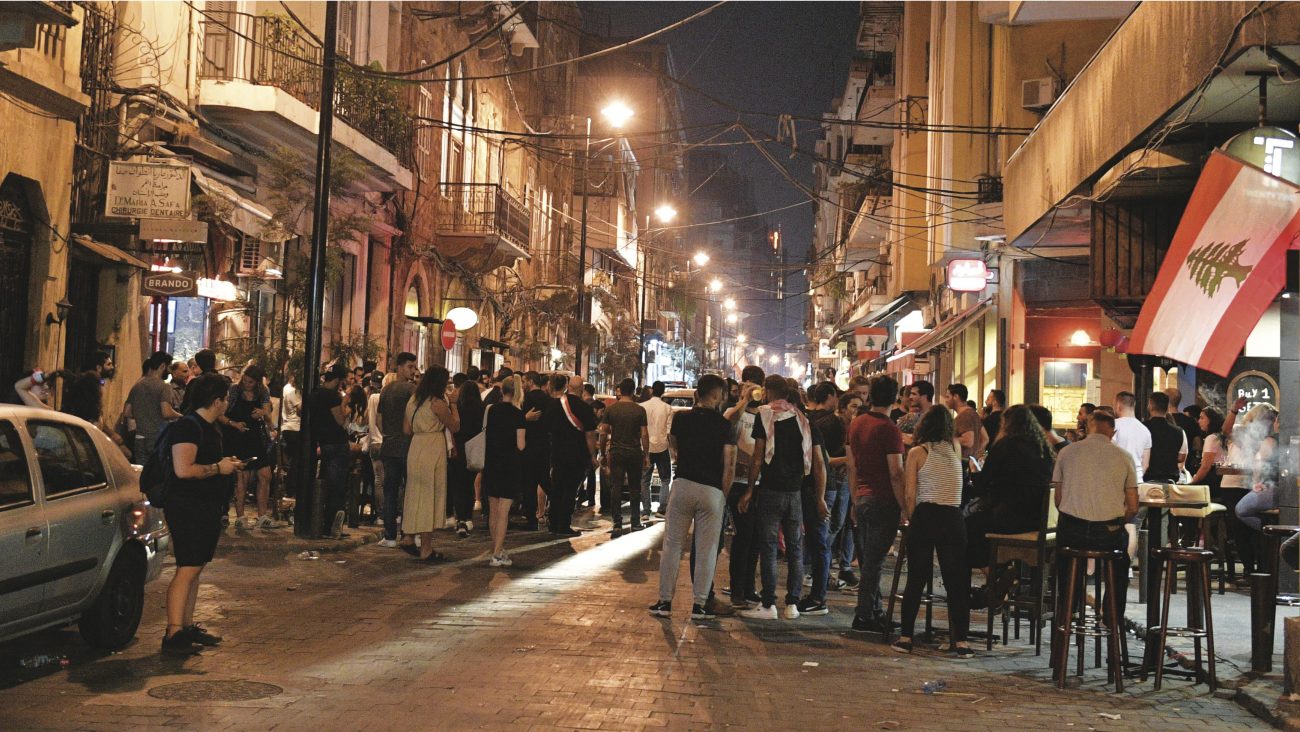
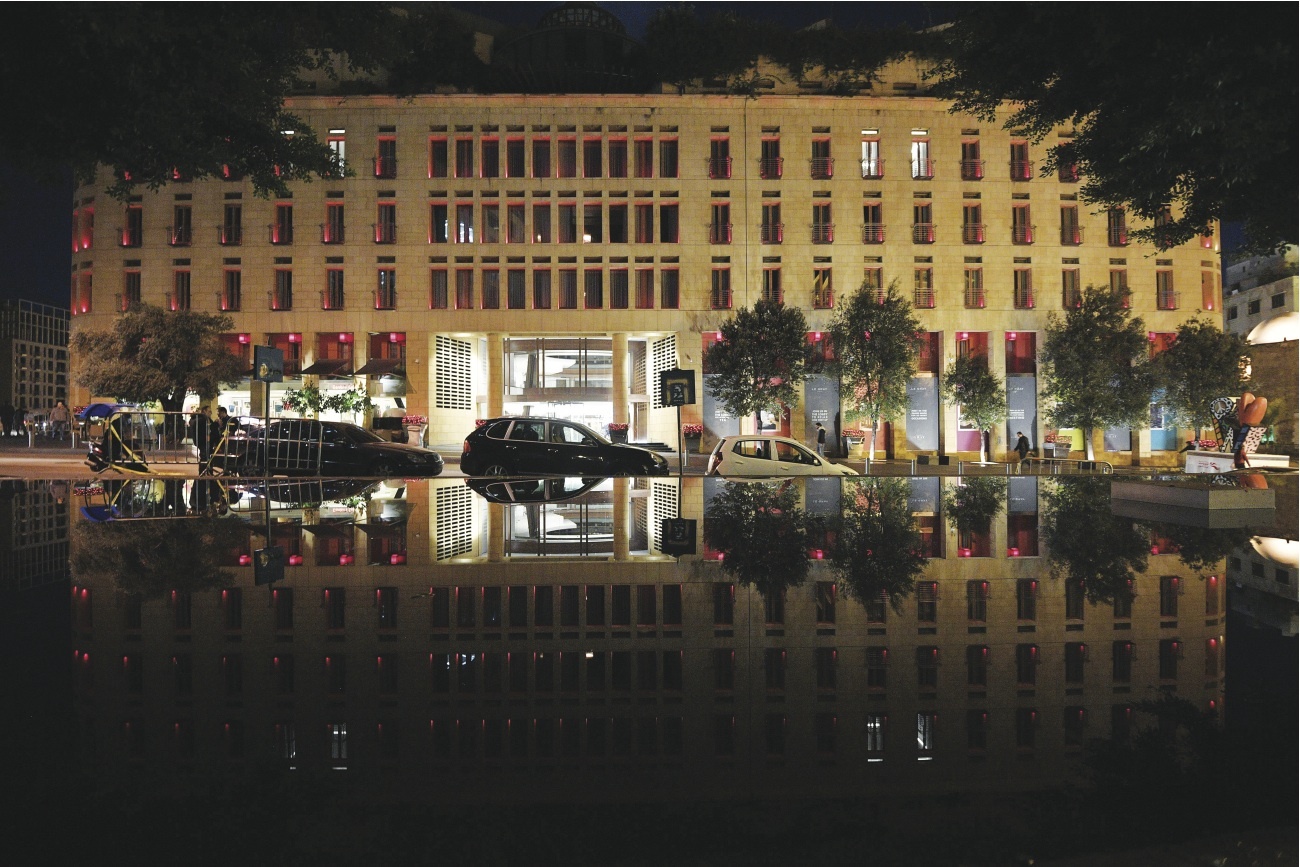
This year, however, if October and November performances are any indication, a busy festive season will not be on the cards for Lebanon’s hotels. When visiting five star properties in preparation for this story throughout November, this writer was struck by how eerily quiet the lobbies and adjacent cafes of visited hotels were.

Bright beginnings

The year did not start this way. On the contrary, all the hotel managers Executive interviewed spoke of an extremely positive year—marked with high occupancy at competitive room rates—up until the last quarter. Both Le Gray and the Four Seasons told Executive that until the onset of the October protests 2019 was set to be a record year for their property, the best since their openings in 2009 and 2010 respectively.

According to hoteliers interviewed, average occupancies in Lebanon’s hotels from January to October ranged from 70 to 81 percent at high room rates—in comparison to the decreased room rates most hotels were offering in previous years to attract business. Area General Manager at Le Gray Georges Ojeil placed average occupancy in his property at 81 percent, with room rates that at times exceeded $375 per night.

This success was due to several factors. The drop in the number of tourists from Gulf Arab countries in 2012 (which had only slowly begun to reverse years later) had shown those in the hospitality sector the merit of diversifying their clientele. Therefore, for the past four years, hoteliers and the Ministry of Tourism had been targeting new markets by partnering together for media campaigns and exhibitions that promoted Lebanon as a destination. These efforts, according to Tracey Bolton, cluster director of sales and marketing at Phoenicia Hotel, had finally paid off. The lifting of the travel advisory on Saudi nationals in February 2019 also had a positive impact on occupancy figures, as Executive reported in its June issue.

To Rami Sayess, regional vice president and general manager at the Four Seasons, nothing matters to tourists as much as stability. “This [our positive figures] was thanks to the efforts of the Ministry of Tourism through Visit Lebanon, plus what we have done as Four Seasons with our worldwide sales offices and other resources,” he says. “But the major reason behind this influx of tourists was the stability we had in the first nine months of the year and even before. When there is no negative media about Lebanon people want to come visit.” 

When good things come to an end

The perception of stability Lebanon was enjoying the first three quarters of the year disappeared overnight with the onset of the uprising on October 17 and the ongoing turmoil since. All hotel managers Executive spoke to say they had an immediate drop in occupancy from the first full day of the protests, meaning October 18. “The problem with our sector is when negative things happen, the reaction is fast,” Sayess says. “We dropped from a 100 percent occupancy the day before the events to 4 percent within days. So yeah, it was drastic.” 

Hotel managers in Downtown’s five star hotels said they expect to finish November with single digit occupancy rates, or at best low double digits, and have a similar outlook for December if the situation does not improve. These luxury properties in Downtown have been hit both because of their location in proximity to the protests and because of the high room rates and prices at their F&B outlets. Further away from Downtown, in four star city hotels in Hamra or Ain el-Mreisseh, occupancy rates are a bit higher—in the 20 and 30 percent range on average—but still nowhere near what they typically are in his period.

In general, all the hoteliers Executive spoke with agree that the situation the country is passing through now has had a larger negative impact on their business than anything in the last decade. “The hotel has been in operation since 2009, and we have never reached such a deep valley in terms of operation and occupancy,” Ojeil says. “Even in the worst days of the so-called trash crisis [in 2015], we were at 17 percent occupancy and there was a continuous inflow [of guests].” While tourists may not care about political squabbles, he says, roads blockage and street violence deter people away from Lebanon.

The economic situation, in terms of the on-and-off bank closures and the difficulty of accessing dollars, has also prevented hotels from depending on locals’ spending in their F&B outlets. “The issue with the banks needs to be resolved as well, since today locals have issues with spending—people are only spending on necessities and not luxury these days,” Sayess says.

Just breathe

The solid performance of the first nine months of the year have left hotels with “acceptable cash flow and reserves,” according to Ojeil. However, given the uncertainty of the circumstances, all hotels are operating on what Phoenicia’s Bolton calls “survival mode,” managing their cash reserves by cutting down on costs as much as possible. Common cost saving measures taken by all hotels interviewed included cutting down on energy expenses with some properties turning off power on several floors and reducing the number of elevators in use or decreasing gas and diesel usage. Hoteliers are also sending their staff on their annual paid vacations—which have already been budgeted—and have put planned projects on hold.

Ojeil says Le Gray is trying to limit purchases through managing their stock more efficiently, while Sayess shared elements of Four Seasons’ emergency contingency plan that includes sending employees to sister properties in the region to work there for two to three months. “The Four Seasons network has 114 hotels around the world, so we contacted the hotels in the region and asked who needs help, since it is the high season,” he says. “We have sent 60 employees so far, and their salary is charged back to the hotels they are working in—so this property
saves money.” 

These cost saving mechanisms will only help these hotels survive until the end of January 2020, according to those Executive spoke with, and then they will have to decide what measures to take if the situation remains volatile. “The good thing is that Lebanon always bounces back, but the issue is how long it’s going to take and at what cost?” Sayess says. “Because the longer it takes, the more seriously it will impact businesses. Some will sustain longer than others, but if this continues for five or six months, who will fall every month? There are 400 families, if not more, that depend on a hotel of our size for their livelihood.” In an interview on November 15, Ojeil told Executive that the hotel already had losses that exceeded $1 million (in terms of room and conference booking revenues) since the onset of the protests.

Even if a government is formed today, and serious work is put into resolving the economic situation and the political tension, some hoteliers believe it will take a while for the industry to get back on its feet. “The hospitality sector needs two months at minimum to pick up after everything calms down,” Ojeil says. “Leisure tourists need time to forget and rebuild their trust in Lebanon, while local and regional corporate bookings are influenced by the economic situation in the country and will not hold conferences or invite delegations to Lebanon.” 

As 2019 draws to a close, and hoteliers close their annual budgets, they surely cannot help but look back at this year with despair at what was lost. The hope is that they will still be able to rebuild and start anew when the situation stabilizes, as they—and indeed Lebanon—have done countless times before. In the end, there is no choice but to believe in the resiliency of Lebanon and its hospitality sector.

December 18, 2019 0 comments
0 FacebookTwitterPinterestEmail
EditorialOpinion

No more lies

by Yasser Akkaoui December 18, 2019
written by Yasser Akkaoui

It’s only during crisis that truth comes to light. As everyone scrambles into new positions, reality is revealed. Each time the Lebanese equation changes, players let their masks slip in their bid to defend their slice of what remains. The violations that are perpetrated in the process are often so flagrant that forgiveness seems impossible. 

Now is the time to face the truth—to be honest with ourselves and others—or instead of witnessing the rebirth of Lebanon we will all bear witness to its slow death. It is past obvious that our political class is driven by ego, arrogance, incompetence, ignorance, and corruption—all while hiding behind geopolitical excuses that no longer, and never did, make any sense. Even now, as I write this editorial, our politicians continue to bicker among themselves over how to reform a government of old faces, while our people recover from another night of violence inflicted upon them. But Lebanon has changed, even if those who cling to power refuse to accept this new reality. 

The picture we face now may be bleak, but we should never forget that we are a rich nation, through our people, our heritage, and our nature—and it doesn’t take much to put it all to good use. The pillars of our nation—our entrepreneurial private sector, educated population, and wonderful culture—need strong institutions that allow them to thrive. To achieve our promise we need leadership empowered by the people, not dictated by foreign powers. We need leaders that understand the importance of, and are able to launch and activate, the bedrocks of our economy—our agriculture, manufacturing, and services industries. Who understand the principles of competitiveness powered by education, knowledge, and healthcare. 

This Lebanon is within our reach. Executive’s Economic Roadmap 3.0 was drafted amid the revolution with a renewed nation in mind. Regardless of who leads the transition, they will have this roadmap as a guide as they embark on the long road toward Lebanon’s rebirth. 

As Lebanese we need to stand up and reclaim sovereignty over our nation. Over the course of this still ongoing uprising, we have seen the masks slip from our political elite—accusations have become incriminations—and it is no longer possible to trust those that have failed in power for 30 years. Instead, we put our trust in the people of Lebanon. We put our trust in the collective will and spirit of the Lebanese, and our optimism in the hands of those who are battling every day for change, those who reimagine Lebanon with their blood, tears, and hopes. 

Now is the time. 

December 18, 2019 0 comments
0 FacebookTwitterPinterestEmail
Economic roadmapEconomics & PolicyLebanon 2020

A roadmap to recovery

by Marwan Mikhael December 3, 2019
written by Marwan Mikhael

There is one question on everyone’s mind: Is there still a way out of the current crisis or are we going to fall into an abyss with an intense deterioration of all economic indicators that could lead to dire consequences? A summary of the current economic situation will help us analyze its sustainability.  Then we can try to find a way out of the crisis with the least damage to the economy.

The protests accelerated what was already a deteriorating economic and financial environment. The protests on the street accentuated panic among the population, with the resignation of Prime Minister Saad Hariri being the cherry on the top. When banks opened following 14 days of closure, people rushed to withdraw and/or transfer their deposits into dollars or outside the country.

Banks were obliged to adopt further restrictions in order to maintain financial stability for the longest possible time.  No banking system in the world could survive an unchecked rush on banks. When depositors place their money in a Lebanese bank, the bank in turn uses these funds to loan to other customers, or to buy government bonds or Certificates of Deposit from Banque du Liban (BDL), Lebanon’s central bank. Such uses are standard practice world over, and so long as depositors are content to keep their money in bank and do not en masse try to withdraw their deposits, the banking system remains stable and functional. In Lebanon, the liquidity issues of banks were also exacerbated as the banking system had already lost part of its foreign assets starting in 2011, with the balance of payments (BOP) in the red for more than eight years. Moreover, the BOP deficit had accelerated during the past two years.  

The current economic and financial situation can only be transitory as its downfall has been accelerated by the protests, making the economic and financial situation unsustainable. The restrictive measures adopted by banks will make it less likely for capital to flow into the economy as investors will become worry about the risk of being unable to withdraw money from the system. It will, therefore, become more and more difficult to attract money and the economy will have to rely on its own existing stock of foreign assets to finance its imports of goods and services. Imports will decline as a result yet will continue to constitute the major drain on foreign assets.

Another source draining deposits is cash withdrawals from banks. People are withdrawing as much cash as they can, in both currencies (Lebanese lira and US dollars), to counter the restrictive policies of banks. Then, being unable to transfer cash outside the country, this money is kept in safe boxes at homes. Estimates based on the balance sheets of BDL find that the amount of cash withdrawn from banks in October and November has amounted to more than $2.5 billion.

Taking a longer view, successive governments since 1990 were never able to restore investors’ confidence level to where it was before the war started. The dollarization rate never went below 50 percent and most of the time interest rates on lira were much higher than on dollars. During the episodes of shocks like in 1995, interest rates went up to 38 percent, while in 2005, 2006, 2008, and more recently, the price of credit default swaps (CDS)—these are an insurance against the risk of default of the Lebanese government—increased to more than 2400 basis points, meaning that there is a greater risk of default. Theoretically, the five years CDS should be equal to the difference between five years Lebanese Eurobonds and five years US bonds, which has crossed 1000 basis points.

As demonstrations continue, the restrictive policies of banks will remain in place and the repercussions of both on economic growth are substantial. Analysis of various sources including the Purchasing Managers’ Index, finds that companies’ turnovers fell by more than 50 percent in October, depending on the sector. The impact in November is anticipated to be larger than the previous month as banks froze their facilities for individuals as well as for companies, and reduced credit cards limits. Consumption and imports are de facto declining and traders are feeling the heat.

The result is an economic recession combined with a liquidity drought that is unsustainable beyond the short term. Either a government is formed and the country is put on the right track of reforms or the restrictive policies will increase and the parallel exchange market will see a larger depreciation of the Lebanese lira. The cash economy will flourish as depositors will avoid putting money at banks.

So the million dollar question remains: If a government is formed, is there a way out without a haircut on deposits, a restructuring of government debt, and devaluation? The most urgent issue is to restore investors’ confidence in order to be able to levy the restrictive measures of commercial banks and for capital to start flowing in again. A way out can be found without a haircut on deposits and devaluation, but a restructuring of government debt, at the least the debt in Lebanese lira, is preferable in order to reduce the burden on public finances.

The first step before getting into any future economic plan is to form a government. This government has to be formed quickly and, according to the Lebanese constitution, it has to get the support of the majority of parliamentarians. Beyond parliamentary approval, the government has to gain the confidence of people on the streets, but, most importantly it has to get international recognition as trustworthy and cooperative. Debating the composition of the new government is like debating the sex of angels. Be it technocratic, techno-political, or purely political, the most important thing— besides being approved by the international community—is for the government to be coherent, to have an economic and financial plan for the upcoming three to four years, and to be responsible for its actions, in order to be productive and immediately start to tackle the current economic and financial crisis.

If a government with international support is formed, then resolving the current economic woes will become easier. An inflow of deposits from the GCC governments of $7 billion to $10 billion as deposits at BDL will also be very vital to support confidence, as BDL will then be able to pump dollars in the market, and banks will relax capital controls in few months’ time. Of course this will be conditional on the new government adopting an ambitious yet credible comprehensive economic reforms plan for the upcoming three to four years.

As capital controls will be maintained in the near term, the banking system has to move into reducing interest rates in order to limit the increase in its foreign currency exposure. A drastic reduction in interest rates is advisable on both dollar and lira deposits. The interest rate differential will have to decline to a quarter or half a percentage point as it is the case in economies with pegged currencies. This step will lead to a reduction in the cost of funds for banks, especially in dollars, at a time where capital inflows have been reduced to negligent levels. Banks will then move to reduce interests on corporate debt and start to provide loans again to businesses.

BDL has already issued a circular ordering the banks to increase their capital by 20 percent by mid-2020. Many analysts are arguing the fact that this may not be enough as the scenarios they are considering require a haircut on deposits. This alternative scenario is based on restoring the confidence in the banking sector and the economy at large, which will make this recapitalization enough for the current period. Any recapitalization that goes beyond this level will necessitate a better environment in order for banks to be able to attract investors.

In order to accelerate the recovery process, it would be advisable for the new government reach an agreement with the International Monetary Fund (IMF) as soon as possible. The importance of an IMF program is that it will act as a catalyst for capital inflows. The IMF will agree with the government on three years Extended Fund Facility (EFF) that will consist of an economic program agreed with the government including a timeline with quarterly evaluation by the IMF. It will also entail a package that could go up to few billion dollars with quarterly disbursements if the review by the IMF mission is positive on the implementation of the reform program. Once the IMF gives a green light for the disbursement, international donors will do the same. Hence the IMF will act as a leverage to attract capital from abroad. If the IMF program will disburse $3 billion over three years, it is expected that this money will attract more than $10 billion over the same period. It is important to note that citizens will need to sacrifice in the short term, while gradually getting better public services over the medium term.  

Having covered the pressing issues of the current situation, let us then look more specifically at the economic reality that Lebanon finds itself in and the measures that need to be undertaken in the immediate and the long term to put the country on a path toward recovery.

I – Economic reality

Over the past few years, Lebanon has been facing increasingly challenging economic and financial conditions on the back of contradicting policies and paralyzed governments, with reforms eternally remaining in the pipeline. Economic growth has been very low—averaging close to null over the past three years including the current year—with macroeconomic vulnerabilities rapidly increasing as capital inflows dried up and Lebanon continued to rely on a consumption- and import-driven growth model. In particular, fiscal policies and projections were unrealistic, especially with the boost in wages and salaries of government employees before the 2018 elections and the increase in taxes that hit the private sector in an already weak economic growth environment. This has led to a surge in the FY 2018 fiscal deficit to 11 percent of GDP, pushing public debt to 151 percent of GDP. This fiscal policy, in addition to the structural composition of the economy, fueled the current account deficit to 18 to 20 percent of GDP last year—this time without capital inflows that used to close the gap in the past. Lackluster progress in structural reforms continued to hamper investment and allowed inefficient public enterprises to linger and a large informal economy to expand.

The government’s slow reaction and/or wrong policies adopted to face the systemic imbalances led to increased macroeconomic deterioration. While some adjustment policies were adopted since the start of 2018, these fell short of the comprehensive reforms needed to ensure macroeconomic stability. Despite some monetary policy tightening, the external sector imbalances kept on deteriorating. Similarly, fiscal deficit in the first half of 2019 remained significant despite its decline compared to the previous year, however, arrears were accumulated toward three main counterparts, namely private hospitals, contractors, and social security. Finally, the government did not agree on any tariff increases in the power sector, which may have helped reducing quasi-fiscal losses. Sizable financing from the banking sector—especially BDL at advantageous rates—provided critical financing relief, but also deferred the urgency to tackle the underlying problems.

On the back of weakening confidence, economic activity has slowed considerably and the country has started to enter stagflation. High-frequency indicators, including the purchasing managers’ index, cement deliveries, construction permits, real estate transactions, and motor vehicle sales, have continued to deteriorate, confirming a marked slowdown in economic activity. In addition, public investment and construction have contracted due to cuts in government development spending. Growth is estimated to have declined to 0.6 percent in 2018 and will go into negative territories this year, following the eruption of demonstrations on October 17. Real GDP growth is expected to register at negative 2 percent, as lost confidence led to capital controls, which in turn, hurt traders’ activity and increased non-performing loans at banks. Consumer inflation has decelerated markedly to 2.77 percent by August 2019 compared to 6.29 percent during the same period last year. It is expected to substantially increase in the last quarter of the year as the appearance of a parallel exchange market where the dollar is being traded in a large range (from LL1,700 – LL2,300/$1) has led to a jump in consumer prices of imported goods.  

Government has tried to contain the fiscal imbalances during 2019, but it has accumulated arrears. The 2019 budget was approved by Parliament in July of the same year, which left just five months to implement the new budget with the embedded tax measures. During the first seven months of the year, fiscal deficit had declined by 21.7 percent year-on-year to reach $2.4 billion with the primary balance registering a surplus of $577 million or 1 percent of GDP. Nonetheless, this primary surplus masks an underlying unrecorded spending as government has accumulated arrears of at least 1 percent of GDP in the first seven months of the year. Due to recent events, the overall fiscal deficit is expected to widen to 8.5 percent of GDP against a budget target of 7.6 percent in FY 2019 as revenues will remain constant despite the increase in taxes approved in the budget, and expenditures will decline by 6 percent compared to 2018.

The weakness of the external position has widened in recent months. Although the trade deficit has narrowed marginally by August 2019 to 20 percent of GDP, down from 20.6 percent during the same period last year (the trade deficit would have been narrower at 16.5 percent of GDP in 2019 if it was not for the imports of mineral products that have increased by more than 64 percent to reach $4.7 billion, largely on the back of EDL fuel imports), the current account is expected to have remained in a deficit of 18 to 20 percent of GDP. The balance of payments has recorded a deficit of $4.5 billion in the first nine months of the year, compared to a deficit of $1.3 billion during the same period last year. The BOP deficit is expected to reach $8 billion by the end of 2019 for the following reasons:

  1. We estimate that $500 million of debt related payments will go to foreign holders of Lebanese debt in the last three months of the year. BDL has to pay around $1.9 billion of debt related payments in foreign currencies including Lebanese Eurobonds maturing at the end of November, Eurobonds coupons, and principal payments on bilateral and multilateral loans.
  2. An additional $2.5 billion to $3 billion of outflows from the banking system is expected as a result of BDL providing the necessary amount of dollars for imports of wheat, food, fuel and medicine (for the last three months of 2019), the transfers abroad that took place before the eruption of the protests, and the ongoing cash withdrawals from banks.

II – Pillars of reform

The government should aim at restoring confidence through economic sustainability and balanced growth. The strategy should be founded on three pillars:

1.     Macroeconomic stabilization along with poverty reduction. This includes: Large reduction of the fiscal deficit over the coming three and a half years (from the second half of 2020 till the end of 2023) through an effort to mobilize revenue that will generate 3-4 percentage points of GDP in gross additional tax revenue by end 2023 (it will be 1-2 percent on a net basis due to the privatization of telecoms in 2021), and a strategy for cost recovery in Electricité du Liban (EDL); monetary policy that will continue to aim at preserving the exchange rate peg for the moment, as it is an anchor for confidence and the negative impact from floating the lira outweighs its positive impact on competitiveness and on the reduction of the current account deficit; monetary policy that will try to reach an inflation objective of 4 percent or less in order to help in shoring up confidence; and increasing social and development spending to protect the most vulnerable.

2.     Structural reforms with improved transparency and governance to strengthen public enterprises and institutions, and to foster higher economic growth. This will include: improving public financial management through better collection and better control of tax evasion to achieve more fiscal discipline and greater budgetary transparency; reforming EDL and the tariff structure to ensure a balanced budget for the energy sector and better services; modernizing and corporatizing all the enterprises owned by the government in order to prepare them for privatization; strengthening anti-corruption agencies such as the central inspection authority and the court of audit; and improving the regulatory framework of investment and job creation.

3.     Adequate new financing from the international community to support Lebanon. If such a program is adopted, the government will be able to catalyze new external financing from governments and multilateral institutions, which will help closing the financing gap and allow reforms to work.

III – Macroeconomic framework

In the near term, economic activity is expected to remain subdued and 2019 will register a recession of 1.5 percent to 2.5 percent. The high level of interest rates, together with fiscal consolidation, will constrain credit growth, incomes, and domestic demand in 2019 and the first half of 2020. A gradual increase in confidence as well as in public investment spending will offset some of the impact on the economy, while targeted increases in social assistance will help offset most of the impact on the most vulnerable.

Over the medium term, real GDP growth is projected by BLOMINVEST to improve gradually to stand between 4 and 5 percent assuming reforms are being implemented at a steady pace. As stabilization takes hold, CEDRE projects will start to move along with higher private sector investment. Foreign direct investment (FDI) will also increase and credit to the private sector will spur domestic demand. When the economy improves substantially, the pegged exchange rate will have to move into a crawling peg, as it was the case between 1994 and 1998 in line with economic fundamentals. The latter, along with structural reforms, will increase the competitiveness of Lebanese goods and services, and will provide an additional boost to domestic production not only through expenditure switching but also through exports.

Inflation is expected to increase in the short term, and it already has, due to the capital controls that are in place, obliging companies to use the parallel market in order to get foreign currency for their imports. Inflation is expected to hit 5 to 6 percent by end 2019, and more than 10 percent in the first half of 2020. However, an appropriate monetary policy, in addition to confidence restoration, will be able to bring inflation down to around 3 to 4 percent in the medium term.

The fiscal deficit is expected to decline in line with the adoption of several revenue, expenditures, and financing measures. The deficit will go below 3 percent of GDP in two years’ time as the authorities’ broad-based tax policy and administrative reforms take hold. These measures will place general government debt on a declining path, reaching 120 percent of GDP by FY 2024, after peaking at 155 percent of GDP in FY 2020.

The current account deficit is expected to widen after narrowing to less than 10 percent of GDP on a year-on-year basis in the last quarter of 2019 and the first quarter of 2020. Initially, import demand will be contained by the capital control measures, but then imports will increase again driven by more capital inflows and higher demand. At the same time structural reforms should help a gradual export recovery, underpinned by competitiveness gains from better infrastructure and new investment. Increasing remittances and FDI flows, as well as multilateral and bilateral creditor financing will provide financing in the coming years.

IV – Fiscal policies

The fiscal program should focus on putting the debt on a sustainable path by diminishing fiscal deficit on the back of strengthening revenue collection efforts and lowering spending, while creating space to support social and development spending. Given Lebanon’s low tax ratio, the fiscal program should be centered on administration reforms to increase revenue through better collection policies and well-targeted increases in taxes, while providing better services to citizens, in order to raise the tax to GDP ratio by 3 to 4 percentage points by end 2023. However, total revenue to GDP will end 2023 at 21.7 percent, as privatization of the telecom companies will reduce short term income for the government (in tandem with the privatization of telecoms, government revenues will have to be increased in order to keep their ratio to GDP constant as there is around 1.7 percentage points of GDP that will be lost due to privatization). Expenditures will remain under control and as a result the primary surplus will increase from an estimated 0.3 percent of GDP in 2019 to 3.2 percent of GDP in 2023. The overall fiscal deficit will decrease from a projected 8.5 percent of GDP in 2019 to zero percent of GDP in 2023. Moreover, the government should stop accumulating any kind of arrears. Old arrears should be paid through the issuance of government Treasury Bills to concerned parties, and new budgets will have to include better spending management and forecasting in order to avoid the accumulation of future arrears.

Being able to increase government revenues to GDP ratio throughout the next four years is a great achievement for Lebanon. As tax evasion is large in Lebanon, it is not an automatic thing to assume an increase in tax revenues that match the increase in nominal GDP, especially during high growth period coupled with an increase in GDP deflator. A lot of collection effort is needed with some tax measures in order to have an increase in tax revenues that outperform the increase in nominal GDP.  

The FY budget 2020 approved by the government and sent to Parliament includes a 0.6 percent deficit without any tax adjustment. However, this low deficit is a one-off due to the contribution of mainly BDL and to much lesser extent commercial banks through the provision of financing at 1 percent to the government. The budgets for future years should include fiscal measures and a drastic reduction in EDL deficit. The most important issue is that the primary budget balance will turn into positive territories from 2021 onward. If the government adopts the measures outlined in this paper, an adjustment to the current version of 2020 budget has to be made. 

The budget for 2020 comprises an increase in social safety nets spending. The program for poverty reduction in coordination with the World Bank has been expanded to include more families in need. When the government starts the implementation of more fiscal measures, an adjustment, toward an increase, should be considered for the most vulnerable in order to alleviate the impact of a restrictive fiscal policy.

A sustained effort over several years should be put in place aiming at revamping tax policy and tax administration. With low tax compliance in Lebanon—tax evasion reaches around 2.5 percent of GDP and an estimated 30 percent of the GDP value is in the informal economy—in addition to uncollected bills in the energy sector, the potential improvement in tax revenues is huge and could reach 4 percentage points of GDP. Tax policy and tax administration measures should center on broadening the tax base while maintaining a low tax rate, aiming to ensure progressiveness of the tax system.

Tax policy reforms will help improve government revenues substantially in the near term. Measures include removing exemptions and preferential treatment to reduce distortions in the tax system and broaden the tax base. These include the removal of VAT exemptions, except for basic foodstuffs, a measure that will significantly improve revenues. It is also important to put a floor on gasoline prices as these prices are the lowest when compared to similar non-oil producing emerging markets. In addition, other tax policy measures include: further strengthening taxation on real estate especially on high value properties and empty apartments, increasing the taxes on the infringements on maritime properties, and ensuring equivalent taxation of all sources of income in order to reduce the rentier behavior by investors.

Tax administration reforms will strengthen tax collection ability over the medium term. Legal penalties for noncompliance should be increased, but at the same time an American-based way of settlement should be provided to companies. Companies should be able to negotiate with the Higher Judicial Council to reduce the penalties rather than bribing the tax comptroller and banking secrecy has to be lifted on all employees at the Ministry of Finance. Measures to install e-government at the Ministry of Finance should be accelerated; a lot of work has already been done. Finally, the government should stop granting further tax amnesties.

V – Public debt restructuring

Public debt restructuring is essential if Lebanon wants to get out of the vicious cycle of debt and deficit and put the debt to GDP ratio on a sustainable path. However, it should not include a haircut on the principal of the debt. Restructuring the debt does not mean a haircut on the debt as it will de facto lead to a haircut on deposits, even if it is the one held by the central bank only. The idea of BDL writing off its holding of government debt in order to substantially reduce the stock of debt—BDL holds close to $38 billion of Treasury Bills and Eurobonds—is not a viable option. Any decline of this magnitude in BDL assets will have to lead to a decline in its liabilities, meaning a haircut on banks deposits at BDL, which will result in banks having to do a haircut on their customers deposits.

Restructuring of government debt has to entail lengthening the maturity of government debt, while drastically reducing interest rates on the debt for the coming three years. Of course, this decline will hit the banking system profits for the upcoming few years. However, it is the least painful compared to any other measure that will help getting out of the current crisis. In our scenario, we considered a decline in the effective interest rate on government debt to 1 percent in 2020, 2 percent in 2021, and 3 percent in 2022 and 2023. Interest rates will go back to market rate starting 2024. This decline in debt service will help the government reduce total deficit at a time when tax measures and expenditure tightening will help boosting the primary surplus. In our scenario, public debt to GDP ratio will decline from 154.7 percent at end 2019 to 113.7 percent at end 2023.

VI – Social safety nets

The social safety nets program put in place since 2007 is a good one and should be expanded, with the help of the World Bank, to cover more families as unemployment has increased drastically following the Syrian refugees’ crisis. Lebanon lags well behind peers and other emerging markets in poverty reduction and especially in inclusive growth, with those living below the poverty line estimated at 33 percent of the population in 2018. Programs targeting poor people in Beirut and its suburbs should be put in place in addition to boosting agriculture and agroindustry in the rural areas to reduce the extreme poverty there and reduce urbanization. The poverty reduction strategy should be aimed at reducing inequality and supporting the economic empowerment of women.

The Ministry of Social Affairs is the responsible entity for coordinating social policies and will have to work with the Ministry of Agriculture, the Ministry of Industry, and international stakeholders, to implement a comprehensive social policy. The latter will have to include conditional and unconditional cash transfer programs, creating cooperatives in rural areas, encouraging farmers to join these cooperatives, and providing technical assistance to these cooperatives as it will help increasing the negotiation power of farmers (see box below on rural development).

If the government adopts tax measures other than the ones mentioned above, it will have to boost its social assistance program by:

  1. Providing a one off disbursement of LL300,000 to the most vulnerable in order to protect them from the impact of tax policies (if covering 40,000 families the projected cost would be $120 million).
  2. Strengthening financial inclusion by launching an initiative to reach the goal of having one bank account for every woman and boosting girls’ educational enrollment—by providing grants to families enrolling their girls in schools (as well as for boys from the most vulnerable parts of society)—and guarantee their participation in the labor force afterward.
  3. Conditional cash transfers as well as unconditional cash transfers are an effective way of reducing poverty. Out of 142 countries that distribute cash transfers, according to a report compiled by the World Bank, 70 percent are implementing unconditional cash transfers and 40 percent went with conditional payments, whereby recipients must fulfill certain criteria in order to get paid. These criteria comprise, among other things, children’s school attendance, up-to-date vaccinations, and regular visits to healthcare centers by pregnant women.

VI – Structural reforms

Structural reforms are essential in any government program to spur investment and job creation and reach balanced growth and human capital development. The government will have to instill a policy to strengthen governance and transparency and an improved business environment in order for Lebanon to realize its full economic potential. Lebanon ranked 143 out of 190 countries in the International Finance Corporation’s Doing Business Indicator for 2019, with Lebanon’s best ranking on the property registration sub-indicator at 110. The major weaknesses are lengthy procedures in all sub-indices and a major weakness in the implementation of the rule of law to enforce contracts. The government has recently introduced a major overhaul to the Code of Commerce, which constitutes a good step forward but not enough in the current circumstances.

In order to tackle the structural problems of the country, it is important to analyze the size, shape, and responsibilities that we want the government to provide. Without having an ideological background on the type of government and society—and it should not be taken as a taboo—it is important to lessen the Lebanese government’s role to the maximum. The issue is that we have to accept that we are living in a third world country. And in these types of countries, the rule of law and government management of public enterprises, do encompass major inefficiencies due to political interference and impediments linked to cronyism. If we were living in a Scandinavian country or in France, I would vote for a welfare state because the government is efficient and is providing its citizens with all the needed services at a very high quality by imposing high tax rates on their income.

Moving from a third world country to a first world country does not happen overnight. Singapore had an “benevolent dictator” and it took the country 30 years to climb up the ladder. When understanding the fact that fighting corruption and restoring the efficiency of the public sector is not an easy task, we can accept to streamline the government and give the private sector a more important role, while ensuring the right regulatory framework. This is the ideal solution for Lebanon in the current circumstances, until we reach our target to become a developed country.

Areas for structural reforms

i) Energy Sector

The government has already prepared an ambitious plan to reform the energy sector, aimed at addressing inefficiencies and eliminating losses in EDL, but this plan should be accelerated and a regulatory authority should be appointed as soon as possible. Structural weaknesses in the energy sector have remained unaddressed since 1993, and they include, but are not limited to, pricing policies, technical and non-technical losses, and supply and demand management. If the government delivers the improvements needed, it can make Lebanon’s energy sector an engine of growth rather than a burden on the economy. Tariffs are below the production costs, which are exorbitant as EDL is using fuel to produce electricity, hence indicating implicit subsidies provided by the government. The latter has already started to address these shortcomings through the electricity plan that was set in motion with the help of the World Bank. 

Structural milestones in the electricity plan should be put in a schedule with monthly updates to the public and to the Council of Ministers. The plan has to include the steps to implement on different fronts in order to get to a 24/24 electricity by end 2020 or mid-2021, at the latest, while having a profitable company. EDL should enter into a public-private partnership in order to improve its management by bringing in a strategic investor on a revenue sharing basis.

The government should adopt a policy that protects, to a certain degree, low-income households from an increase in energy prices. The increase in tariffs for households consuming up to 200 kwh/month has to be minimal, if any, compared to the increase for higher tranches. Manufacturing industries should also benefit from low tariffs to reduce their input costs in order to encourage exports. The use of gas for producing electricity in the near future by using Floating Storage and Regasification Units (FSRUs) will help solve this problem by reducing the cost of producing electricity. EDL will be able to reach its targets through a lower increase in tariffs.

ii) Education

The Lebanese government is spending large amounts of money on education, without being able to provide its citizens with adequate quality. The number of teachers in public schools is high and reaching alarming levels without providing the right quality of education to students. Overall pupil to teacher ratio stood at 7:1 in Lebanon’s public schools (for Lebanese students), while it is at 21:1 in the private sector, based on estimates by BLOMINVEST and the Center for Educational Research and Development. Public schooling embraces weak quality control and frail teaching that need to be reformed urgently. Restructuring the existing public schools is fundamental as many are non-efficient and only increase education costs. The repetition rates are much higher at public schools than in private schools and dropout rates are also important, especially at the primary level.

Lebanon needs to go for a twinning with a developed country like Finland in order to put in place a model school. However, the government will continue to finance public schools. As the country has failed to create a high educational level at public schools, the government can turn to the best educational system in the world these days, namely the Finnish system. A model school managed by the Finnish (or any other developed country system with excellent public education) has to be shaped and all other public schools have to be benchmarked against this school. If public schools are not capable of matching the level of this model school, then the Finnish will be given the opportunity to manage all the other public schools. In this case, the government will be paying for public education but it will be providing its citizens with an upgraded service that the users will surely appreciate.

Last, but not least, the education system should be overhauled to fit the needs of the labor market. Education should start to be more focused on the knowledge economy and vocational education. A partnership should start to emerge between the Lebanese public education institutions and the stakeholders in the different Lebanese sectors in order to cater the education toward the needs of the economy.

iii) Health

On the health front, the country will also have to turn to the private sector to manage public hospitals. It has already been found that appointing boards to public hospitals was not enough to ensure a better performance, especially given that most of the time the financing is not adequate. Treating public hospitals the same way the government is paying private hospitals is the only solution to improve public health services. The government should provide the management of the public hospital to foreign entities from the developed world as public-private partnerships, with key performance indicators put in place to measure the performance of these entities.

Turning to the private sector for management will help the government get out of the current high cost – low quality of public hospitals. Healthcare expenditure reached $4.39 billion in 2018, representing 7.6 percent of Lebanon’s GDP. In addition, per capita spending on health was calculated at $640, high by regional standards. Government healthcare expenditure constituted 51 percent of the total or 4.1 percent of 2019 GDP with the private sector holding the remaining 49 percent share. The market is forecast to grow by 4.5 percent in 2019, reaching $4.59 billion by 2023. Spending on healthcare is expected to reach a value of $5.90 billion, experiencing a local currency compound annual growth rate (CAGR) of 6.1 percent in US dollar terms.

iv) Telecommunications

The main issue in telecommunication sector is to set a medium term goal in order to put Lebanon on the map of major advanced economies in the sector. The goal will be to rank among the top three countries in the world having the fastest broadband fiber optics internet connection. What is more important than having this connection is to widen it to cover the whole country and especially the rural areas. It is important to reduce the cost of starting a business related to the knowledge economy by not having to incur the costs of implementing the business in Beirut. Providing the right infrastructure for the skilled Lebanese labor should be a top priority for the government.    

The telecommunication sector still has a long way to go, as the poor infrastructure of the sector keeps on hindering the quality and speed of internet connections. Even though fiber optics is already installed in big cities but not yet operational, Lebanon actually relies on copper cables to have access to the internet. However, these cables have limited capacity in terms of data transfer and speed. Based on the latest data released by Akamai, a global provider of content delivery network services, the average connection speed in Lebanon stood at 1.8 Mbps in Q2 2016, compared to 4.0 Mbps in Egypt and 4.3 Mbps in Jordan. South Korea topped the list with an average connection speed of 27.0 Mbps and was trailed by Japan (17.2 Mbps) and the United States (15.3 Mbps). It was also noticeable that, while the global average connection speed grew by a yearly 14 percent in Q2 2016, Lebanon’s slipped by 0.8 percent over the same period.

Another major issue faced by the ICT sector in Lebanon is the lack of competitiveness due to the government’s tight control over the sector. Despite the sequential declines in communication prices since 2014, the fact that both telecom companies, Alfa and touch, are publicly owned entities operated by private companies for the benefit of the government, creates a sort of duopoly agreement between the two companies. According to World Bank sources, “limited competition in telecommunications and broadband is stifling growth of the sector. The fixed-line and broadband market sees the dominant position of Ogero, while the mobile sector, unlike most countries in the world, is under the control of the government.” Besides inhibiting growth and innovation, government control is keeping tariffs high and limiting product differentiation. According to Arab Advisors Group, Lebanon ranked 17th in 2015 out of 19 Arab countries in the Cellular Competition Intensity Index.

v) Fighting corruption and improving competition

Anti-corruption has to be strengthened. A coordination committee between the different institutions dealing with anti-corruption has to be put in place. All government employees and employees in government-related institutions have to lift banking secrecy on their accounts in Lebanon and abroad. Auditing of these accounts has to be performed by the committee and related agencies.

Currently, there is a competition law but there is no enforcement of the law, especially on politically backed oligopolistic sectors. A competition authority has to be created and will coordinate with the regulatory authorities in different sectors. 

The Lebanese industrial or agroindustrial private sector has to be protected against unlawful competition. This competition is harming the local productive sector through under-invoicing of imports especially from Turkey and China. Besides these countries, the government may also provide protection for domestic producers against competition from other countries. However a different approach to customs has to be adopted. Both ministries of industry and economy have to identify the domestic sectors that should be given some protection and will have to look into the details of which domestic products are being at risk in order to take the right decision.

A case in point for showing the right way of protecting domestic products will be the wine industry. The protection of domestic wine should not entail increasing custom duties by an ad-hoc percentage on all imported wine. Rather, it should put a minimum tax of $10 dollars on any imported bottle of wine as price of Lebanese wine in Lebanon varies between $5 and $50 dollars per bottle. It is the low cost of imported wine that is causing the most harm to domestic wines. A percentage increase of the customs duties on imported wine will not serve the purpose. A minimum charge in this case is the solution. This scenario is applicable to all cheap imported liquors. 

The judicial system has to become independent. The government has to pass a law to provide independence to the judicial system. The supreme judicial council has to be elected by the judges. At the same time, banking secrecy has to be lifted on judges in order to be able to fight corruption in the judicial body.

vi) Privatization

The government has to initiate the privatization process of the telecom companies. The Higher Council for Privatization and PPP (HCP) will have to coordinate with the Telecom Regulatory Authority (TRA), which has to be appointed as soon as possible, in order to prepare for the privatization of the two telecom companies.

The best privatization strategy will have to bring in both citizens and strategic investors along with the government. It will serve three purposes: to develop capital markets, to give ordinary people a stake in the company to be privatized, and to ensure better management and higher future profits by bringing in a strategic investor. This strategy is based on the fact that the government will do an initial public offering (IPO) for a certain percentage of the company, open to the public. People will get a share of the profits while the strategic investor and the government will divide the remaining share. The government will continue to collect the taxes on the sector and will keep a share in the company, however, it will be a minority share.

Saying that the government should not privatize companies that are providing large profits to the Treasury is not an accurate statement. The privatization of the telecom companies will help reduce government debt by more than $6 billion in one shot (in our scenario, the privatization of the two mobile companies will take place in 2021), in addition to the fact that it will enhance the management and will reduce political interference. Services will improve and prices may decline while key performance indicators will be set for the companies to implement government strategy, mentioned above, in the telecom sector.

vii) Other structural reforms

The other structural reforms that the government will have to undertake are summarized below and will entail improving the management of public enterprises by strengthening their governance, transparency, and efficiency in order to prepare these entities to get in a partnership with the private sector:

  1. Increasing transparency in all public enterprises or semi-independent public institutions. There should be an external audit for all the institutions that were not previously under the umbrella of the Court of Audit, even those that have to be liquidated: Council of the South, Council for Reconstruction and Development, the Displaced Funds, Casino du Liban, Middle East Airlines, Electricité du Liban, etc. All public enterprises that will remain in the hands of the government and will not be privatized will have to go under the supervision of the Court of Audit.
  2. Provide a better legal framework for public enterprises to simplify the process of privatization. The authorities will have to present to Parliament the necessary laws in one year’s time that will modernize and clearly define the role of the government as owner, regulator, and shareholder of these public enterprises.
  3. Issue implementation decrees for passed laws. There are a large number of laws approved by Parliament for which the government has not yet issued implementation decrees. Some of these laws have been passed by Parliament years ago and yet implementation decrees have not been issued rendering them inapplicable. This includes laws such as the trade law and the government must set a time frame that will not exceed six months in order to issue the implementation decrees for all approved laws.
  4. Improve the business environment: Trading across borders has to be improved while fighting corruption. Modernizing the processes for imports and exports related activities is crucial to shorten the time needed and to reduce bribery and tax evasion. This will include reducing custom-related processing time and reducing hours to prepare import/export documents in order to be in line with one-stop customs portal promoted by the UN. Enforcing contracts time has to be shortened. Currently the rule of law is not well enforced and when it is, the time needed is 720 days. The amount recuperated is 31 percent of the claimed value and the judicial processes remain archaic most of the time. Procedures to start a business must be streamlined: The government should move forward in simplifying procedures by adopting e-registration and streamlining the required documentation as it needs currently 15 days, eight procedures, and costs 42 percent of income per capita to start a business.

The views and opinions expressed in this article are those of the author/s and do not necessarily reflect the editorial views of Executive Magazine.

December 3, 2019 0 comments
0 FacebookTwitterPinterestEmail
Last wordOpinion

Keep the spirit of this revolution

by Thomas Schellen November 18, 2019
written by Thomas Schellen

Constitutions are serious stuff. The one that I grew up under is known as the Grundgesetz—the fundamental law of Germany. In its first line, this constitution declares that the dignity of the human being is inviolable and that the state has to honor and protect it. Back at the time of this constitution’s drafting 70 years ago, this was big news in a country that had just experienced devastation and unimaginable barbarism practiced by its own regime.

Germans are no worse or better than other humans. This is to say that the generations of rulers and ruled that have lived under this stipulation of inviolable dignity since 1949 have had vertical and horizontal disputes by the zillions, including incidents of authoritarian violence. By way of comparison, German society passed through more internal conflicts of interests than is worth to consider when advocating for the importance of constitutional values in a country where defense of the citizens’ dignity has for too long not consistently been respected as self-evident.

Implement responsibilities

But Lebanon has last month been awakened to the primacy of all its people’s dignity—by its own people. That is profoundly encouraging. How to proceed from this moment? For me, this is mainly not a matter of intellect as expressed in laws and constitutions, but a matter of sustained emotion and will. The determination to succeed are related to the sort of intense passions that have been visible in this country during the October revolution. Young colleagues at Executive who came to the office for a meeting on day seven of protests exuded much emotional energy. This energy might be the secret and, until now, missing ingredient needed to save Lebanon.

It is a paradigm of human experience that passions are followed by responsibility, and that love will or will not be strengthened in the process. Before the yet ongoing global cultural shift marked by medical innovations and the sexual revolution from the 1960s onward, the transmission of love into responsibility was mainly a biological fact of life and the base of societal continuity—but one that manifested itself across cultures, including religious ones, in as much unwanted as wanted responsibility on the part of men, and that too often left its entire burden on mothers.

Partial departures from these biological paradigms have caused vast social behavior shifts in the involved countries. Self-determination has been setting new norms that have been slowly taken up in countries outside of the developed liberal market economies, including Lebanon. These departures also had enormous impacts on economies, not the least by enabling and expanding the economic roles of women. On top of this, the world today is engulfed in a shift to a new economic status quo that is determined not primarily by ownership of crude means of production and control of financial capital, but by ownership of information (big data) and by human and social capital.

While much is globally uncertain in the new economic context, it is my conviction that human relational energy and entrepreneurialism will play the main role in driving economies as long as there are humans running this planet. The economic implication for Lebanon then is that this country’s best shot lies in the activation of its human and social capitals, including the often noted Lebanese penchants for easygoing communication, personal entrepreneurship, and fast adoption of new business ideas.  

Channel the energy

All throughout the past 30 years, the passions and wills of highly qualified young Lebanese have been curtailed by their perceptions and self-perceptions of living under systemic conditions of political imprisonment, social coercion, and economic hopelessness. If the people who last month accumulated their energies into interrelated manifestations so unstoppable by the forces of old inertia will continue to marshal them—despite all impediments—in their newly discovered passion and belief in their ability to build a better country, the complex triangle of passion, determined love, and willing responsibility could produce so much more than just a bunch of impressive economic numbers. If this is a time to dream, let’s dream bigger than big. Peaceful in politics, clean in environment and economic human behavior, and fully cognizant of dignity, Lebanon would be a fantastic place to live. An Eden between east and west, south and north.

November 18, 2019 0 comments
0 FacebookTwitterPinterestEmail
CommentEntrepreneurshipSpecial Report

Lessons from the American entrepreneurship ecosystem

by Samer Elhajjar November 18, 2019
written by Samer Elhajjar
  • Fostering a supportive culture is key for entrepreneurship.
  • The government needs to create policies that enable entrepreneurship, such as tax incentives and intellectual property rights.
  • Universities in Lebanon need to include real-world, hands-on engagement within entrepreneurship programs.

With the current hardships and challenges Lebanon is encountering, the government needs to look to new ways to reboot its economic system and to boost its economic growth. The answer is in investments into our entrepreneurial ecosystem. This summer, I had the opportunity to spend three months in the US as a visiting scholar at Ball State University, where I learned a lot about the American entrepreneurship ecosystem. Although entrepreneurial developments in Lebanon are progressing, I believe that Lebanon can learn from the solid American ecosystem to make running businesses easier and more efficient.

Supportive culture

In the US, the entrepreneurship culture is community oriented. When I was there, I realized that there is a sense of responsibility toward the other, and a willingness to support each other. A key factor of America’s innovation ecosystem is the strong interconnections among its people, which promotes collaboration and the exchange of ideas. This is important for innovation because it allows entrepreneurs to have allies, receive help, and form connections more easily. Entrepreneurs usually seek supportive communities that encourage entrepreneurial pursuit and reward innovative mindsets. To thrive, entrepreneurs need to be immersed in a culture of innovation and one where risk-taking is supported. Culture is an enabler for the entrepreneurial ecosystem and can play a vital role in motivating entrepreneurs to launch their own companies.

Enabler government

On the policy level, undoubtedly the Lebanese government has to create new policies that will transform the country’s entrepreneurial ecosystem into a more dynamic and finely tuned one. In fact, the US government plays an important role in nurturing entrepreneurship by developing protected intellectual property rights and imposing low and stable nondiscriminatory tax regimes and regulations. In addition, the US government aims to make doing business easier in the country. The government wants to reduce the time and effort required to register a company. For instance, it took me less than 72 hours to register a business in the state of Indiana. The entire process was done online from my home and through a website.

Entrepreneurial education

American universities have a huge impact on the entrepreneurial ecosystem by offering high-quality academic programs that equip students with the mindset, knowledge, and skills to run entrepreneurial firms. Entrepreneurship is integrated into the curriculum and available at all levels of hundreds of business schools across the US. Courses focus on all aspects of business growth including pre-startup, startup, growth, and consolidation stages. In addition, business schools have strong connections to industry, with a number of research centers and innovation hubs.

Entrepreneurs need to be immersed in a culture of innovation and one where risk-taking is supported.

In the Lebanese context, universities are showing interest in investing in entrepreneurship education, but still with a real lack of hands-on, real-world engagement with the problems faced by Lebanese entrepreneurs in the market. The role of entrepreneurship education should be approached with caution. There is no doubt that entrepreneurship education is likely to be of value to Lebanese students. However, the reality of launching, sustaining, and growing a business in Lebanon has specific requirements. While some universities are focusing on how to launch a startup, they ignore the importance of teaching startups how to grow and scale a business in the Lebanese context.

Access to finance

To prosper and grow, innovative and creative startups need access to appropriate forms of finance. The availability of finance is a further positive feature of the American entrepreneurial ecosystem. For example, the US Small Business Administration provides funding to entrepreneurs and small businesses when private banks are not inclined to do so. Many states also offer incentive programs for startups. For instance, Massachusetts encourages startups to invest in research and development (R&D) by offering sales and use tax exemptions. If a startup in Massachusetts is buying gas, steam, electricity, or heating fuel, and has five or fewer employees, it can be exempt from sales and use tax. Actually, some Lebanese or foreign would-be entrepreneurs might not make the decision to invest in Lebanon because of the high taxes. To compete with other businesses, startups need a supportive financial environment. Reducing financial barriers would definitely then improve the Lebanese ecosystem dynamism.

The American ecosystem took years to build. In Lebanon, around six years ago, the entrepreneurship spirit was nearly nonexistent. However, in 2013, with advising from the World Bank and EU, Banque du Liban, Lebanon’s central bank, issued Circular 331. The Circular played a significant role in activating Lebanon’s startup economy across the country. The Lebanese government, alongside local institutions, should keep this momentum and provide new initiatives and incentives to drive growth in our economy.

November 18, 2019 0 comments
0 FacebookTwitterPinterestEmail
CommentEntrepreneurshipSpecial Report

Lebanese entrepreneurship requires a robust regulatory framework

by Roxana Mohammadian-Molina November 15, 2019
written by Roxana Mohammadian-Molina
  • Regulation is key for the success of entrepreneurship initiatives.
  • Tax breaks, a regulatory sandbox, and access to finance will aid investment in small and early stage startups in Lebanon.
  • The Banking Control Commission of Lebanon could play a pivotal role in kick-starting the fintech sector through a regulatory sandbox.

The High-Level Lebanon-UK Tech Forum, held in London on September 19, was a showcase not only of the Lebanese entrepreneurial spirit, but of the global outreach of Lebanon’s tech industry and digital ecosystem. The takeaway was that despite undeniable and plentiful challenges in Lebanon’s startup ecosystem, at the governmental level the desire is there to actively support entrepreneurship, particularly within the tech sector. 

Yet, underpinning the government’s goodwill is a key cornerstone on which the success or failure of entrepreneurship initiatives depends: regulation. The experience of other countries that have successfully created a thriving business and startup hub shows that creating an appropriate regulatory framework to support such efforts is key. Investors seek stability, consistency, and proportionate and predictable regulation that is built around a long-term strategy.

A look at measures that have proved successful in other countries is a good starting point. Take, for example, the UK tech startup ecosystem, which has evolved rapidly over the past decade, outpacing other European countries in terms of funding—7.1 billion euros ($7.8 billion at the time of writing) was raised in 2017 alone. The ecosystem has largely benefited from support by the UK’s financial services and markets regulator, the Financial Conduct Authority (FCA), through its Project Innovate, designed to aid innovative businesses in fintech and regtech. A key element of this project was its regulatory sandbox, established in 2015, that allowed authorized businesses to trial innovative propositions in the market with real consumers. A review of the regulatory sandbox published by the FCA in October 2017 confirmed that it had indeed reduced the time and cost of introducing innovative ideas into the UK market.

Practical solutions in Lebanon

What exactly are the regulatory measures that could see investment in small and early stage startup businesses transform Lebanon’s economic landscape and even make the country a global hub for startup capital? We will look at three: tax breaks, a regulatory sandbox, and access to funding. 

The UK Seed Enterprise Investment Scheme (SEIS) has been a successful government policy to encourage investors fund small and early stage startup businesses in the UK by offering those investors tax-efficient benefits—allowing up to 50 percent of the investment to be claimed back as income tax relief. Before 2012, investors would be taxed relatively heavily on any money they put into a new business, creating a lack of incentive to fund small and early stage startups. However, under SEIS, a number of tax breaks were introduced to would-be investors that made it much more rational for them to fund a startup.

A common area of concern for investors in early-stage startup is the regulatory certainty of firms.

Undoubtedly, a well-designed tax benefit scheme similar to the SEIS for would-be investors targeted to boost growth in specific sectors (fintech, agritech, medtech, and insurtech) would be a good starting point in Lebanon.

A common area of concern for investors in early-stage startup companies is the regulatory certainty of the firms in which they are considering investing. Feedback from all startup firms who participated in the UK regulatory sandbox indicated that taking part in the sandbox program provided a degree of reassurance to investors through the oversight of the FCA and the increased regulatory certainty participation provided. The Banking Control Commission of Lebanon (BCCL) has the opportunity to play a pivotal role in kickstarting the fintech startup industry with measures such as a regulatory sandbox. This would serve as a framework to allow small-scale live testing for new business models and increase the credibility of domestic Lebanese startups with both investors and customers alike.

As for access to funding, fintech, with solutions such as loan-based peer-to-peer (P2P) and investment-based crowdfunding platforms, stands as a serious contender to unlock the funding challenges faced by Lebanon’s SMEs. Yet the emergence of a P2P lending sector requires a strong regulatory framework to protect both lenders and borrowers and ensure that investors receive the appropriate level of protection.

In the US and the UK—the two largest P2P markets in the world by volume—the sector is highly regulated. In the UK, the regulatory framework around P2P has been designed primarily to provide additional protection to consumers, while promoting effective competition within the P2P lending industry. The regulation of this sector in Lebanon would allow the emergence and growth of the industry in a controlled way. What is needed is a combination of legislation and a regulatory framework from BCCL and Banque du Liban, Lebanon’s central bank. This would not happen overnight, but with the right roadmap in place this could be achievable in the next five years. 

The Middle East has one of the highest savings rates in the world, but people do not use a lot of credit, and investment opportunities are lacking. Therefore, a P2P model has the potential to place Lebanon at the receiving end of savings to be channeled into a dynamic SME and startup ecosystem.

November 15, 2019 0 comments
0 FacebookTwitterPinterestEmail
EntrepreneurshipSpecial ReportStartup support

New programs offer business, financial help to entrepreneurs

by Lauren Holtmeier November 15, 2019
written by Lauren Holtmeier
  • New accelerator, incubator, and grant programs for startups demonstrate a nichificiation of the ecosystem.
  • Many entrepreneurs rely on these programs for financial support and in-kind services, such as office space and mentorship, to develop their young businesses.
  • The ecosystem still has gaps that will need to be addressed to develop further.

Since 2013, and the advent of Circular 331 in that year that was designed to boost investment in the knowledge economy, the Lebanese startup ecosystem has matured significantly. The injection of funds into the ecosystem raised awareness and attracted aspiring entrepreneurs. However, with 331 funds funneled to accelerators and VCs via commercial banks having previously slowed, and the country now facing the possibility of economic crisis, the future for Lebanese entrepreneurs looks increasingly challenging and uncertain. Fewer entrepreneurs have set up shop in Lebanon in the last few years as compared to the original Circular 331 boom, and there are still gaps in the ecosystem, such as an early stage and post-acceleration, but pre-VC stage, gap that must be addressed. 

For startups in their early stages, ways to mitigate risks and alleviate challenges entrepreneurs face include accelerator and incubator programs that provide support to fledgling businesses, whether by providing finance or in-kind services such as office space, mentorship, and access to networks. According to a 2018 Arabnet report on the Lebanese innovation economy, an ecosystem gap for early stage support exists, and 80 percent of survey respondents said the need for ecosystem support motivated them to apply to accelerator programs. In conversations with VC funds, heads of accelerators, and entrepreneurs, Executive was told that funding for post-accelerator stage entrepreneurs is lacking. Today, there are at least seven accelerators and incubators, most of whom were launched in the few years post-331, with the notable exception of Berytech, an ecosystem for entrepreneurs which launched in 2002.

With one pure fintech accelerator already in existence, the need for two, given the number of fintechs, is questionable.

Circular 331 was credited with causing dramatic change in the ecosystem; some attempts to create acceleration programs in the pre-331 era came and went leaving little impact. Now a new generation has been ushered in, and, in some ways, the accelerator aspect of the ecosystem is beginning to see a nichification. New accelerators and other initiatives offer support for green industrial initiatives; fintech (similar to the recently launched Startecheus); financial inclusion, which in part includes fintech; social enterprises; and one will target renewable energy, waste, and water valorization. In an August interview, IM Capital fund manager Corine Kiame told Executive, “We need more accelerators. We have so many gaps. And we need more accelerators outside software, we need incubators and accelerators that are diversified across the sectors.” While new niche programs are cropping up, one general initiative has emerged as well like the Talal and Madiha Zein American University of Beirut Innovation Park (AUB-iPark) that launched on September 2.

Those behind these initiatives see a need for this new nichification. Developing programs specifically for agriculture and industry, considered productive sectors, may help spark innovation and churn out new products and solutions to further develop them. In June, Executive wrote that there were not necessarily enough fintech players in Lebanon to warrant a fintech accelerator, and that outlook has not changed. According to 2019 Arabnet data, there are 16 fintechs in Lebanon, and regulatory hurdles and the absence of a sandbox in Lebanon make other regional countries more attractive options (see story page 62). 

Supporting innovation

Beirut-based French business school, École supérieure des affaires (ESA), is launching a new accelerator set to be operational in Q1 2020. This will be housed alongside ESA’s SmartESA accelerator program in a new 3,000 square-meter facility, but will operate on a slightly different model. SmartESA’s new program hopes to incubate 10 startups per cycle, with startups from fintech, insurtech, and productive sectors eligible to receive $50,000 in cash, plus in-kind services, with a chance for follow-on funding. Unlike SmartESA, which only offers in-kind services and does not take equity, the new accelerator will take equity as payment from the startups. For the new accelerator, the SmartESA team is in talks with corporate and private sponsors, but as nothing is yet finalized details remain scant, and they are applying for Circular 331 funding via a partner bank, but Antione-Jihad Bitar, SmartESA coordinator, declined to say which bank. With banks implementing stricter capital controls and protests in the country in their second week, he says “Are they going to change their mind after the crisis? I don’t know, but it’s an important question.” With one pure fintech accelerator already in existence, the need for two, given the current number of fintechs and lack of important support from the central government and central bank, even with SmartESA’s new accelerator only partly focusing on fintech, is questionable according to members of the accelerator scene. 

RayMondo sal, a green industrial incubator initiative by environmental NGO Fondation Diane received a $3 million investment from Viridis investment fund (both the NGO, Viridis, and RayMondo were founded by Diana Fadel, who is the majority shareholder of the latter two), says RayMondo manager Antoine Abou Moussa. The new incubator had its soft launch in August and hopes to be fully operational by the end of the year. Located in the Roumieh industrial district in its own 3,000 square-meter facility, RayMondo has plenty of space to incubate new initiatives. So far, FabricAID has begun to use the space, and Abou Moussa says they are in advanced discussions with L’Atelier du Miel to have their operations there. Abou Moussa says that startups, SMEs, universities, and even corporations can use the space. He tells Executive they will invest between $50,000 and $100,000 in startups, and they will consider taking equity, a percent on eventual sales, or collecting rent as ways to monetize the company. He did not know the total size of the fund available, and when asked if there was a range they were considering investing in total, he replied, “No range.” 

Ideas are often born of crises, and with Lebanon on the brink of crisis, some are hoping to see more turn to entrepreneurship.

According to a press release from RayMondo, they will have space for 40 green startups and SMEs. Abou Moussa says that they are searching for one large “anchor tenant,” such as a university that rents space as well. RayMondo will buy the machines necessary for industrial innovation, and currently they are sorting out viable clusters for investment; the clusters include waste management, food waste and food companies, and essential oil production. Abou Moussa says that while no fund size is specified for equipment investment, Fadel will provide funds based on a needs assessment. “It’s new and it’s untapped,” Abou Moussa says. “We’re using our gut feeling in a lot of places. We don’t have a lot of studies done yet on green industries. There’s a few studies, but they’re not specific to what we’re doing. Whatever comes, we’re open, and we’re trying to adapt and understand.”

Similarly, Cleantech, an offshoot of Agrytech—which in itself is a program by Berytech—which will be launched in June 2020 will look at three main categories: renewable energy, waste, and water valorization. Although Cleantech will be open to all fields and backgrounds that have to do with water, waste, and energy, Ramy Boujawdeh, deputy general manager of Berytech, says they are working to link it with Agrytech (see story page 56) through what they call the water energy food nexus. “If you want to create sustainable agriculture, you need to make sure you are not depleting your water reserve and not abusing your energy to produce food,” he says, explaining candidates would be startups that are looking at techniques to reduce water usage in agriculture, for example, or at using less energy for irrigation. Cleantech plans to form advocacy groups for each category that will develop and publish white papers to draft laws that aim to improve the capacity to utilize innovation in the Lebanese agricultural sector. 

A different kind of support

No matter the outcome of ongoing protests in the country, industry and agriculture, will continue to be cornerstones of Lebanon’s economy, despite accounting for a relatively small share of total GDP; combined, they currently account for around 15 percent of total GDP according to McKinsey’s Lebanon Economic Vision. With added stress on the finance and insurance sector in the last two months, which accounts for 9 percent alone, agriculture and industry’s importance cannot be overlooked. Innovation in these sectors have the potential to be largely impactful, and support for startups in these sectors will be important to help entrepreneurs develop their ideas and get their nascent businesses off the ground. 

Two other niche initiatives that operate differently from traditional accelerator and incubator programs are the Arab Financial Inclusion Prize Fund (AFIIP) and the Hult Prize Lebanon. AFIIP was inaugurated in 2018 and is currently in its second cycle; it provides funding and a more informal support network to startups, SMEs, and larger corporations in the financial inclusion field across the region. AFIIP has $55,000 that will be dispersed this year as part of the grant that is provided by four sponsors: Consultative Group to Assist the Poor (CGAP), the Sanad Fund by Finance in Motion, Spectrum Digital Holdings, and Tamer Amr, who is a private sponsor. Alexander Reviakian, co-founder of AFIIP says while he realizes the amount is small, the technical support provided to winners and finalists is an added value. 

As AFIIP is a grant, it operates differently from an accelerator, yet when asked what support they provide outside funding, Reviakin pointed to several ways that AFIIP, which had 97 applicants this year, helps those who apply to network (e.g. by paying for them to attend regional conferences with major players in financial inclusion and setting up meetings in advance) and indirectly develops their go-to-market strategies by facilitating connections between small players, like startups, and large players, like regional banks and accelerators. 

Similarly, Hult Prize Lebanon, developed in partnership with Lebanon’s central bank—Bank du Liban (BDL)—Blom Bank, the United Nations, and Hult Prize Foundation, which operates in 15 cities globally, is a grant and mentorship program designed for university students. Hult Prize Lebanon, part of the global Hult Prize Foundation that launched in 2009, is now beginning its third cycle having launched its first cycle in Lebanon in 2017. It awards an annual seed grant of $250,000 for one startup focusing on impact entrepreneurship, which in Lebanon could be those that focus on electricity or healthcare, for example. Karim Samra, CEO and founder of Changelabs and COO of Hult Prize Lebanon tells Executive that when they began the initiative they found Lebanon to be an attractive country because of BDL’s Circular 331. Since they began operating in Lebanon, the number of participants doubled from year one to year two, and Samra says numbers for year three are on track to double again. There are now around 70 active campuses spread across 30 to 40 universities, with 5,000 students applying last year, Samra says. 

Beginning in September, Hult Prize Lebanon sends mentors to campuses for what they call the on-campus round and students receive training in ideation and pitching; experts also run hackathons. For round two, teams that make it to the next phase are invited to Beirut Digital District for the Student Startup Forum for further coaching, and ultimately they pitch their ideas. Finally, the teams are narrowed down to the top six who go through a six-week incubation program in Beirut, and experts are flown in to provide mentorship throughout the cycle. The winner is registered as a company and continues to receive support while establishing their business. While the runners-up receive no cash, Samra says that last year, two were accepted into Berytech’s program. Two avenues exist for Lebanese to get global experience; the winner of the Student Startup Forum is invited to an incubator program in London, and the best on-campus team from each campus is invited to compete in global regionals.

Future of entrepreneurship

Both these programs provide networking opportunities to companies in their programs. Reviakin tells Executive that plans to expand in coming years include developing more categories for applicants, such as one for startups and one for more established companies. These programs both offer direct avenues to regional and global conferences, networking, and opportunities for additional funding. In Lebanon, where many startups look to expand beyond Lebanon, this kind of networking could be a key ingredient to helping many survive and grow their companies. 

The AUB-iPark does not discriminate on the type of startups it will accept and has identified pre- and post-accelerator gaps as target areas for their new initiative. Leveraging research and talent produced at AUB, they hope to improve the quality of the pipeline going into accelerators. For the post-accelerator stage, mentorship and networking are the main offerings. Overall, the ecosystem lacks investors for the post-accelerator stage, though a couple new initiatives have emerged in the last few years. And while mentorship is valuable at any stage, cash is crucial for startups in the post-accelerator stage to further develop their product and expand their customer base through marketing. While the AUB-iPark will not take equity or charge for rent, they offer no cash for startups. Startups with at least one founder that is a current student or AUB alumni will be eligible for the program. They will run competitions in which smaller cash prizes are available, but the details had not been confirmed as of writing. Salim Chahine, AUB-iPark executive director, says, “We are using the support of our Zein Endowment as well as the AUB operating budget to support startups.” He declined to comment on the size of the endowment or budget. 

Agriculture and industry will continue to be cornerstones of the economy.

With all these new initiatives and fewer new businesses, the question of the utility of so many new accelerators is raised. Bitar says that while the overall number of startups is decreasing, the overall quality has increased. But even with an overall quality increase, are there enough new ideas to warrant so many programs? Bitar believes there are. And efforts like the AUB-iPark and Hult Prize that aim to create startups and feed the pipeline at the university level, perhaps they will successfully generate interest in entrepreneurship. 

Ideas are often born out of crises, and with Lebanon on the brink of crisis, some are hoping to see more turn to entrepreneurship. “We’re always worried about the economic situation, right?” Chahine says. “But this is something out of our hands and out of our control, so we’re trying to look at things positively. If there’s an economic crisis, our kids need to do something differently, and our kids need opportunities. Maybe pushing them to think of their struggle, they can come up with new ideas.” 

Making predictions right now for the future is hard, but entrepreneurship certainly has a role in the future of this country, especially in productive sectors. If these programs are able to find enough quality startups to accelerate and incubate, they have the potential to add real value to the ecosystem. It can be assumed that a few quality startups will emerge in the coming year or two as the ecosystem since Circular 331 has gradually established itself, but if there will be enough to fill up the space these new programs in addition to spaces existing programs offer is yet to be determined. And regarding a holistic examination of the ecosystem, more analysis is needed on the post-accelerator gap to determine current supply and demand and its effects on the ecosystem. 

November 15, 2019 0 comments
0 FacebookTwitterPinterestEmail
EntrepreneurshipEntrepreneurship 2019fintechSpecial Report

Lebanon needs fintech regulation to keep up with regional growth

by Lauren Holtmeier November 15, 2019
written by Lauren Holtmeier
  • Lacking regulation or access to licensing, fintech in Lebanon proves challenging.
  • While there are fintech-adjacent paths entrepreneurs can pursue, these require partnering with licensed entities, such as banks and financial institutions, which are limited in the number of partnerships they can undertake.
  • Other countries in the region have opened up regulation and created regulatory testing sandboxes to encourage fintech.

Entrepreneurs in Lebanon seem to have a certain resilience within them. “If you can make it work in Lebanon, you can make it work anywhere,” is a mantra often heard by Executive. For one sector, however, making it in Lebanon proves particularly challenging—especially for late comers. Fintech entrepreneurs in Lebanon are faced with the lack of access to licensing and the lack of regulatory or technical sandboxes—usually established by a government or central bank—making it hard for fintech startups to operate or test their products. As a result, many fintechs find themselves turning to regional markets earlier in their lifecycle than startups in other sectors—in some cases before testing or marketing their products.

Globally, the fintech market took off around 2015. Market size will reach $305.7 billion by 2023, according to international consultancy firm Kenneth Research. Other predictions by the firm include the payment/billing services sub-market segment generating $207.11 billion in revenue by 2023, with significant growth in artificial intelligence and blockchain, and North America leading globally in expected growth, but Asia-Pacific anticipated to grow faster than other regions. 

In the MENA region, fintech is growing, albeit behind global rates. A report from Magnitt, a Dubai-based entrepreneurs’ network, found that in 2018, fintech attracted the most investment by sector in the region—at 12 percent of investment overall. Annual growth is expected to reach $125 million by 2022, according to a 2018 research by Beirut-based MENA Research Partners. The number of fintechs in the MENA region has more than doubled in the past two years—to more than 240 companies—according to research from Fintech Galaxy, a Dubai-based company. 

Regulatory desert

Fintech in Lebanon is challenging, but success stories do exist. A 2019 Arabnet article cited16 fintechs in Lebanon, with the country ranking third in number of fintechs hosted regionally. From the commercial bank side, in 2018 Bank Audi ran a hackathon where it invited five startups to test their products in a sandbox they had created. A new white paper by MEVP from 2019 titled “Evolving MENA Fintech Landscape” notes the importance of such a sandbox in a fintech ecosystem: “The virtual space created by such a framework provides a restricted area in which FinTech businesses (both established and start-ups) can test and refine their technology-based innovative products, services, and platforms without being immediately burdened by the usual regulatory and financial requirements which would otherwise apply to their activities.” Sandboxes are especially important for those entrepreneurs who wish to develop payment, wallet, digital banking, loan, and microloan solutions.

The number of fintechs in the MENA region has more than doubled in the past two years—to more than 240.

Another positive signal for fintech in Lebanon is that banks are looking to collaborate with startups, founder and CEO of Fintech Galaxy Mirna Sleiman says. One successful example is that of Tycron, whose product gives banks a real-time overview of their local and overseas accounts, now in use by SGBL. The Investment Development Authority of Lebanon’s Fintech Sector in Lebanon 2018 Factbook points to seven Lebanese fintechs that have grown into regional and international players in the last five years, as well as identifying Lebanese fintech market opportunities in insurtech and e-payment with “12 payment providers offering fast and innovative payment methods which enables fintech start-ups to bring new techniques.” 

Lack of regulation, however, remains a major challenge. Back in June this year, Riad Salameh, the governor of Banque du Liban (BDL), Lebanon’s central bank, released a statement saying: “Our intention is to regulate and supervise fintech companies, by imposing their licensing by Banque du Liban.” To Executive’s knowledge, no progress was made on this front. (Pinpay, an electronic money transfer service is the only Lebanese fintech to acquire licensing to operate from the central bank. Its shareholders are BankMed, Bank Audi, Fransabank, and Middle East Venture Partners.) 

David Norman, co-founder of Juno, a digital solution for unbanked populations, tells Executive that in June he and his co-founder Alexander Axiotiadis were in talks with Prime Minister Saad Hariri’s office. “They were looking at how to do a regulatory sandbox, but now because of the economic crisis, they dropped it,” he says. BDL’s willingness to consider fintech and other digital solutions and cryptocurrency has accelerated in the last couple years, which is a positive signal for the eventual future of fintech in Lebanon. However, recent political and economic developments in the country leave the future on a lot of fronts, fintech included, looking uncertain.

There are other options for those who wish to pursue fintech in Lebanon, such as channeling efforts into solutions that do not require a license to operate. However, some entrepreneurs following these routes are still required to partner with banks because they need a licensed party to operate with.

“Blockchain and AI, customer experience, that is technology that is useable. AI companies should be flourishing in Lebanon, but still they don’t survive,” Sleiman says. “Part of it is lack of awareness and ignorance on a banking level.”

For those who are newer to the scene, finding partner banks appears challenging. Two new Lebanese fintech startups Anachron, a robo advisory tool, and Juno that Executive spoke with (and previously profiled) cited the lack of regulation, lack of a sandbox, and inability to locate a partner bank as the main drivers behind their decision to move their focus out of Lebanon. 

Both Anachron and Juno have looked for but failed to find a licensed partner, e.g. a bank or other financial institution, to operate under. “I’ve spoken with Blom Bank, Sarander, Audi, and Cedrus, and all have said no for different reasons,” Norman says. “Some are afraid of the tech, some don’t understand what you’re trying to do. The usual excuse is that ‘It’s not within our strategy.’”

The all-new Smart ESA // Photo by Greg Demarque | Executive

Juno, because of their unbanked target market, are primarily considering Egypt (2017 World Bank numbers estimate that 33 percent of adults own a bank account) and Jordan (World Bank data states only 42 percent had a bank account in 2017). Anachron is considering Bahrain, which has a sandbox and legislation for fintech, co-founder and managing partner Wael Khattar tells Executive. “So far our market [in Lebanon] seems to be non-existent, not just because of the banks, but because of how our product matches the current economy in Lebanon,” Khattar says. Anachron is used by investment advisers and asset managers in banking to increase efficiency of client interaction—it is a difficult time to offer such a product due to the current economic situation.

Even with modest progress, Lebanon lags behind the region significantly when it comes to offering an attractive environment for fintech. “Fintech requires regulatory support. Full stop,” Galaxy’s Sleiman says. “When it comes to fintech, you can easily set up a company, burn so much cash throughout your lifecycle, reach a deadlock where regulations are not helping you, and then you can go to the graveyard without anyone noticing you were a startup.”

Regional outlook

According to the MEVP white paper, Bahrain was one of the first to launch a sandbox in 2017, just one year after Abu Dhabi. Bahrain’s sandbox has incubated more than 35 startups and Bahrain’s  central bank has helped integrate fintech solutions into 11 banks. Today, despite its small market size, it remains an attractive option for fintech in the region, Sleiman says.

“Some are afraid of the tech, some don’t understand what you are trying to do. The usual excuse is that ‘It’s not within our strategy.’”

Other countries, like the UAE and Egypt have taken strides forward to make their markets attractive to players in the fintech field by introducing sandboxes and designing innovation-friendly legislation. Bahrain, UAE, Egypt, Saudi Arabia, Jordan, and Oman have all introduced regulatory sandboxes beginning in 2016.

Dubai and Abu Dhabi are also attractive options for those in fintech because of testing environments, but one thing they still lack is the involvement of the central bank, says Sleiman. In 2017, the Dubai Financial Services Authority introduced the Innovation Testing License that allows fintech firms to develop and test concepts within the Dubai International Financial Centre without being subject to regulatory requirements that typically apply, according to the MEVP white paper.

Egypt is another up and coming market, and in Sleiman’s opinion, has the chance to be at the forefront of fintech in the region. In 2019, Egypt’s central bank established a $58 million fund to invest in fintech startups and also introduced a regulatory sandbox. The first pilot cohort gained access to the sandbox in June 2019 according to a report by Daily News Egypt, and have been focusing on digital know-your-customer  applications.

The region has made rapid progress in the last two years, but the modest developments from Lebanon are not enough to keep Lebanese fintechs in the country. Even with some fintech finding success, regulation from the government and central bank must catch up.

November 15, 2019 0 comments
0 FacebookTwitterPinterestEmail
EntrepreneurshipEntrepreneurship 2019Special Report

Houmal Technology Park

by Thomas Schellen November 12, 2019
written by Thomas Schellen
  • Houmal Technology Park (HTP) can be an example of tech manufacture and fruitful entrepreneurialism.
  • Export orientation of tech companies can be realized independently from the Lebanese entrepreneurship ecosystem that relies on Circular 331.
  • First-mover disadvantages of pioneering tech companies need to be compensated by state and municipal partners for creation of productive clusters.
  • Risks pertaining to the structural deficiencies in the legal and administrative infrastructure and risks linked to the recent changes in the financial and economic environment urgently need to be overcome.

Digital infrastructure of data centers is an easily overlooked growth industry in tech when compared to the exotic spheres of blockchain-based banking and finance, the internet of everything, or development hotspots from health and virtual reality gaming to artificial intelligence. And the project of a first national data center realized in Lebanon as a public-private partnership (PPP) frankly looks today even more utopian than at the beginning of this year, partly for reasons of uncertainty added by the October protests and partly because of the irrational political miscalculations that the PPP project has evidently been facing for over a year (and that contributed to the atmosphere of despondency that set the stage for October 17). But despite no rational line of vision on a national data center to be built as a PPP in the coming years, a new industrial campus on a hilltop a few miles southeast of Beirut provides its visitors with a strong impression of this important information technology (IT) growth sector’s potential for Lebanon. This industrial site goes by the name of Houmal Technology Park (HTP). 

Talking with Fadi Daou, HTP’s mastermind and owner, Executive corroborated the following: It is possible for a young enterprise from Lebanon to have innovative manufacturing with a complete focus on export markets, job creation through such a venture could alter and upgrade the economic and social fortunes of the communities in which it exists, and HTP’s biggest struggle has been finding the full institutional support that it needs.

Daou’s company, Multilane, produces equipment for data center infrastructure. The international market for which is currently worth $100 billion, he explained in an early October presentation on his project to students. The market, the presentation continued, has seen a 25 percent annual growth over the last five years, with this level of growth forecasted to continue. This is due to continuously rising data volumes and transmission speeds in the IT realm that still functions in line with Moore’s law (that processor speeds, or overall processing power for computers will double every two years).

Daou tells Executive that he just has passed the half-way mark in investing $15 million into the development of HTP, and that he aims to at least triple his workforce between 2020 and 2022. “The business we are in is the business of big data infrastructure, and as a company, we are young and growing,” he says. “We are now in the early days of [transmission] standards of 400 gigabits (Gbit) per second per node, from the top-of-the-rack down. As Multilane we are in a leadership position in the 400 Gbit market—we are first to market in that area and believe that this market is going to start growing in 2020 with a five-year growth cycle. [We believe that this market] will carry the growth of the company for the next few years. This is fundamental.

Optimistic outlook

“All our development is done in Lebanon—the conception, realization, testing, qualification and support are initially done in Lebanon, but eventually we are outsourcing go-to-market with our partners—subassembly is done with our contract manufacturers in China, Malaysia, and Taiwan, and the final assembly, programing, and calibration is done here.”

Optimism over global market positions of Lebanese companies is not a message one hears every day. But what one hears even less is companies confident about their job creation potential in Lebanon. Daou is not merely confident of this in an abstract sense; he has a job creation agenda that is currently in the warm-up round, with an emerging tech academy and discussions or agreements for collaboration with several universities.

“We expect to train upwards of 100 students per year, perhaps one to two hundred. We expect the headcount of the company to grow by at least 50 percent annually for the next three years,” he explains. Transferring this to a numerical example, Daou confirms that this target growth implies moving from a headcount of 100 today to 150 in year one, 225 in year two, and about 340 or 350 in year three.

Daou concurs that the HTP vision not only had many mental barriers, bureaucratic obstacles, or even demands for “soft fees” to conquer over the past decade before it reached today’s status—near-readiness for full migration of the Multilane enterprise and its attached academy. Attesting to having encountered distinct first-mover disadvantages, he says, “The problem is not necessarily the money, but the delays that we encounter with bureaucracy under the existing system. Delays impact us in a very negative way. The world that we work in relies tremendously on time to market, and if we are delayed in any project, our customers are not going to wait for us next time. They are going to use our competitors. We need to remain competitive not only on price, value, [and] performance, but also on turn-around time.”

In his perspectives on what can work in improving the industrial tech sector in Lebanon, Daou sees the path of attracting dynamic multinational companies to Lebanon as preferable over efforts to foster local formations of tech companies and take them from startup to international exit.

“The problem is not necessarily the money, but the delays that we encounter with bureaucracy under the existing system.

In this sense, what sets HTP apart from other initiatives in the entrepreneurship ecosystem of Lebanon is that it is not a story of the monetary stimulus engendered by Banque du Liban’s (BDL), Lebanon’s central bank, Circular 331 and crystallized around the Beirut Digital District (BDD). Not being part of the entrepreneurship ecosystem of BDL-inseminated tech embryos nurtured in BDD breeding boxes on lifelines of banking-infused funds that are administered by VC nurses, the HTP campus feels more like the founding cell of its own ecosystem.

In the context of seeking to test the mutual influence and development potentials between Lebanon as location of an innovative manufacturing project and such an enterprise, Daou is now facing uncharted territory and risk scenarios. Talking after recent changes in the banking sector practices and before the protests, he notes new risk potentials that are rising in Lebanon’s economic framework. “If the cash flow barrier becomes prohibitive for us, we would reach a point where we would need to mitigate this risk by adopting a different operations model where we can function without operating out of Lebanon,” he says. “Another risk which we are afraid of facing is the fact that we have employees at subsidiaries and offices in Germany, the US, and Taiwan. If we get to a point where we can no longer transfer money, hard currency, to compensate them, we would not be able to keep these offices open or keep our customers satisfied. This is the risk that we face as an indirect or secondary monetary effect.”

November 12, 2019 0 comments
0 FacebookTwitterPinterestEmail
agro-industryEntrepreneurshipSpecial Report

Technology and agriculture meet in Agrytech

by Nabila Rahhal November 12, 2019
written by Nabila Rahhal
  • There is a need for innovation and R&D in the agro-industry sector in Lebanon and the region.
  • Agrytech, a program by Berytech focusing on innovations in agriculture, was created to address this need. It has four major pillars including an accelerator program and an agri-food innovation cluster.
  • Agrytech was promoted to university students and graduates through various activities and interest in the accelerator program, now in its third year, has risen slowly and steadily.
  • Agrytech received its second round of three-year funding from the Foreign Ministry of The Netherlands this August 2019.

At the time of writing, Lebanon is over a week into nationwide protests which were, to a large extent, fueled by the miserable economic situation the country is facing. Now more than ever, we are reminded of the importance of high performing productive sectors, namely industry and agriculture, in a country’s economy. In a 2018 article published in Executive’s end of year issue, Cristiano Pasini, representative and director of the United Nations Industrial Development Organization (UNIDO) for Lebanon, Jordan, and Syria, wrote that a strong industrial sector, which benefits from technological advancements and innovation, is a driving force behind national economic growth. 

Among the industry subsectors in Lebanon, it is agro-industry that shows the most potential for being a driver of economic growth. “There are around 960 companies working with food products in Lebanon. [Agro-industry] is the second [largest] subsector in terms of exports, and the first in terms of added value, since the raw material used is grown or found in Lebanon,” Mounir Bissat, the secretary of the Syndicate of Lebanese Food Industries told Executive in a December 2017 interview. According to the Food and Agriculture Organization of the United Nations, agro-industry contributes 5 percent to GDP (as does agriculture)  and “constitutes a major and growing employer in the economy.”

However, one of the reasons the agriculture and agro-industry sectors are not living up to their full potential is the lack of investment in research and development (R&D) and innovation. In the same interview with Executive, Bissat explained that almost 90 percent of the companies in agro-industry are family-run small- and medium-sized enterprises (SMEs) with limited budgets, making it difficult for them to invest in modernizing traditional recipes or innovate design or food production techniques. 

Lack of R&D investment is preventing the agriculture and agro-industry sectors from reaching full potential.

According to Ramy Boujawdeh, deputy general manager at Berytech—an ecosystem that fosters innovation technology and entrepreneurship, initiated in 2002 by Université Saint-Joseph—the agriculture sector in Lebanon and the region faces many challenges that could be addressed through innovation, yet are not. “We see Lebanon as one of many countries around the MENA area that have major issues in innovation in their food sector,” he says. “The main issue is that we are really dependent on the import of food, which, in turn, goes back to our lack of connected agricultural value chains, water security issues … there are lots of opportunities and systems across value chains that could be improved through innovation.” 

It is within these dynamics that Berytech launched Agrytech in January 2017. Boujawdeh says Agrytech, an agri-food innovation hub, was “designed and branded to attract people that are interested in reviving and improving the agricultural sector in Lebanon.”

The program has four pillars, the first of which is an acceleration program designed to support entrepreneurship in agri-food. Second is an agri-food innovation cluster focused on SMEs and large businesses. Third is an online resource platform designed for those with an engineering or tech background who want to get insights on the challenges facing agriculture in Lebanese and regional markets to identify opportunities where they could make a difference. The last pillar is a digital fabrication lab, which is accessible to Agrytech through the funding of Berytech and is open for all at varying costs (depending on whether it is individuals, startups, or established companies). In the Fab Lab, people can prototype their hardware solution or scale their minimal viable product to take to investors and show them how it works.

Agrytech receives 90 percent of its funding from the Ministry of Foriegn Affairs of the Netherlands,  and Boujawdeh says they raise the remaining 10 percent through a variety of channels including sponsorship opportunities for various activities at Agrytech. He says that getting noteworthy sponsors such as banks and agricultural companies sends a positive message that their program has weight and that a number of people believe in it. 

Photo by Greg Demarque | Executive

This past August marked the end of the first three-year period of funding for Agrytech, at an amount of $3.3 million. The program has now entered into a second three-year round of funding, with the Dutch again covering 90 percent. The fund for the coming three years is $6 million to be split in half between Agrytech and a new program by Berytech called Cleantech (see story page 66 for more details). However, Agrytech does not plan on sustaining itself indefinitely based on external funding and support. Boujawdeh says they are looking to move into an equity-based accelerator model in the coming years, now that they have built up their expertise and know-how and have several solid success stories. They are also looking at how such a model can be exported to the region and drive innovation in the agriculture sector outside Lebanon as well. 

Setting the wrong foot right

In its third batch of startups, Agrytech is now well-established, but things did not run smoothly at first. As Boujawdeh recalls, the initial thought was that by simply launching the program and opening the call for applications to the acceleration program, they would be flooded with applicants—this was not the case. “We thought we had a problem of youth without jobs so they would be happy to find job opportunities [through the program] and they would immediately relate to the sector and our work would be done,” he says. “But we quickly realized that there needs to be an educational component whereby they can learn about the sector before they get excited about it.”

Boujawdeh says that this is because the agriculture and agri-food sectors are generally not perceived as providing attractive job opportunities. Many people in Lebanon and the region still perceive agriculture as the rural farmer on his donkey tending to goats and sheep or toiling away on the land with little reward. As such, Agrytech had its work cut out for it in attracting tech-minded people to its program and exposing them to the challenges in the agri-food sector. 

To achieve this, Boujawdeh says Agrytech focused on university students and targeted them through several channels. During the winter and spring seasons, prior to the launch of the accelerator program in the fall, they organized a series of two-day startup weekends, ideathons, and hackathons. During those events, Boujaweh says, teams or individuals propose a problem and spend a few days with experts, mentors, and coaches discussing it and learning the thought process involved in developing viable solutions. On the last day of the event, they pitch their solutions in front of a jury and three winners are announced; winners receive cash rewards of varying amounts depending on the event. 

Efforts to familiarize the market with Agrytech is slowly but surely paying off, with increasing applicant numbers.

Another way Agrytech spread the word for its program was through reaching out to university professors and asking them for their support. “The word is getting out and so we have university professors in engineering pushing their students to look at agriculture as an opportunity or connecting with a colleague in the faculty of agriculture and getting their students to meet him or interview him,” Boujawdeh says. “We are seeing more final year projects that are in the engineering field focusing on applications in agriculture.” 

Those who have been working in the agriculture sector for several years and were familiar with its challenges were also interested in Agrytech’s accelerator program, he says. To them, they had a potential solution for a certain challenge but were afraid to take the risk of leaving their jobs and so they tested their idea with Agrytech.  

Their efforts to familiarize the market with their program is slowly but surely paying off, according to Boujawdeh. Agrytech had 65 to 70 applicants for their first accelerator batch in 2017, 80 applicants for the second batch in 2018, and 110 applicants for the third batch that was launched in October 16 of this year. Boujawdeh says that not only has the quantity of applicants increased, but so has their quality and maturity level: “People in the first batch were looking at the downstream side of agri-food production—the post-harvest aspects that include everything between food processing and the end product that reaches consumers. With the second and third batch, we have more people looking at the entire value chain and focusing on the upstream side of production—the pre-harvest aspects from the sourcing of fertilizers, seeds, and equipment through farming until you produce and harvest. This is super exciting because most of the problems lie in this upper chain.” 

Accelerator breakdown

From the 110 applicants for the third year of Agrytech’s accelerator program, 24 were selected and were due to begin their 11-month journey with the program on October 16. Teams can be made from individuals with a variety of backgrounds but there has to be members with experience in science or technology.

Photo by Greg Demarque | Executive

The program is divided into three phases, the first of which is a two-month validation phase where Agrytech works with the startups to make sure the problem tackled is big enough to have a market share and be investable. Only 12 participants make it to phase two of the program, and here they go from a well-developed idea to a minimum viable product that is piloted or tested among users. The third and final phase sees eight shortlisted startups learn to become “investment ready” by practicing pitching to investors and by identifying potential clients. 

Startups get a cash injection at each stage: $2,000 in the first phase, $15,000 in the second, and up to $20,000 that they need to match in the final stage—they do so either through personal funds or by different competitions such as Arabnet, for which Agrytech helps them pitch. Boujawdeh explains that they give participants cash instead of procuring the needed materials themselves because they want them to learn how to invest their money in the best interest of their business. How this money is spent, however, is monitored and regulated. Agrytech also run audits on what they do to make sure everything is above board. 

Post accelerator program, Agrytech maintains a soft follow up on their graduates and invites them back to speak to the new batch and share their success stories. Boujawdeh says any startup that has been through the program and that raises funds in the year following the program is committed to pay up to 5 percent of any equity they raise up to a million dollars, so up to $50,000. “It is a way for them to pay it forward for others in the program,” he explains, adding that the money raised goes into funding the accelerator program.

Together we are better

Another major component of Agrytech’s program is an agri-food innovation cluster called Qoot—from the Arabic word for a farmer’s daily snack—that was launched in February 2019. The cluster is made up of 35 companies that either work directly in the agro-industry by producing foods or indirectly by developing packaging or printing machinery. The idea behind the cluster, according to Boujawdeh, is to have these companies—and others who will join down the line as Boujawdeh hopes to reach 100 companies by the end of 2020—support and source material from each other and work together to improve the agriculture value chain. Boujawdeh compares Qoot to a cluster of grapes, whereby each individual grape has its own identity, but since it is connected to the other grapes, it can grow better and faster. 

Many aspects of what we consider normal in modern daily life in Lebanon and the region are thanks to innovative entrepreneurs.

Annual membership fees for Qoot range from $250 for companies with less than 10 employees to $800 for large companies (more than 50 employees). Boujawdeh says they are selective regarding admittance to Qoot, with two main criteria being that companies show an interest in innovation—through their business model, product, or service—and are willing to share and collaborate with others in cluster. Agrytech provides Qoot members with training and talks on innovation on a regular basis, and supports them in connecting to new markets.

Qoot provides a network of support for the startups in Agrytech’s accelerator program in that a number of its members mentor, coach, and test or buy some of the startup’s solutions. Meanwhile, many of the startups that graduate join Qoot to have a network of peers and professionals whom they could benefit from or support, Boujawdeh says. During the next three years, Agrytech will be scaling up Qoot and through it will be doing some advocacy and lobbying.

Many aspects of what we consider normal in modern daily life in Lebanon and the region are thanks to innovative entrepreneurs. It is high time that these innovations are directed toward agriculture and agro-industry, two sectors that literally feed us. Agrytech is the first bud of this plant bed, the hope is for the growth of more similar initiatives down the line. 

November 12, 2019 0 comments
0 FacebookTwitterPinterestEmail
  • 1
  • …
  • 54
  • 55
  • 56
  • 57
  • 58
  • …
  • 686

Latest Cover

About us

Since its first edition emerged on the newsstands in 1999, Executive Magazine has been dedicated to providing its readers with the most up-to-date local and regional business news. Executive is a monthly business magazine that offers readers in-depth analyses on the Lebanese world of commerce, covering all the major sectors – from banking, finance, and insurance to technology, tourism, hospitality, media, and retail.

  • Donate
  • Our Purpose
  • Contact Us

Sign up for our newsletter

[contact-form-7 id=”27812″ title=”FooterSubscription”]

  • Facebook
  • Twitter
  • Instagram
  • Linkedin
  • Youtube
Executive Magazine
  • ISSUES
    • Current Issue
    • Past issues
  • BUSINESS
  • ECONOMICS & POLICY
  • OPINION
  • SPECIAL REPORTS
  • EXECUTIVE TALKS
  • MOVEMENTS
    • Change the image
    • Cannes lions
    • Transparency & accountability
    • ECONOMIC ROADMAP
    • Say No to Corruption
    • The Lebanon media development initiative
    • LPSN Policy Asks
    • Advocating the preservation of deposits
  • JOIN US
    • Join our movement
    • Attend our events
    • Receive updates
    • Connect with us
  • DONATE