• Donate
  • Our Purpose
  • Contact Us
Executive Magazine
  • ISSUES
    • Current Issue
    • Past issues
  • BUSINESS
  • ECONOMICS & POLICY
  • OPINION
  • SPECIAL REPORTS
  • EXECUTIVE TALKS
  • MOVEMENTS
    • Change the image
    • Cannes lions
    • Transparency & accountability
    • ECONOMIC ROADMAP
    • Say No to Corruption
    • The Lebanon media development initiative
    • LPSN Policy Asks
    • Advocating the preservation of deposits
  • JOIN US
    • Join our movement
    • Attend our events
    • Receive updates
    • Connect with us
  • DONATE
EquitiesSpecial Report

Reinvention of Lebanese equities and the coming capital market

by Thomas Schellen September 6, 2019
written by Thomas Schellen

Metaphorically, the asset class of equities, based on trading claims of minuscule ownership slices in listed enterprises, is the ballroom dance queen and king in the palace of financial markets. Historically—the joint stock company that is the precondition for the trading of shares being as young as four centuries—this asset class is a spring chicken when compared to assets such as bonds, gold, and real estate. Equities started gradually, with the development and institutionalization of stock trading in bourses of 17th and 18th century Europe, or, in the later English term, on stock or securities exchanges.

Over the past century or so, as exchanges burst to become central dance arenas of advanced economies, information and agility became mantras for investing in equities, regulation became the operating floor, and liquidity became the secret of success for the asset class. Trading in shares as a highly interactive social and economic pattern has evolved in spurts and pivots under the impact of technical progress in long-distance communication and information transmission in tandem with the development of laws and regulations. It has been heavily influenced by models, theories, and narratives of economists who would often be celebrated at one particular time only to be regarded as, to use Keynes’ term, “defunct” by the next generation of economists.

Except for times of war and supreme ideological silliness, consistent rules and operational safety were understood to be of utmost importance to the functioning of stock markets, and thus exchanges were protected by their governments from ideological follies and insulated from vain politicking. Operators of exchanges during the rise of capital markets in the 20th century have been doing their best to secure unfettered information flows that comply with principles of symmetry, to conscientiously practice and improve governance, and adopt the most productive technology that facilitates and enhances human control and ethical behavior.        

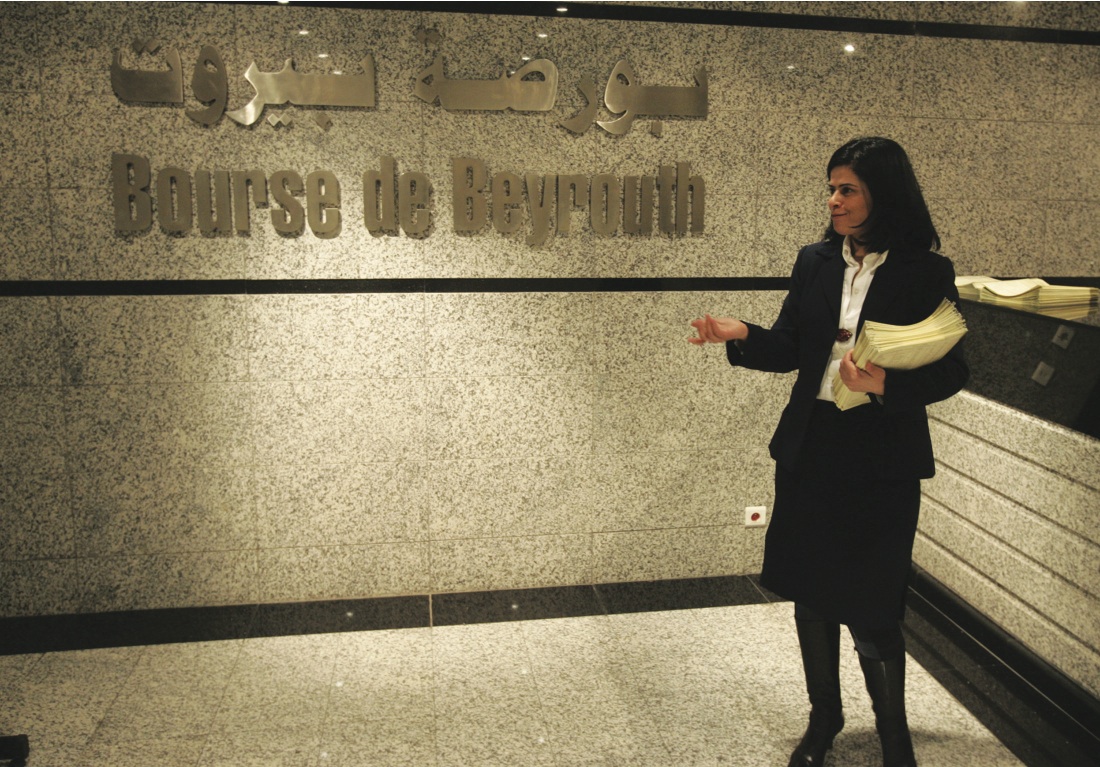
How existential it is for the success of an equities exchange to be well-managed and regulated, technically kept at the top of the game, and insulated from political plays has been demonstrated impressively by the track record of the Beirut Stock Exchange (BSE) between 1996 and 2019. This year, the rulers over the nascent Lebanese capital markets saw no other option but to initiate the Electronic Trading Platform (ETP) that would incorporate these virtues after the BSE had failed so miserably in matters of attracting liquidity and operating in the needed independence from the inertia of Lebanese politics and legislation.  

At this time, emerging from summer 2019, and the political, monetary, and fiscal turmoil that came with it, into the business season that promises being fueled by the first meaningful reforms that the country has seen in years and will hopefully culminate in offshore resource confirmations and also witness the state’s initiation into sane electricity generation patterns, Executive asked local investment professionals what to make of Lebanese equities and what to think of the coming ETP.   

Ambiguity, optimism, and indifference

The headline result is threefold: ambiguity, optimism, and indifference. The investment banking emirs, wealth management princes, and prime movers of financial things in Lebanon view the existing equities with ambiguity, neither greatly condemning nor enthusiastically praising them. They anticipate the reinvention of a reliable home for Lebanese securities trading and capital market activities with great optimism and hope. But they are mostly indifferent or pessimistic in their assessments if the BSE has a future.

To focus first on the most promising bits of the capital markets equation today, the ETP is being traded as the future champ. Wael Zein, chairman and general manager of Lucid Investment Bank is full of praise for the regulatory infrastructure and institutional diligence that underpins the ETP. “The ETP platform is an excellent way to institutionalize this market, and I can say that everything which has been done so far in terms of rules and regulations [for capital markets], is really very advanced,” he says. “We feel this because we rely on [these rules] the most when it comes to private equity and investment structures.” 

According to him, the ETP is a very important step toward creating what he calls the alternative part of equity, meaning equity for middle- and small-sized companies that pursue corporate growth. “This is where the equity is needed in Lebanon,” he tells Executive. “It is needed to fund those companies with risk money instead of funding them with loans and subjecting all these companies to huge risk at their stage of growth. The ETP platform itself is an excellent way.” 

For Youssef Dib, private and investment manager at Saradar Bank, the drivers and motives behind the ETP are the same as those behind the support for the knowledge economy by Banque du Liban (BDL), Lebanon’s central bank. “In my view [the ETP] is a very good initiative by BDL Governor [Riad] Salameh to try and ignite dynamism in private sector financing,” he says. “This was the initial idea [behind the ETP], as it was the idea when he launched [Circular] 331. [The Circular] 331 created the technology ecosystem in Lebanon which encouraged many entrepreneurs all around. Now is the time for a midlife assessment to see what worked well and what not so much. Once the overall system is more mature, there will hopefully be exits and once we get to exits, the option of listing on the ETP would be one possible conduit.” 

For Fadi Osseiran, the general manager of Blominvest bank, the ETP cannot come soon enough. “The most important thing is the impact that the ETP will have on the financial market, and today this is more important than before because the cost of debt is so high due to the interest rates that we have,” he says. “[These rates] today are so high that many companies are not able to borrow, and it also does not make sense to borrow.” 

Having been involved in a leading role with a consortium that entered a bid for being granted the license for the ETP but was defeated by the winning bid of Bank Audi Group and Greece’s Athens Exchange (Athex) Group, Osseiran has frequently expressed high enthusiasm for the ETP project in the past and says he is certain that the operation will be a win for Lebanon. “There can be plenty of reasons why a company would need equity,” he says. “The point is that today you do not have the proper mechanism and trading platform if you want to raise equity. But an ETP that functions in the way we see as proper and that is liquid and has market making, creates such an option, and that is why I am saying the ETP will be good for the country and good for the companies that are raising money.” He tells Executive that his top priority as an investment banker lies in having the ability of helping companies to go onto the capital market, “To have the proper platform and get companies on the exchange, that is the job I want to accomplish.” 

Raja Abdallah, who is engaged with the development of investment advisory service at FX trading specialist firm Royal Financials, dismisses fears that companies are still far from ready for flotations on the ETP. “Skeptical views that Lebanese companies, either SMEs or large companies, are not ready for listing, will change,” he expects. “Lebanese companies will adapt to the new ETP, and the transformation of their governance will happen quickly as companies realize that they will need to be up to standards to be listed. We are all waiting for the ETP. The governor [Riad Salameh] has placed his word and personal weight on it and owes it to the startup community and [venture capital] funds to deliver, and also to the many private companies who would like to go public.” 

Royal, which was a member of the Blominvest-led consortium in the ETP bid, will, in Abdallah’s estimate, come to play a role in the ETP only as a matter of time. “We are leaders in the technology commonly deployed on an ETP,” he tells Executive. “We use it in our trading platforms. We know how to manage this technology, use it, sell it, we know the dynamics and how it works. We do not want to anticipate things as to what the role of Royal Financials on the ETP will be, but we know [that] we have sufficient expertise in the area of electronic trading to make us a credible player or a tech [partner] in the operation of the ETP.” 

Toufic Aouad, general manager of Audi Private Bank (which is a unit of ETP-winning Bank Audi Group), tells Executive that setting up of the ETP is “expected to be a major development in the direction of improving the liquidity conditions of the Lebanese equity market. By listing new companies and attracting new investors, we will be increasing the number of players and participants in this market, hence improving its efficiency. Corporates will also have access to a new source of capital, which could revive investments/expansion projects and bring new life to the Lebanese capital markets.”

Jean Riachi, chairman and general manager of FFA Private Bank, was not part of a bidding consortium for becoming the ETP licensee. This notwithstanding, or perhaps because of the distance he has kept to the ETP ownership and operator issue, he delivers his assessment of the project with notable passion. “The ETP is a great idea and a great achievement for the CMA,” he says. “They were right to take this step because we have had enough with the Beirut Stock Exchange, its red tape and bureaucracy. Now we will have a modern market with dynamic people running it because the operator is here to make money. As we know, the volumes in a market are important for investors because this is what creates the depth [of the market]. As an exchange, they will do whatever it takes to make the exchange active.” 

The immeasurable ratio of handicaps to expectations

All expectations for the ETP as a magnet for liquidity and capital-seeking companies of course have a time-handicap of six to 10 months affixed to them, and fortunes of the platform will also be co-determined by factors that are still sitting in the dark, from the operator’s strategy for activation of trading and inclusion of stakeholders in the Lebanese financial markets, to the readiness of state-affiliate enterprises (SAEs) for an eventual flotation, and the appetites of prominent family-owned companies for opening their capital structures.

But there is an alignment of views among the investment bankers and wealth professionals who talked to Executive. They think that the ETP, albeit very significant for the future of the venture capital—private equity sphere in the Lebanese entrepreneurship ecosystem, and for maturing tech startups in need of exit opportunities, cannot count on this sphere for its sustainment. The number of prospective beasts of mythos, whether miniature-unicorns or some Arabian breed of billion-dollar valuation potential, is too small and too far in the future to speculate on. In the term of the first years of ETP life from 2020 onwards, the stakeholders in the financial sector and prospective capital markets anticipate that launch clients and first-wave listing candidates on the ETP will come from the realms of SAEs and existing family companies in the medium- to large-size categories.

Our equities

When the question turns to wealth manager’s perspectives on equities traded currently on the BSE, the enthusiasm for most stocks by Audi’s Aouad seems strictly ruled by the facts on the ground as he says, “The Lebanese market suffers from both breadth and depth (ability to sustain relatively large market orders without impacting the price of the security). Accordingly, it is more linked to the political developments rather than the actual underlying fundamentals. Current valuations are severely distressed, especially those of banks which are trading at P/BV lower than ~0.4x, while profits as well as dividends have been stable [or] sustained at the minimum.”

For Riachi, the investment propositions of existing Lebanese equities are not enticing in the current market. He names as reasons why FFA domestically are “no big fans of equity investments for the time being” the vagaries of investing in real estate company Solidere on the one hand, because of the company’s debts and relative uncertainty about management performance, and subdued outlooks for the banking sector on the other. Although banking stock trade at up to 50 percent discount to their book value and thus look attractive, it is to him not a valid argument for acquiring Lebanese banking stocks because such ratios are today the case with banking stocks in many international markets. “In the banking sector it has become the new normal to buy below book value. This is not the criteria to use as reason for buying Lebanese banking stocks today. The criteria are the quality of the assets and the expectation of future profitability,” he explains, but denies both as buying reasons because he expects decreasing profitability and sees asset quality to mean nothing for the current time. “So there is no incentive on this front that would make buying bank shares logical. At one point you might want to buy, but not today,” he says.
For Osseiran at Blominvest, the share prices of Solidere stock show that the company has been paying the price for the level of uncertainty that is beyond its power to influence. As a major company in Lebanon, it has borne the brunt of global pressures on the country and, as a highly politicized company from the way it was designed, also been affected by who is in power in Lebanon and the question of how much support it received under the domestic political uncertainties. The company in Osserian’s view in the past also made both good and bad management decisions that were reflected in its share price, but the stock to him has not much to fear. “I would not say that it has big downside potential and see the political handicap today as small,” he says. “The cycle is changing, and they made the right move to decrease prices. A major handicap today is their loan level. Even though they have decreased it, the price of the loan is still substantial because of the interest rates which affect the company. But I agree that between negative impact from increasing interest rates, and the positive effort of management structuring, [Solidere] should become better.”

As to banking stocks on the BSE (which include the stock of BLOM, the parent of Blominvest), Osseiran regards them as “correctly valued” with reference to the negative outlook for profitability and their generous price-to-book value. Noting in his interview with Executive just before the August announcements of sovereign ratings that effects have already been priced in, he says, “As the bad news are already priced in, any pocket of good news would be positively reflected. There are several pockets of potentially good news, for example through budget implementation and through reforms. Upside [in equities] will be there. If you want to invest in Lebanon, things to look at is what is cheap, and thus there is a big potential in the banks.”

With the optimism about the coming trading platform and the potentially positive outlook for existing stocks being both codependent to each other and located in the future, Lebanese investment experts’ anticipatory predilections with the markets and trades that are to come leave the question over the fate of the BSE relegated to an afterthought. For Riachi, a burial is called for. “They should close it. The Beirut Stock Exchange will die. I can tell you from now,” he says. For Osseiran, the BSE could have a future if it gets energized into new vigor by having to stand up to a competitor, but he asks if the question of its life is even justified. “It depends on how the ETP will work. But if you worry over the question if the BSE were to die, you would have to ask if it is alive today,” he cautions. For Royal’s Abdullah, the existential point is clear. “Nobody has any regard for the BSE. Let’s be honest,” he says.

It seems that the BSE, irrespective of any possible nostalgia for the institution—in an irony of history, the BSE’s initial year of establishment was 1920, a century before the impending start of operations of the ETP that is expected to substitute it—has exhausted all emotional capital and operational appeal with the makers in our financial markets. Regardless of how its operations will play out once the ETP is up, running, and hopefully successful, however, one could reason that there would be room and need in Lebanon for a hands-on museum covering the past and future of finance, from the history of commodity money to fiat money and cryptocurrencies, the role of banking and central banking, and the functioning of capital markets, including an active learning environment where people can get a feel and acquire a taste for being investors in equities.

September 6, 2019 0 comments
0 FacebookTwitterPinterestEmail
OverviewSpecial ReportWealth management

Asset management in Lebanon

by Thomas Schellen September 6, 2019
written by Thomas Schellen

The problem of our age is the proper administration of wealth, so that the ties of brotherhood may still bind together the rich and poor in harmonious relationship. The problem of Lebanon in the current period of economic scarcity and political austerity is the proper administration of wealth in the interest of empowering society to improve its productivity and prosperity.

Read those two sentences again. Do they contradict or complement each other? Are they true or false, or is it somewhere between the two? Whatever your answer, our editorial perspective is that the latter is a contemporary adaptation of the first. The first is actually a quote, concealed for the purpose of this story. It is the opening sentence in a 130-year-old essay, colloquially known as the gospel of wealth, in which the richest American male at the turn of the 20th century, Andrew Carnegie, presented his sincerest convictions. 

Protecting wealth in times of global dangers

Making sense of great individual wealth, as Carnegie’s essay was a prominent example of attempting to do, is never easy. In the specific context of personal and familial circumstances confronted with a dysfunctional economic environment under scary global conditions, making sense of and protecting wealth is more than difficult. The situation of a Lebanese wealth owner seems to entail not one, but three problems, two of which are hot and immediate, and one that is ethical and fundamental. The first of the three problems are risks for wealth produced by the widening cracks in 70-year-old global frameworks that are under strain from political, economic, social, and environmental threats.

On the levels of politics, and economic and social instabilities, the world’s rich and poor alike are confronted with aggregations of risks that rarely, if ever, had been experienced, even in the form of military threats by the last two or three generations. These unprecedented elements of financial and economic warfare range from information and IT attacks to fake news, state-sponsored cyberterrorism, and currency conflicts.

In the latter, the weaponization of the dollar could have consequences as uncontrollable as violations of the mutually assured destruction (MAD) doctrine in the days of ICBMs and the superpower arms race. This is no exaggeration in the views of observers and analysts (also found in Lebanon) who point out that the global regime anchored by a US-controlled reserve currency—as has existed in different varieties since Bretton Woods—is incompatible with the unilateral use of this currency as a weapon in economic warfare.

But this dangerous contradiction notwithstanding, American tweets and messages of trade wars and currency wars abound. The socioeconomic threat of such wars for large and small nations is huge, with the only difference consisting in the knowledge that the large economic powers can unleash mutual havoc with unpredictable outcomes, while small nations have no defense at all. Lebanon has just received another reminder on August 29 that an act of financial attack by a very powerful, self-interested and ruthless aggressor can inflict incalculable social devastation and destruction of finance.

But beyond these global threats of the unleashing of economic weapons of mass destruction (WMDs)—no need to send a UN investigative commission from New York to Washington, these WMDs exist—there are also domestic dangers lurking in the US that could devastate the world, such as the alleged death spiral in the country’s public debt. Even as this threat may well be overblown, it is no joke that the recession signals from the world’s largest economy this summer have been making daily headlines, that American central bankers are worried about their independence, and that the US government’s political saber rattlers ply their noisy trade in the Middle East.

The aggregation of US-related risks is not made prettier by the sudden emergence of new fault lines in the European political and economic house. The EU appears increasingly prone to contribute its share toward flooding the twitter spheres—and the minds of international investors—with panic signals.

Lebanese options for wealth preservation

The Lebanese wealth holders of 2019 are, at first glance, confronted with very poor prospects of being able to preserve their native wealth in a country suffering from job scarcity and weakening economic stability. Even if a brave wealth owner here knows that such prospects are possible, what are the priorities that they have to set in this environment where global markets turmoil meets local volatility and forced austerity?

As it turns out, much the same as in the previous periods when Lebanon’s fundamental problems were festering under pretty rugs.   

Wealth management experts tell Executive that the best things to pay attention to for a Lebanese investor are basic truths. They recommend, as both first-line and follow-on remedies for wealth fears, the magic pill of diversification.  

Youssef Dib, general manager of Saradar Bank, leaves no ambiguity on the table. “In wealth management, more than ever, we need diversification by country, by asset classes, [and] by currency.”  

“In wealth management, more than ever, we need diversification by country, by asset classes, and by currency.”

Toufic Aouad, general manager of Audi Private Bank, prescribes for wealth clients healthy baskets of assets for each portfolio. Queried on why this is the case, he presents an immediate perspective on the global situation. “International markets have been shaken by the Fed’s speech at the last Federal Open Market Committee (FOMC) meeting, as it qualified its rate cut by ‘mid-cycle adjustment’ rather than a reversal of the tightening cycle/a start of an expansionary monetary cycle,” he tells Executive. “Market participants, having priced in four interest rate cuts for the next 12 months, were spooked by this neutral position. President Trump’s reaction the next day added another layer of nervousness, as he revived trade war uncertainties by launching another round of tariffs—mainly on consumer products—effective September 1.”

He adds, “We expect markets to remain data-dependent and to move in a wide trading range until we have more clarity on both fronts. Wealth management starts with a proper asset allocation that caters to client’s needs and requirements. Every portfolio should include a wide basket of assets that are diversified by type (equities, fixed income, commodities, FX), geography (domestic, developed markets, emerging markets), and maturity.” 

Charles Salem, assistant general manager and global director of the private banking at Banque Libano-Française (BLF), offers BLF’s assessment of half a dozen event clusters and risks in his answer on how local investors should respond to worrying global developments. Citing the situations relating to China/US trade wars, Hong Kong, Brexit, Italy, Argentina, and the Global Purchase Managers’ Index (PMI), he also advises diversification. More specifically, he says, “Local and international investors alike should focus on diversification in their portfolios to manage uncertainty and preserve capital. We still advise investors to remain prudent in their asset allocations during the last quarter of 2019 and maintain an exposure to fixed income through our LF Total Return Bond Fund, which is currently up 6.83 percent as of end of July 2019. We also recommend tactical allocation into assets such as gold, which have proved good protection against volatility. Investors should be ready to add exposure to equity if the picture above brightens and recession fears fade.”

When asked if there is any transparency in Lebanese investment opportunities such as equities, Saradar’s Dib emphasizes that the real estate markets and opportunities in Lebanon have upside potential and that the market for equities is not marked by opacity as such, but is under-researched. “Lebanon overall is facing a lot of challenges today, and hopefully, in terms of valuations, whether real estate or other, I think we are more at a low point than anything else,” he says. “It is definitely a market that an investor should be looking at, given that its environment has been difficult for some years now, and hopefully will turn around when politicians start moving in the right direction in substance and not just form.”

Endeavoring to drill down into the anatomies of wealth management opportunities in Lebanon at this moment, Executive asked the experts about the wealth preservation prospects in real estate, equities and financial markets and presently almost untapped realms of impact investing, including startup entrepreneurship and micro-finance.  

One noteworthy finding from our inquiries concerns the company at the intersection of real estate and equities. In our conversations, not everyone is convinced that Solidere, which is as entwined as intimately with Lebanon’s fortunes as no other enterprise of importance in this country, is already at its pinnacle as far as downside potential. However, Ziad Abou Jamra, the company’s deputy manager tells Executive that recent measures would inevitably make Solidere shares catch up with the company’s fundamentals (without defining a moment for this to happen).  

“The price of the share today is around $6 and the book value is $10. However, the book value does not reflect the real pricing of the current land bank portfolio and other properties owned by Solidere,” he says. “What reflects the reality is the Net Asset Value (NAV). An assessment of the NAV, taking into account current deeply depressed prices of land which should be temporary, will reveal a much higher figure than the book value, maybe something above $20 per share.”

How do we define the purpose of wealth? There are no absolute answers to this question and perfect formulas for the management of wealth for the social good in sight.

What the most skeptical observer of Solidere can be assured of is that the company has not been the target of qualified scrutiny by local equity analysts, as neither FFA nor Blominvest, who in previous years tracked Solidere, have lately produced such reports. Solidere actually has not been covered much by financial wires in the past 13 months since a new board of directors assumed the reigns at the company. When Executive looked for news coverage of Solidere by Reuters, the agency’s page on Solidere entailed a single short news item and the list of board members still featured as current the names of the board that was correct up until July of last year.

Is there a purpose to wealth

That leaves the third problem: How do we define the purpose of wealth? There are no absolute answers to this question and perfect formulas for the management of wealth for the social good in sight (Carnegie’s answer has been challenged from many angles). But for the investor community in Lebanon, one worthwhile point in seeking meaningful uses of wealth might arise from awareness of increasing probabilities that investments in carefully selected real estate opportunities and, even more so, investments via high-function Lebanese capital markets have a potential to contribute to national economic improvements and help preserve the investors’ wealth in a rational way. Moreover, even as a financial institution noted as pioneer in micro-finance involvement with poor population groups in rural Lebanon was just targeted by a missile salvo of sanctions by the US Treasury, investors could very well stand to benefit from investigating new and locally underutilized investment opportunities under the paradigms of impact investing that is aligned with environmental, social, and governance outcomes.

September 6, 2019 0 comments
0 FacebookTwitterPinterestEmail
LeadersOpinion

Lebanese investors must stay alert to opportunities

by Executive Editors September 6, 2019
written by Executive Editors

In today’s Lebanon there are two biases. Let us call them the phoenix bias and the shithole bias. The first is the narrative of an indestructible culture, a country and haven of wealth that has never defaulted on its financial obligations and where no depositor of wealth has to fear the disappearance of a single dinar, taler, rand, dirham, lira, euro, dollar, or even golden Croeseid from his account.

Tending to the opposite extreme is the massively propagated shithole bias. For its followers, Lebanon was the essence of a shithole before a US president ever tweeted so vulgar a term. No country is as bad as this, we have the worst corruption, the worst electricity supply, the worst financial ratings (recent addition to the bias), the maddest government, the baddest currency outlook, the poorest economic data, and the lowest competitiveness. Even the weather averages are not as good as they could be in July and August when compared to a median consolidated (and 100 percent fictitious) temperature of Monaco, Dubai, Kuwait, Novaya Zemlya, and Punta Arenas.

Construction of narratives is great fun and sometimes all there is to do to avoid descending into depression in the face of unpleasant experiences and personal failures when trying to pursue some level of sanity in this country. But to be practical, and be so in connection with the issue of wealth preservation in Lebanon during the current phase of scarcity, it is preferable to seek the most viable angles for dealing with wealth and scarcity.

To start with a few behavioral considerations, and also to be clear from the beginning of this discussion, Executive editors see no inherent incompatibility of wealth and scarcity—meaning there are no valid historical arguments for expropriation of wealthy people or the owning class in order of solving the problems of scarcity—nor do we see a lifestyle contradiction between wealth and austerity. While there is a time for generosity (and Dickens’ Scrooge has given stinginess during such moments the bad name that it deserves), there are many positive examples for fortuitous correlations of being rich and practicing personal austerity. The virtues of self-discipline and responsible/sustainable use of resources are not only fully compatible with owning wealth, but self-chosen commitments to austerity have historically often been to the advantage of wealth owners. This seems worth repeating as the country’s zeitgeist needs to align itself with the need for austerity.

On the economic level of the discussion, scarcity of economic resources is furthermore not so much a contradiction to owning wealth as much as a challenge and mandate to invest this wealth in ways that improve the wellbeing of society. Bankers tell us today that they need to be able to deploy their wealth by lending to ventures that can be classified as good risks; they have a point, as it is their business and expertise to channel deposits into viable lending opportunities.

But from a wealth management perspective, the most recommendable methodology for the rich in this society appears to start with assessing their own needs and collating them with society’s needs. A next step will be to prudently examine, while taking the current economic scarcity into careful consideration, the platforms, markets, structured vehicles, contrarian narratives, and unconventional investment methodologies that exist in Lebanon.

The information and views that Executive obtained in the course of this issue’s inquiries about asset classes that can meet the requirements for sane returns and economic benefits encourage editors to call upon our wealthy families and individuals with two specific requests. First, resist any temptations of the shithole bias, and second, stay alert (or remind your local wealth managers, private bankers, and investment advisers to keep you highly tuned) to all investment opportunities that are opening in the local markets and classical asset classes, especially equities on the electronic trading platform under construction.   

Finally, we want to note that the personalized environmental, social, and governance (ESG) standards radars of Executive’s editors have last month been blinking in positive frenzy. Two laudable developments arrived last month from the US, namely a pivot in perceiving the purpose of the corporation from pure shareholder commitment to one that entails “a fundamental commitment to all of our stakeholders” and the inclusion of “ESG relevance scores” in the ratings report issued by Fitch on August 23. We regard these as positive signals that suggest that more ESG affirmations are called for in Lebanon. Investors should look at impact investing and investing into startup entrepreneurship on levels of funds and individual companies. Investors should not be fools who hate knowledge.     

September 6, 2019 0 comments
0 FacebookTwitterPinterestEmail
LeadersOpinion

Lebanon needs a long-term solution to its trash woes

by Executive Editors September 6, 2019
written by Executive Editors

Lebanon on the precipice of another trash crisis, with its own garbage floating in the sea, lining the streets, and forming a mountain in Tripoli. All this not even five years after the last crisis that, in 2015, saw mounds of garbage pile up on the streets of Beirut and Mount Lebanon. In the north, the garbage mounds have already reappeared, after the owner of the Aadoueh dump refused to accept anymore trash. In the capital, politicians have warned that if no solutions are implemented, the Burj Hammoud and Costa Brava landfills will reach capacity and the country will enter its next garbage crisis by the beginning of September. With that calendar mark passed, it seems Beirut remains safe for a little while longer. How much longer will be determined by the government’s ability to implement long-term waste management solutions rather than relying on ad hoc measures to delay continual threats of crises. A country can only rely on stopgap measures for so long, and 30 plus years—the first emergency measures were implemented in 1997—is far too long.

What then, is standing in the way of a solution? Following altercations in Aley, cabinet meetings were postponed for six weeks, stalling talks on Environment Minister Fady Jreissati’s proposed new solid waste management roadmap. The government, as usual, chose politicking over addressing serious challenges the country is facing. Slight hope emerged when cabinet adopted the roadmap on August 27. But it was adopted without inclusion of a financing mechanism, which is to be studied over the next month. With Jreissati warning that another trash crisis would begin as soon as September 1 if nothing were done, it is curious that with the plan not passed in full, let alone implemented, this deadline has passed without landfills reaching capacity, informal dumps rejecting garbage, and a second crisis kicking off. When Executive asked a Ministry of Environment official how this passage of the roadmap would help in averting this crisis given the timeframes involved, they replied: “Sometimes people make predictions and they’re wrong.”

A weak long shot

New financing mechanism aside—a previous attempt to create one via Law 80 (2018) was removed before it was voted on Parliament—the roadmap calls for a four-part plan to be implemented. The funding issue seems to be central in past failures, like efforts to introduce sorting at source in 2017, to clean up Lebanon’s streets and introduce sorting at source in municipalities and treatment facilities. The sector also carries an alleged deficit of $2 to $3 million, though no one from the Ministry of Finance could confirm this. If the roadmap’s proposed financing mechanism is agreed on, the sector may be well on its way to productivity, but without it the country will continue to be forced to view waste management through a crisis lens. 

Since the end of the civil war in 1990, the country has witnessed emergency measure after emergency measure taken in an attempt to manage waste. The 1998 creation of the Naameh landfill, closure of which spurred the 2015 crisis, was one such measure. In 2006, the household solid waste management master plan was approved by the Council of Ministers as the first attempt at comprehensive waste management. Yet, nothing happened due to political turmoil at the same time. Efforts were renewed in 2010 with little to no progress made. The 2018 law called for a national strategy to be created within six months. Eleven months later one was delivered. 

In a country where progress tends to be slow if not completely stalled, it is of little surprise that the solid waste management roadmap emerged late. Executive has examined the roadmap and the elements that cabinet approved. It is the view of Executive’s editors that implementing this new plan seems like a long shot, given the government’s history of ineptitude and seeming apathy unless crisis stinks up the capital’s streets (even less attention seems to be given if trash piles up in other parts of the country). Previous legislation encourages municipalities to independently manage their waste, but many lack the funds to do so. One wonders how the central government expects this round of attempts at decentralization and increased sorting at source to go any differently.

The solution needed is three-fold. It is the government’s job to chart a comprehensive and sustainable path forward and make sure municipalities are equipped financially to comply with new legislation. Municipalities, given proper funding, must devise ways to effectively collect garbage and enforce regulations—primarily those regarding sorting at source. Finally, citizens themselves must do their part in their own homes. Most waste management experts Executive spoke with agree that Lebanese are willing to sort at source, but lack the infrastructure to do so. Executive calls on the government to finally secure the path and the funding of solid waste management, and for municipalities to establish infrastructure for it, so that citizens will be able to comply with their civic duties for responsible waste management. It remains to be seen if this plan will be the one that sets Lebanon’s waste crisis on a path to recovery, but protests over incinerators, and sure-to-come protests over increased fees for citizens who will have to foot the bill for many of the proposed measures, will make its implementation challenging. 

September 6, 2019 0 comments
0 FacebookTwitterPinterestEmail
EditorialOpinion

A plane in the sky

by Yasser Akkaoui September 6, 2019
written by Yasser Akkaoui

You can no longer live in denial, just clicking on what interests you in this fake voyeur world. Stop looking the other way, reality is now upon us. Swiping left is no longer an option.

The drums of war have been resonating closer and stronger from the Persian Gulf, Yemen, Iraq, and Syria adding to an already charged atmosphere. 

Everyone has been discerning from this chatter very loud and clear messages. Everyone that is, apart from our politicians. I wonder why they have opted not to listen and carry on irresponsibly as if their ears were stuffed with wax. 

The Lebanese citizen has never been so alone. Be it their neighbors, their government—the whole world is watching us as we are being unwillingly dragged into this isolation. What is even more troubling is that our warlords thrive in such an environment; they know it gives them impunity over their socioeconomic responsibilities. Now they can blame all Lebanon’s ills on geopolitics. 

The targeting of Jammal Trust Bank cannot be removed from this bigger picture. The only thing that we are worried about—and this is how war happens—is that you never hear the bomb when it is released, you only hear it when it explodes. 

But as much as some might think that there is no hope, we still believe that resilience, commitment, and perseverance in working for what is right, what is just, what is worth living for, will bring about the Lebanon we all want to see. And we will continue to do so, come what may. 

September 6, 2019 0 comments
0 FacebookTwitterPinterestEmail
CommentEconomics & Policy

Updated laws on e-transactions, offshore companies, and code of commerce

by Auguste Bakhos August 9, 2019
written by Auguste Bakhos

Pressure to update the seven-decades-old Lebanese code of commerce was threefold. First, pressure to reform followed the decision of Banque du Liban (BDL), Lebanon’s central bank, to issue Circular 331 in 2013 to encourage investment in the startup ecosystem, as startups by definition entail innovative technology and development language that is foreign to rigid and non-adaptive Lebanese laws. Second, the revolution of information technology and its use in electronic transactions created an ecosystem that the code was unable to handle and, as such, was a disincentive to foreign investment. Third, pressure to update the code also came from international consulting company McKinsey’s Lebanon Economic Vision, which advocated for 11 statutes to be accelerated to provide a business friendly environment, including the code of commerce. 

To address these gaps, the Lebanese Parliament has enacted three new laws: Law 81 (2018) on electronic transactions and personal data; Law 85 (2019) on offshore companies and single member offshore companies; and Law 126 (2019), which amended the code of commerce law from 1946. 

The main purpose of these laws is to create an ecosystem where companies and startups can prosper and develop, as well as one that is attractive to foreign investments, in order to expose the Lebanese market to international standards and scale. Law 81 was established to create legal controls to protect individuals’ actions, as there was no legislative framework in which e-transactions could be carried out despite these being daily processes in Lebanon. It is a reform that arose alongside the European Union’s General Data Protection Regulation (GDPR), which seeks to protect EU citizens’ data in all jurisdictions. Law 81 is beneficial for the economy in that it allows for e-trading and e-commerce to happen more easily in Lebanon, and between Lebanese companies and those abroad. 

Updates for a digital era

Law 81 can be split into seven parts; the first being the legal requirements on electronic documents and evidence, such as giving the e-signature and e-documents the same power as a handwritten signature and document. The second part covers electronic commerce; it outlines the responsibilities required for all e-commerce practitioners, and covers the e-banking sector. The third part tackles the legal necessities on public communication through electronic supplies, which means that it highlights the responsibilities of the data host and covers the process of providing information online to the public anonymously. The fourth part sets out the national administrative, technical, and legal requirements given by international domain names registration entities. The fifth part states the purposes and boundaries of processing personal information, detailing the obligations and responsibilities of individuals handling the data. The sixth part covers amendments to the penal code, in addition to tackling crimes related to IT systems and bank cards. Finally, the seventh part offers transitional necessities related to the present law by stressing the importance of BDL in licensing electronic signatures and integrating them in the financial and banking sector, while making sure they do not contradict with other laws, especially the banking secrecy law of 1956.

Investment friendly

Law 85 updated Decree 46 (1983) due to the importance of offshore companies in attracting Lebanese and foreign executives to invest in Lebanon. The law’s update, of course comes in the context of Lebanon’s hope for potential offshore oil and gas reserves. This updated law outlined the activities in which offshore companies are allowed to practice. Moreover, this law has ratified the establishment of a single member offshore company in Lebanon, in which a single shareholder manages the company either by themselves or by appointing another director. This single member, being a legal entity or a natural person, is responsible for signing individually on all the company’s decisions, given that they have all the powers and responsibilities usually granted to the board of directors and the general assemblies of the shareholders.

Changes to the code

The major innovation was Law 126, which, after 73 years, reforms and amends a large portion of Law 304 (1946), the code of commerce. Law 126 does not replace the code of commerce but exists to be used in conjunction with it, with its amendments superseding relevant articles in the original law.  This updated law was enacted to meet local and international standards and evolutions in need. These amendments introduce new legal concepts that reform commercial acts in Lebanon. Law 126 opens the local market to a global market by encouraging foreign investments and by integrating several amendments made to adapt to the changed business environment in Lebanon and globally.  

First, the law reforms certain formalities such as integrating electronic usage in daily transactions within the procedural framework, such as deposits and registrations before the trade register. In cases where a company has not been established within six months, the law also allows the founders to recover the deposited amount as capital from the bank accounts. 

Second, the law undertakes several procedural amendments for joint stock companies, such as requiring that one-third instead of two-thirds of board members are Lebanese. In addition, the law separates the roles of the chairperson of the board of directors and the general director to ensure that each role’s responsibilities within the company are clearly defined.  

Moreover,  it tackles Lebanese limited liability companies by allowing a natural person to establish a single partner limited liability company (SARL). The law also provides reforms regarding the transformation of a company, repartition between the bare-ownership and usufruct—the right to use and take advantage of a thing possessed. Regarding bankruptcy, it introduces protections for the estate of the spouse of the bankrupt. In addition, it adopts the regulations of mergers and demergers of a company.

Global depository receipts (GDRs)—defined in the Financial Times glossary as “negotiable shares issued by depositary banks that represent ownership of a specific number of shares in a company and can be traded independently from the underlying shares”—have grown in prominence  in recent years as the favored implement through which companies from emerging markets choose to raise capital. It was important, therefore, to integrate and adopt a new amendment that covers these: Article 28 of Law 126 includes the regulations of the preferred shares and article 458 tackles GDRs. Moreover, these articles were integrated to allow foreign firms to have their stock trade in the domestic market by removing several steps, as well as to ease domestic investor purchases of foreign securities.

The above reforms are a step toward stability and growth and put Lebanon on the right track, which is a path toward an improved future and a modernized contemporary business law that would serve to attract investors and create a perpetual growth economy.

August 9, 2019 0 comments
0 FacebookTwitterPinterestEmail
CommentEducationSpecial Report

The view from Lebanon’s education ministry

by Fadi Yarak August 9, 2019
written by Fadi Yarak

The Lebanese economy is changing. Our education system must follow suit. The Ministry of Education and Higher Education (MoEHE) is committed to achieving the United Nations Sustainable Development Goal (SDG) 4 Education, thereby committing to providing access to quality education for all children. Our work contributes to 12 other SDGs for 2030, including Goal 8 on decent work and economic growth and Goal 9 on industry, innovation, and infrastructure. Thinking ambitiously in these areas means Lebanon needs well-thought out strategies for the economy, for education and skills, and for future industries and innovation.

It is also clear that predicting the economic future requires more than a 10-year horizon. The education system must respond from a broad vision right down to what is happening in classrooms and lecture halls every day.

Changing markets

Diversity is a key characteristic of Lebanon, and our openness to and appreciation for other cultures dates back centuries. This gives the Lebanese a competitive edge, for as the world becomes increasingly interconnected and interdependent, “cultural competence” is more important than ever. Indeed, a globalized market will require not only technical competencies, but also socio-cultural knowledge and understanding. Global citizenship education is key to ensuring our students are equipped with the skills and attitudes that would enable them to thrive in multinational, multilingual, and multicultural environments.

Another pivotal aspect of future markets is the role of technology. It is evident that the future will hold greater technological and digital dependence. A three-year-old child who enters the education system today will enter the workforce after 2030. It is our responsibility to prepare these children for the future job market. How can we identify the markets and corresponding skills needed 20 years from now, with disruptive technologies altering life as we know it? Social media, smart phones, and ride-sharing applications have had a major impact on how we interact, work, and commute today, and these were all created less than two decades ago. The networking skills prepared through curricula designed 20 years ago would not have prepared today’s young job-seeker for the social networking market that exists now.  

The networking skills prepared through curricula designed 20 years ago would not have prepared today’s young job-seeker for the social networking market that exists now. 

We must think about more innovative and effective ways to incorporate education technology in our education system. Lebanese students have already won multiple awards in robotics. The MoEHE organized a coding week in 2018 that attracted thousands of students, and we are looking into using artificial intelligence to track students’ learning outcomes and cater to their learning needs accordingly. We aim to continue in that direction, ensuring we are making the most of what technology can offer to enrich the education of our students and prepare them for the future.

A digital future

Given the challenges of predicting markets, we must consider solutions that prepare youth for employment that we cannot yet envisage. One solution that research increasingly points to is a dual education system that simultaneously focuses on broad educational knowledge and the development of positive citizen behavior, whilst being much more explicitly linked to the world of work. This means regular exposure to the “career world” in schools. This could include job-shadowing activities, guest speakers from various professional fields, and workshops/training sessions on the digital technologies and processes used in the workplace. These activities would require intersectoral collaboration involving government agencies, civil society, and the private sector, to capitalize on what each sector has to offer.

Secondly, we cannot continue to view education as the attainment of knowledge alone. Lebanon, like many middle- and high-income countries, has a mismatch of learners to the economy. Solutions start with mapping our economy in detail and transposing the skills needed. We must start with a good foundation of general education, then build on broader competencies, such as creativity, adaptability to risk, and entrepreneurship. Many countries are also considering incentivizing life-long learning through, for example, individual “skills accounts,” so that even adults can afford to upskill themselves as technologies and their own careers change.  

Finally, we need to consider our education policies in conjunction with our job creation, and industrial and economic policies. We cannot invest in skills for a digital future if we do not simultaneously invest in upgrading and expanding our digital infrastructure.

Our goal must be to move forward consistently across education and industry, to ensure the future youth of Lebanon are able to adapt, navigate, and excel in this unmapped territory.

August 9, 2019 0 comments
0 FacebookTwitterPinterestEmail
Last wordOpinion

Are Arab countries on track for UN education goals?

by Hamed al-Hamami August 7, 2019
written by Hamed al-Hamami

A region of renowned civilizations and contribution to humanity, the Arab region has become one of paradoxes in recent times: Young, highly educated, dynamic nations, on the one hand, and multiple protracted armed conflicts, high levels of youth unemployment, volatile and vulnerable states of existence, and extreme inequalities and disparities, on the other.  

 While the region indeed has made tremendous achievements toward development goals, many countries have unfortunately seen their developmental gains significantly reversed, primarily due to the protracted nature of multiple conflicts, while others struggle to improve the quality of education and achieve nationally set goals.

Available evidence shows that national education systems face significant challenges. Children, youth, and adults in the region are facing unprecedented challenges in terms of learning, employment, and social cohesion. More than 20 million Arab children are out of school or at risk of dropping out. This is coupled with a growing number of youths in the region who are not in education, employment, or training (NEET). In some countries, NEET accounts for up to 45 percent youth. 

In addition, the quality of education needs major improvement. For example, results in the 2015 TIMSS (Trends in International Mathematics and Science Study) for grade-8 mathematics indicate that while some countries have shown improvement, as compared to 2011 results, six out of the bottom eight countries surveyed are in the Arab region. When it comes to literacy, the number of adults possessing low literacy skills is relatively high in the region (more than 50 million adults) and appears to be on the rise, particularly in crisis-affected countries. In most Arab countries, the expansion of educational opportunities has yet to translate into economic growth. The average rate of youth unemployment in the Arab region is the highest in the world, reaching 30 percent, which is more than double the world average.

Steps taken on a long road

Cognizant of the above, all governments in the Arab region embraced Sustainable Development Goal (SDG) 4 – Education 2030 as a prime opportunity to transform national education systems into those of resilience, and to contribute to the realization of national development goals and the Agenda 2030 for Sustainable Development as a whole. In this regard, evidence points to three broad-based issues and priorities of common concern: First, migration, displacement, and education—ensuring access to safe and conducive learning environments at all levels, providing opportunities to gain life-saving and enhancing knowledge and skills, supporting teachers and educators, and building resilient education systems; second, quality and relevance of education—ensuring coherent, holistic, systematic, and sector-wide approaches to addressing the dimensions of quality and relevance in education; and third, financing of education—increasing, optimizing use of, and accounting for, investment in education.

Almost five years after adopting Agenda 2030 for Sustainable Development, countries have demonstrated a number of key achievements. Arab states have led and remained engaged in policy and technical dialogue at national, regional, and international levels as well as corresponding actions through elaboration of, commitment to, and implementation of, successive roadmaps and commitments.

 With the Agenda 2030 being country-led, all countries in the Arab region have taken their own initiatives toward achieving SDG 4, and contextualizing, mainstreaming, and integrating countries’ commitments into national processes. An ‘Arab Regional Support Group for SDG 4 – Education 2030 Agenda’ consisting of  23 member states and organizations have been working together since early 2014 and have met five times to take stock of the implementation of the regional roadmap, and to jointly plan for and finance the continuation of initiatives in 2019.

 The region is confronted with multiple crises that heavily affect the state of education and has been implementing humanitarian response plans for over a decade.  While acute educational needs must be met for millions of out of school children, long-suffering teachers, and a dysfunctional education system, countries in crisis and those affected by it equally recognize the need to combine both humanitarian and development interventions. Therefore, SDG 4 provides an excellent opportunity to position itself as the long-term goal toward which countries plan to rebuild national education systems. 

 In spite of numerous challenges confronting many countries in the region, all are determined to realize education as a fundamental human right, and as the main vehicle for individual, societal, and national development. It is, therefore, the role and responsibility of UNESCO to accompany each and every country in the region toward the 2030 target and beyond.

August 7, 2019 0 comments
0 FacebookTwitterPinterestEmail
CommentEducationSpecial Report

Education and the 21st century

by Farid Chehab August 7, 2019
written by Farid Chehab

The 21st century will cause a rupture in the way we think, feel, behave, create, produce, and live. Fire took eons to start changing humanity—tools, a little less. The first agricultural revolution changed people’s lives over the course of 8,000 years. The first and second industrial revolutions took place within less than 150 years. The digital age will change our civilization in less than a century. Economic theorist Jeremy Rifkin talks of a third industrial revolution, one where humanity moves from owning to sharing under the thrust of the internets of energy, mobility, and communication. These tectonic shifts are happening at a speed never before experienced. Leading the charge are the new digital industries that will render those of the 20th century obsolete before 2050.

The industries of the 21st century, old and new, must submit and react to market pressures—staying in comfort zones means assured death. Unfortunately, worldwide, education has been slow to react. Educational institutions may understand the threat, but the pace of change has not matched needs. Parents and educators raised on the ideas of the 20th century may still insist that students today can learn and adapt, “like we did,” but this is simply no longer the case. Jack Ma, the Chinese business magnate and co-founder of the Alibaba Group, predicts that robots could replace 800 million jobs by 2030. The next generation, who will then be in their 20s, will face a major challenge if we do not prepare them now.

As of today we must forget all we know, because everything that will govern our lives will change. This rupture commands us to enter a period of ongoing creativity and invention. Knowledge of the past becomes obsolete when the future is totally new; this includes education. New education must strive in the following directions: resilience, creativity, collaboration, curiosity, communication, and mathematics.

Resilience

We are an epoch of the mind, one that requires resilience, not memorization. Resilience to fail, to try again, to never lose hope, and to succeed in time frames that are counted not in professional lifetimes, but in decades.

In this new world, education must prepare the mind to see failing as a learning experience, to understand that successes do not endure and that a career path can be shorter than a decade. In the 21st century, newer ideas will overwhelm new ideas. Newer systems will beat already state-of-the-art systems. Just look at the speed in which the likes of Netflix, Airbnb, and Uber entered our lives and disrupted the previous order. 

How many schools and universities today entertain such a spirit of resilience? Are we not still in the era where school marks and academic end-year success remain the norm? Take physical education as an example. Sport is considered a by-product of education, not an essential ingredient to nurture the brain—and increase its resilience. Are schools ready to make sport an intrinsic part of the learning process? 

Resilience, however, is only one aspect of a whole new approach in education; the most important aspect is creativity.

Creativity 

Our current mode of education is learning through rote where educational programs are filled with unnecessary content to memorize. Take this away, and our students can utilize their brain power where it is truly needed—creativity. Today’s schools teach children how to acquire knowledge, not how to create. What we need instead is education through creativity. This is understood by state-of-the-art schools in Finland where students are educated via play. Students acquire knowledge through games with their peers that grow in complexity according to their level. This new paradigm yields results; the Finnish education system is considered one of the best in the world by most metrics. At tech universities, like Massachusetts Institute of Technology (MIT), learning is through continual inventiveness and creativity. 

It has been established that playing and games put the brain in creative mode. Observe a toddler. They are at their creative best playing with blocks and putty, but this is stifled when entering school systems that value study time over play time. Is this not still the case in Lebanese schools and universities? If your child enters an education system from age three that is not fit for purpose, then how will they cope when forced at a later stage to compete with the all-categories creative minds that will rule the world?

Collaboration

Another given in new education is teamwork: Our capitalistic culture, especially in our country, is to favor the “I.” We produce egos and entrepreneurs, but not brains capable of working in groups. One of the best ways to be inventive, creative, and beat the competition is through teamwork. We are still in the mode of “Be the first, be the best.” We need a new education to change this mentality.

Creativity and collaboration are the essentials of new education, but there is more to add: curiosity and communication.

Curiosity

Our ancestors survived because they were curious. Today, our hedonistic civilization has eroded our curiosity in favor of enjoyment. Mindless screen time has replaced our curious instincts. But if schools and universities grasp the urgency of enhancing creativity, they cannot drop the need for knowledge as well. Education must awaken a child’s curiosity. In an age where continuous learning becomes the new standard, its fuel is enduring curiosity. It is a step-change in education. How then do we nurture curiosity? Games and playing is one way, but also by creating a new culture that brings students into contact with nature and triggers their curiosity for the world around them. If parents cannot feed their childrens’ curiosity then they must demand it from their educational systems. 

Communication

Internet communication will be one of our new century’s pillars. In our culture, communicating means speaking our mind without listening to the other. In the 21st century, students’ ability to communicate must not be acquired by social media, but it should be embedded in their program starting with their youngest age. Communication skills are fundamental. Our educators must also spread a spirit of tolerance in a world growing more intolerant by the hour. Are we educating Lebanese youth to open to the world, share, and become tolerant in spirit, ideas, culture, and behavior? Who is championing communication through tolerance in our national education?

Mathematics

The 21st century remains the era of mathematics. Our century will not forgive us if we do not give mathematics the importance it deserves. Digital becomes the new language. Whether they excel in science, culture, or art, our youth must realize that everything they will do in the future will be digitally-based. Previously, we used to start by learning the alphabet. From now on, numbers will equal letters. Survival in the course of the 21st century is at this price—one we have yet to pay.

Resilience, creativity, curiosity, collaboration, and communication must become the mantra of our new educators. Parents must be aware and acquire a new sense of urgency to ask for it. Time is running short because the curve of techno-progress is steeper and faster than our ability to adapt. Children born in the first quarter of the 21st century must not become collateral damage of the new world because of our irresponsibility.

August 7, 2019 0 comments
0 FacebookTwitterPinterestEmail
Hospitality & TourismQ&A

Le Gray’s general manager’s four years in Beirut

by Nabila Rahhal August 7, 2019
written by Nabila Rahhal

Lebanese born and raised, George Ojeil was the hotel manager at the Intercontinental Hotel in Amman, Jordan, when he was offered the position of general manager (GM) of Le Gray Beirut, which he describes as a “very sexy product which any hotelier would love to run.” What further facilitated the decision to accept Le Gray’s offer was that Ojeil’s wife was pregnant with their first child back then, and the couple thought it would be good to be close to family during that period.

So, on October 15, 2015, Ojeil became the GM of Le Gray Beirut at a time when the country was facing a waste management crisis and a dismal tourism and hospitality season. The four years that followed saw Ojeil leading the hotel through what was still a challenging period for tourism (despite a pick up in tourism numbers), and through an extension project that saw an addition of guest rooms, conference rooms, and a ballroom.

As Ojeil prepares to leave Le Gray (effective end of July 2019) to become GM of Ritz Carlton, Abu Dhabi, he reflects on his time with Le Gray and shares his insights on the hospitality sector.

E   I imagine it wasn’t an easy decision to take, joining Le Grey, considering the situation of the country at the time?

I resigned from my previous position in Amman and signed the contract with Le Gray 20 days prior to the waste management crisis and the demonstrations that accompanied it right at the doorstep of the hotel (on October 7 the façade of Le Gray was vandalized). So I had to call Le Gray and see if they were still interested in having me and the reply was yes, things are under control.

When I arrived in Lebanon a few days later, the hotel’s façade was broken and some of the doors had no glass, business was very low, and there was a curfew in the area around the hotel. To be honest, I did have fears at that time and wondered if I had made a big mistake coming back to Beirut. But I remained positive and tried to make the best out of it, and I believe we managed well with the team.  

E   What were your priorities upon assuming your post at Le Gray?

There were a lot of things to be tackled on my list, but the most important thing was looking into my colleagues’ mindset and managing it.

My colleagues were really impacted by the events [of that year], and I felt great demotivation among the team, so I had to work on reengaging them and making them believe that the property will shine once again, despite what we have been through, because you know we are in the people industry where having a positive attitude is very important.

E   How did you manage this period of crisis that the hospitality industry passed through financially? Were you able to retain your team?

We never looked into reducing our payroll or manpower just to save a few dollars—I don’t believe in that at all.

We decided to retain our team because they are our best asset. In hospitality in Lebanon, there will always be good and bad days, but as an employer of choice, we need to prove to them that we are there for them during tough days and that we will support them so that they will support us during the good days.

Still, we managed to put many strategies together at that time to reduce our payroll by, for example, managing a natural attrition: When there were people leaving, due to personal choices, we did not replace them, and we had to make do with what we had. In parallel, because we were working on boosting the motivation and morale of the remaining team, this enhanced their productivity while reducing headcounts. When someone is engaged and motivated, he or she can replace two or three headcounts. When I took over, we were 231 employees with only 87 rooms and occupancy was very low; today, business is at a peak, we have additional conferences and events facilities, more rooms, and the additional lobby—and we are at 165 employees.

E   What were some other measures you took to reduce costs?

Aside from looking at payroll, we looked into energy. We transferred our lighting to LED technology, we looked at operating our generators at peak hours to reduce our electricity cost. So we have taken a lot of cost-saving initiatives when it comes to energy, and when you save on energy it’s automatically pure profit. These two measures supported us in reducing our expenditure and optimizing our profit without impacting the quality of the product.

E   The extension project was completed in July 2017. How has it impacted business at the hotel since?

The extension project allowed Le Gray to provide full service, so we managed to attract residential seminars, MICE business, and so on—and this is of capital importance. Prior to the extension, we only attracted frequent international travelers staying at the property, but now it’s a different ballgame.

During tough times, hotels focus on the local dynamics where you can at least generate revenues to cover your costs. If you don’t have these conference and events facilities, it’s a handicap. 

E   Let’s talk about 2019, and how the year has been so far for hospitality and tourism in general and Le Gray specifically.

2018 was a record year for the hotel, and so far in 2019 (July) we are witnessing a year-to-year increase of 3 percent on a record year. The first half of the year was fantastic and, in ratio, we have already generated 65 percent of 2018’s profit.

E   Is that related to the lift of the travel restrictions from Saudi Arabia to Lebanon?

This is supporting it, definitely. The lift of the travel ban accentuated the demand, and once we had more demand on the market, this supported driving average rates upward. Once the demand is bigger than the offer in the market, you feel the rates gradually increasing. We witnessed an increase year-over-year in our average rates by 12 to 13 percent of the average rate.

E   But what happens if the demand suddenly decreases due to security incidents such as the one witnessed in Aley/the southern highway on July 6?

If, God forbid, there is a drop in demand, you start seeing a sort of price war between hotels. Hotels will have to drop their rates to get more business, and if the competition drops their rate, we may have to follow at a certain stage. Le Gray has a competitive advantage in that we have a diversified business mix, so demand from different continents would support driving occupancy continuously.

E   From your experience, how have you seen the government supporting hospitality in Lebanon, and what more could be done?

I personally believe that Mr. Guidanian [the tourism minister] is doing a fantastic job in diversifying the demand and bringing more demand from different areas. What he has done through participating in different fairs on different continents was very smart and allowed hotels to be present under the umbrella of the Ministry of Tourism, thereby saving costs and encouraging wider participation.  

Regrettably, in the 2019 budget, it looks like there will be a cut in the ministry’s budget, which means it won’t be able to participate in the majority of these fairs anymore.

In a wider sense, the government can support the hospitality sector in numerous ways. With energy, the government can subsidize or support hotels with a lower energy fee.

On another note, we need to support our youth and grow talent. We are not developing our youth or nurturing the hotelier of tomorrow.

E   Can you elaborate on this? And whose responsibility do you think this should be?

I think [the government] needs to focus more on developing the youth toward service departments, to have highly skilled and developed waiters, cooks, and captains, for example, which is something we don’t see often. These are respectable, well-paying jobs where the starting salaries for entry jobs in the kitchen and restaurants are around $800 for example. These jobs also offer the opportunity to learn the basics of the hotel business and grow from within; there is no elevator to success, you need to climb the ladder.

The Ministry of Education and Higher Education needs to once again support technical education. There will always be people who go to universities to get their degrees [in hotel management], but there will be other people where, instead of having zero education, they go to these technical schools and learn something that would support them in their journey in hospitality.

If we have a situation where everybody wants to go into hospitality management programs, at a certain stage, there will be an overflow of managers and not enough entry level employees, and at the end [of the day], when you go to a hotel, you are not served by the general manager. It ends up that people who are doing these entry-level jobs have never been in any kind of hospitality schools, and so you have to spend real money on training them and doing orientation.

E   Why have you taken the decision to move on in your career?

From a professional perspective, we hoteliers have to broaden our scope every four to five years, otherwise we fall into our comfort zone, which is not healthy.

Also, I have aspirations and dreams that, regrettably, I feel won’t be fulfilled if I stay in Lebanon. If we look at how many five star hotels are in Lebanon, they are only a handful: The industry is not growing and demand on the destination is not growing, and so if we need a career at the international level in hospitality, we need to leave. 

August 7, 2019 0 comments
0 FacebookTwitterPinterestEmail
  • 1
  • …
  • 59
  • 60
  • 61
  • 62
  • 63
  • …
  • 691

Latest Cover

About us

Since its first edition emerged on the newsstands in 1999, Executive Magazine has been dedicated to providing its readers with the most up-to-date local and regional business news. Executive is a monthly business magazine that offers readers in-depth analyses on the Lebanese world of commerce, covering all the major sectors – from banking, finance, and insurance to technology, tourism, hospitality, media, and retail.

  • Donate
  • Our Purpose
  • Contact Us

Sign up for our newsletter

    • Facebook
    • Twitter
    • Instagram
    • Linkedin
    • Youtube
    Executive Magazine
    • ISSUES
      • Current Issue
      • Past issues
    • BUSINESS
    • ECONOMICS & POLICY
    • OPINION
    • SPECIAL REPORTS
    • EXECUTIVE TALKS
    • MOVEMENTS
      • Change the image
      • Cannes lions
      • Transparency & accountability
      • ECONOMIC ROADMAP
      • Say No to Corruption
      • The Lebanon media development initiative
      • LPSN Policy Asks
      • Advocating the preservation of deposits
    • JOIN US
      • Join our movement
      • Attend our events
      • Receive updates
      • Connect with us
    • DONATE