• Donate
  • Our Purpose
  • Contact Us
Executive Magazine
  • ISSUES
    • Current Issue
    • Past issues
  • BUSINESS
  • ECONOMICS & POLICY
  • OPINION
  • SPECIAL REPORTS
  • EXECUTIVE TALKS
  • MOVEMENTS
    • Change the image
    • Cannes lions
    • Transparency & accountability
    • ECONOMIC ROADMAP
    • Say No to Corruption
    • The Lebanon media development initiative
    • LPSN Policy Asks
    • Advocating the preservation of deposits
  • JOIN US
    • Join our movement
    • Attend our events
    • Receive updates
    • Connect with us
  • DONATE
Industry & Agriculture

Agriculture & industry

by Ahmad Barclay & Nabila Rahhal January 11, 2018
written by Ahmad Barclay & Nabila Rahhal

[media-credit name=”Ahmad Barclay & Nabila Rahhal” align=”alignright” width=”620″][/media-credit]

[media-credit name=”Ahmad Barclay & Nabila Rahhal” align=”alignright” width=”621″][/media-credit]

[media-credit name=”Ahmad Barclay & Nabila Rahhal” align=”alignright” width=”620″][/media-credit]

[media-credit name=”Ahmad Barclay & Nabila Rahhal” align=”alignright” width=”621″][/media-credit]

[media-credit name=”Ahmad Barclay & Nabila Rahhal” align=”alignright” width=”620″][/media-credit]

[media-credit name=”Ahmad Barclay & Nabila Rahhal” align=”alignright” width=”945″][/media-credit]

January 11, 2018 0 comments
0 FacebookTwitterPinterestEmail
CommentIndustry & Agriculture

TAQA is a living product

by Soumaya Merhi January 10, 2018
written by Soumaya Merhi

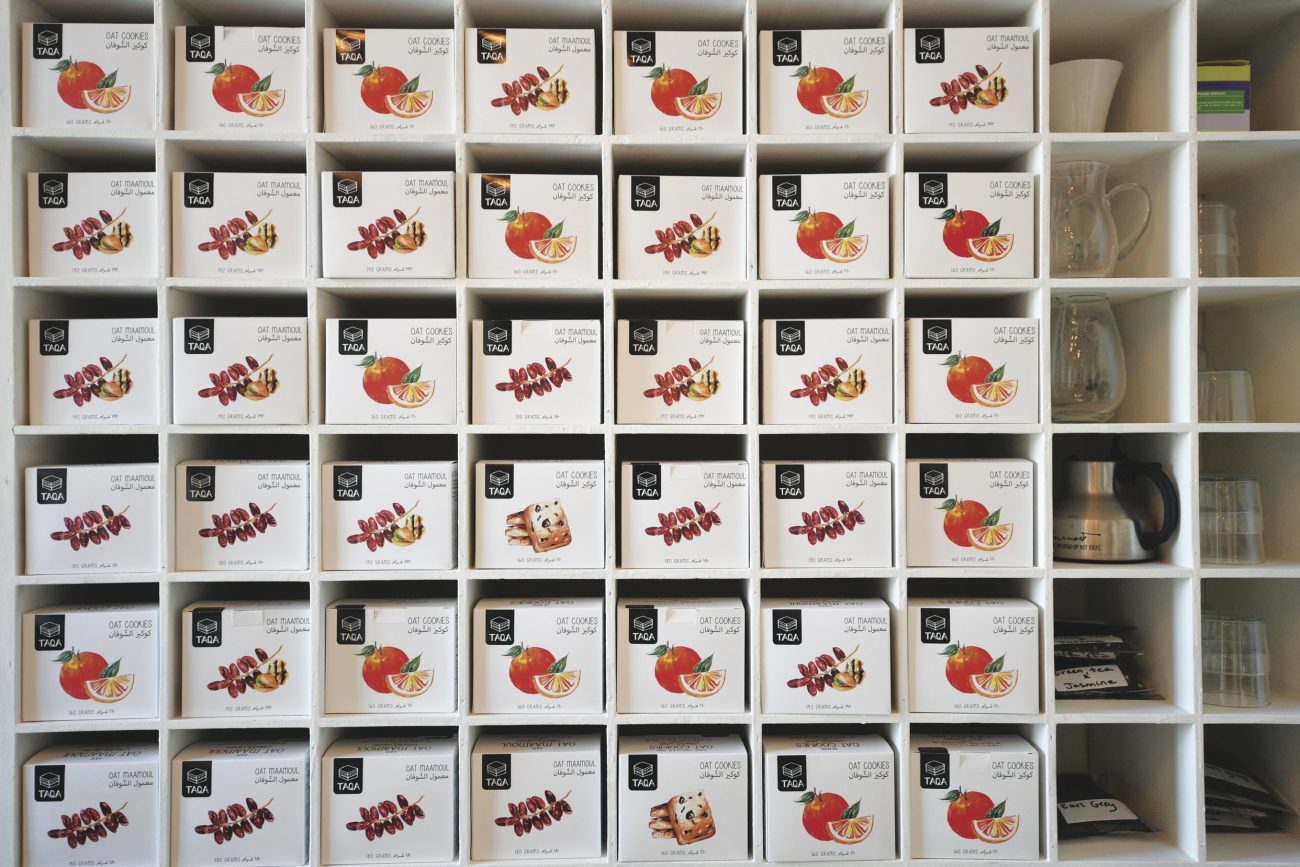
TAQA is a Tripoli-based wholesale bakery that produces and manufactures health snacks, such as cookies, maamoul, and dried fruit and nut bars. TAQA’s snacks are all wheat-free, GMO-free, palm oil-free, and vegan. We started out as an artisanal bakery called Bread Basket Square and progressively transitioned into a manufacturing facility with automated lines.

A business plan came eventually, but we certainly did not start out with one. Selling our cookies would prove to be a struggle, one that provoked self-ambition and discovery. It started with a farmer’s market, and a hunger for a food revolution. I wanted to give meaning back to a consumer good. I wanted the product to be transparent: What you see is what you get.

Today, only 10 companies control almost every large F&B brand in the world; these behemoths are dictating your diets and nutritional intakes with colorful packaging that is overwhelming on supermarket shelves.

TAQA is part of something different, and harder to achieve. As food becomes more specialized, branding is taking center stage. However, the more specialized food there is, the more costly supply chains will become; hence, mega food manufacturing facilities are on the decline. The more specific the food industry aspires to become, the tighter and leaner the manufacturing map will have to be.

Initiation to business

Two years ago, a normal day in my life included driving from Tripoli to anywhere from Barbir, Beit Mery, Corniche El Mazraa, Zouk Mosbeh, or Batroun, and back to Tripoli. Zapping morning radio shows, quick, stolen hellos, and senseless hours spent in traffic were my first experiences into distributing my products in the Lebanese market.

With sales routing came a sharpened mind and fine tuned observation. A quality, honest health snack at an affordable price was needed in Lebanon. With a focus on a fair and profitable business model and a three-year track record of proof of concept, I was ready to launch a proper manufacturing facility. Over time, the refined business pitch started bringing in funds, which facilitated my head-first dive into transitioning the product from niche market share to modern trade.

Help from friends and family, supportive suppliers, committed investors, and loyal customers are all sound pillars of TAQA. My initiation to a streamlined ‘business’ was the daunting task of proving myself.

Initiation to manufacturing

Running a manufacturing facility is about confidence and modesty. It is about balancing ambitions with the market’s potential, and relentlessly believing that the product will succeed.

Shifting from an artisan bakery to a certified ISO 22000:2005 manufacturing facility required no less than a culture shock. Implementing a food management system, training, procedures, regulations, traceability, and recruiting a dedicated team is an indefinite process constantly evolving. 

I believe skilled workers and simplified supply chains will eventually be the driving forces of manufacturing and, in the future, will replace outsourcing and low-cost mass labor. Small tweaks in our processing lines helped me and my team reach optimal scalability. As a manufacturing facility, TAQA is still on a learning curve and has much to overcome, but what is important is that procedures are in place to be able to absorb and adapt quickly to new changes.

TAQA as a living brand

I tend to define TAQA as more than a product: It is how we think. and how we share our product. Any output from the factory—be it a product or a photo on social media—is a true and genuine reflection of what we do. We are not a fan of generic material, packaging, or products. TAQA has dedicated itself as a brand to support many different communities in Lebanon, notably the athletic and outdoors community. I want TAQA to deliver an honest message about lifestyle and healthy snacking.

This has been a rollercoaster of a journey, with many milestones achieved along the way.  Having to tap into distinctively varied skillsets like sales and marketing, distribution, and production management; to getting deep into the nitty-gritty details of paperwork, pitching to investors, and acquiring a food-management system; and perfecting soft skills for customer service, as well as hiring and training employees have made this journey the most exhilarating one that renders you humble and appreciative of anyone that cares to do something of meaning in the Lebanese market place. 

January 10, 2018 0 comments
0 FacebookTwitterPinterestEmail
Industry & AgricultureQ&A

Food for thought

by Nabila Rahhal January 10, 2018
written by Nabila Rahhal

Executive sat with Mounir Bissat, secretary of Syndicate of Lebanese Food Industries, to talk about the challenges and opportunities in front of the agro-industry subsector experienced in 2017. 

E   What are the main challenges facing the industry sector in general, and the agro-industry specifically, in Lebanon?

The first challenge is instability in the country. The current situation [concerning Prime Minister Saad Hariri] is worrisome. Almost 60 percent of our exports are to Arab countries, so anything that endangers this relationship will backfire very badly on the industry sector as a whole and on the food subsector specifically.

In the Arab markets, the “made in Lebanon” [brand] has a premium for which consumers pay good money. The Lebanese agro-industry in these markets is well developed, because some of the big Lebanese companies have been present there for over 30 years, and put in a lot of effort and investment to establish their brands and presence in retail spaces in a professional manner.

It would be a pity to lose this work and these markets over the turbulence that is occurring now.

E   Have exports to Arab markets managed to overcome the hurdle of road closures due to the conflict in Syria?

Yes, we were able to adapt rather quickly and export through sea instead of land. The impact at first was on the pipelining, because it used to take up to 15 days to reach Oman, which is the farthest destination [we export to] by land, while today, by ship, it takes a month or 35 days.

This is not to [mention] that the paperwork and formalities at land borders are faster and more efficient than at seaports.

This all negatively affected the sector, but we persevered and continued. But until when? This is a big question mark, especially if the Arab markets are further affected.

E   Let us go back to the challenges facing the sector.

A challenge the industry sector suffers from—regardless of the political situation—is overhead and operational costs, which are very high in comparison to our competitors in the region.

Many of the traditional foods we produce are also made in other Arab countries such as Syria, Jordan, Egypt, Turkey, and Saudi Arabia. These countries have an advantage over us in that the industry sector receives government support and subsidies, which we don’t have in Lebanon.

The high cost of energy and of labor affect the competitive advantage of Lebanese exports in these countries.

If we want to talk about challenges in the agro-industry specifically, I think it is high time to invest in research and development (R&D).

E   Why are we not doing so already?

Eighty percent of companies in the agro-industry are [small and medium enterprises], and family businesses, so most of them to do not even have a R&D department; they cannot afford to invest in one.

It is true that Lebanon is excelling in developing high-quality food products, but to innovate on a traditional recipe or develop a new one is not easy.

E    But recently, we have seen more entrepreneurs in this sector modernizing traditional recipes or innovating them.

It’s happening at a small scale, but not at the industry level.

This is an essential need for the agro-industry to continue on the right path. We should invest in new products, or variations of the existing ones.

E   Does this innovation have to be done through an R&D department? Or are there other ways?

We can outsource it, because many universities in Lebanon have the research centers to do this. But up until now, we have not been able to formulate a link between academia and private food companies.

E    Why not?

Because it is expensive, and we cannot cover the costs if there are no subsidies or support. For example, the money companies spend on R&D is not tax deductible.

Also, the mindset of academia in Lebanon is not business-oriented, [where] internationally, the success of the food industry is due to collaboration between it and the research done in universities.   

E   What are the strengths of the Lebanese agro-industry?

The Lebanese agro-industry is export-oriented, which helps us survive the challenges mentioned. Regardless of the local economic situation, the market in Lebanon is small and exporting is natural for growth anyway.

What helps the export market is that the Lebanese diaspora and expats are spread around the globe, and they are the main consumers of our food products. Wherever expats are, they tend to establish Lebanese cuisine restaurants, and this automatically opens up markets for our food products.

The agro-industry is the subsector with the most diversification and diversification in export destinations, with around 70 destinations across the globe.

E   But doesn’t being consumed mainly by Lebanese abroad limit the market for our agro-industry?

Unfortunately, yes. Lebanese food across the world is still labeled as ethnic food and is mainly consumed by Lebanese and Arabs. Europeans and Russians who try Lebanese food in a restaurant love it, but they rarely buy Lebanese food products from a supermarket.

This is a challenge where R&D and marketing could play a role [in finding a solution]. Let’s take hummus bil tahini, which is an estimated $1 million market in the USA; Lebanon has less than 0.1 percent share of this market.

The role of R&D here would be marketing Lebanese products in a manner resembling the way that hummus has been marketed and exploited by other countries [that produce it].

It may be too late for Lebanon and hummus, but we could, for example, promote pomegranate molasses as a healthy salad dressing. If this is something we can achieve, it would be a great success story for the Lebanese agro-industry.

E   Who would be responsible for doing so?

It should be a joint effort with a team leader. The private sector has the dynamics for that but lacks the means. A task force should be created which includes research centers, agro industrialists, and the concerned ministries with a team leader.

But the question is: Who will the team leader be? The public sector will not accept that a member of the private sector be the leader, and the private sector’s confidence in the public sector is low.

E   Is the agro-industry reaching out to new markets?

The subsector achieves growth because the market is increasing locally and internationally, due to a trend toward Middle Eastern cuisine being perceived as healthy. This creates more demand for Lebanese food products.

However, as I said earlier, if we want to achieve real growth in the export markets, we have to go mainstream and not remain in the ethnic market. If we stay in the ethnic market, we will continue to grow in modest percentages. The international market has already become saturated and the foods we produce in Lebanon are now being produced internationally.We are competitive on quality and are well established in the international markets we are present in, but other countries compete with us on price.

E   What can be done to support this sector?

It’s high time the government develops an economic strategy and decides if they want Lebanon’s economy to be built on services or the banking sector or something else. Logically, all the pillars of the economy should be almost equally developed.

After the end of the [2006] war, factories that were not damaged resumed work the next day, while it took up to a year for tourism and services to recover. I am not saying that industry will contribute 60 percent to GDP, but if we are supported to reach 30 percent, it would solve many of the problems the government is suffering from today, such as unemployment, [low] foreign direct investment, [an unfavorable] trade balance, and [meager] cash flow.

Also, there should be some subsidies for the cost of production—especially the cost of energy. Factories in Lebanon buy fuel derivatives at market price, while all neighboring countries have subsidized rates. So you can imagine the difference in production costs. The government could also support the agro-industry with transportation costs and through legislation facilitating our work and reducing our expenses.     

January 10, 2018 0 comments
0 FacebookTwitterPinterestEmail
Industry & AgricultureWine Industry

Of reds, whites, and rosé

by Nabila Rahhal January 10, 2018
written by Nabila Rahhal

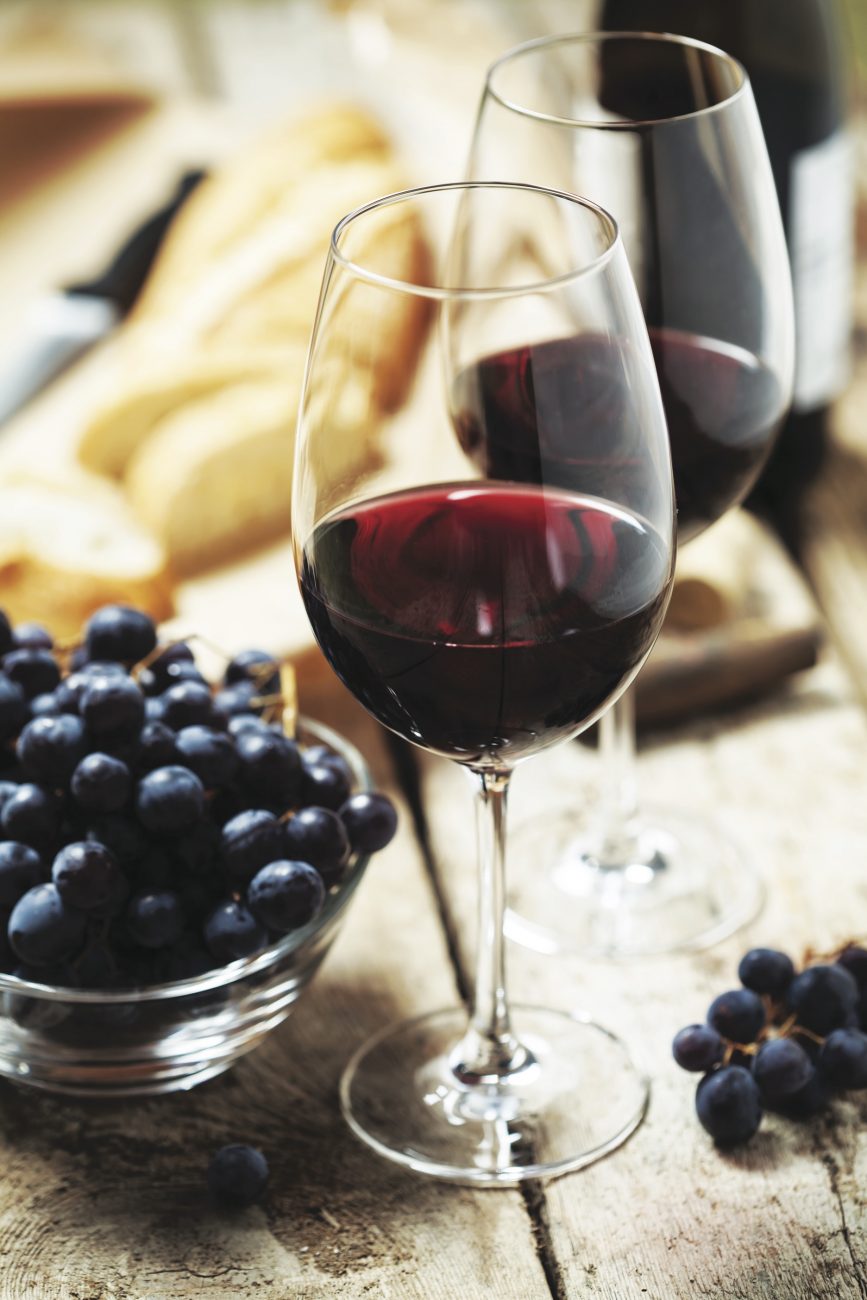
There is a lot to raise a glass to when it comes to Lebanese wine. 2017 saw several new wineries entering the market, with a few more slated to launch their first vintage in 2018, raising the total number of wineries to 49.

Demand for Lebanese wine has grown internationally as well, with over 40 countries indulging in it across the globe, as opposed to a decade or so ago. The popularity of local wines among Lebanese consumers is also rising as the enotourism trend has helped educate them about wine.

All the winery owners and managers that Executive spoke to said they had experienced growth in sales, markets, and production size. “Our market share grew to 40 percent—meaning 1.8 to 2 million bottles. Our premium portfolio is growing, and we’re appealing to more consumers,” says Dikran Ghazal, the general manager of Château Ksara.

Rise to fame

Exporting a portion of production is the natural path for agro-industrialists in a market as small as Lebanon. Lebanon has been doing so ever since the Phoenicians were shipping their wine off to nearby Mediterranean cities, but also more recently, since the late Serge Hochar took Château Musar to London during the Lebanese Civil War.

Wineries in Lebanon formed the Union Vinicole du Liban (UVL) in 1997, with the sole objective of “consolidating and building on Lebanon’s image as a wine producing country by highlighting its proud history and promoting its potential.”

As more wineries entered the market, it was understood that the only way to acheive growth was for  wineries to work together on promoting Lebanon as a winemaking country. As such, starting six years ago, the UVL began to aggressively promote Lebanese wine abroad through generic campaigns—such as the one done in the UK in 2012—and participation in international wine fairs, such as Megavino in Brussels and ProWein in Germany, under one pavilion named “Wines of Lebanon.”

The public sector has played its part in promoting Lebanese wine abroad, through the Ministry of Agriculture’s organization of the annual Lebanese Wine Day—the first edition of which was held in Paris in 2013. The Chamber of Commerce, Industry, and Agriculture of Beirut and Mount Lebanon also contributes an annual sum to the UVL, which supports its budget for international fairs and helps the smaller wineries who do not have a budget participate in these foreign exhibitions.

Sipping on the fruits of success

These efforts have paid off. “For five to six years, we’ve been [making] lots of noise everywhere, and since today, people are bored of drinking the same [types of] wine, they find Lebanese wine exciting. Also, Mediterranean food and wine is now a global trend, and this helps us,” explains Faouzi Issa, winemaker and co-owner of Domaines des Tourelles, adding that his wine entered new markets in 2017, including Malta, Côte d’Ivoire, the Dominican Republic, and Réunion.

In agreement, Ghazal says there are a number of reasons why Lebanese wine is getting the international recognition it deserves. “There have been efforts made by the wineries’ export teams, and over the years, these pay off. On the other hand, the quality of Lebanese wine is getting better every year, due to the climate and manipulation of the soil and [developments in] how we store the wine and harvest the grapes. Plus, there are more activities happening in key markets abroad, such as trade events and wine tastings, which [spread] the word. There is curiosity [among international consumers] for wines of the new world, and Lebanon has a history with wine which big companies like us work on developing,” says Ghazal, mentioning China as a booming new market this year for Château Ksara.

Some producers feel that the international consumption of Lebanese wine would further increase if there was additional government support or subsidies, like the support available in wine producing countries like Argentina, South Africa, or Chile. “The market is huge outside Lebanon: If we just add 20 percent to the notoriety of Lebanese wine abroad, we would all run out of wine. Our market share is increasing, but we’re moving in baby steps because we need government support; private investment alone cannot create international recognition,” says Hady Kahale, general manager of Ixsir, explaining that for Lebanese wine to truly succeed globally, it needs to build a name for itself out of Lebanese restaurants and ethnic markets.

All in a day’s work

Growing exports takes more than shipping the wines off in crates, says Ghazal. “You have to follow up and build relationships, and it’s quite an investment of time and money. Thirty to 35 percent of our budget goes to exports, and there are less margins in it, since prices are competitive internationally,” says Ghazal.

“It takes more effort than the local market because you need to travel and promote the wine in order to support your distributors,” explains Edouard Kosremelli, chairman and CEO of Château Kefraya, adding that the winery exports 40 percent of its production abroad.

To Issa, penetrating new markets where Lebanese wine is relatively unknown, such as the US, requires an investment of time and energy. “It’s been three years that I have been investing in the US market, and today, my wine is in 15 states, including New York. It requires a lot of effort and mobility, though, since you have to be there personally and consistently. They don’t know what Lebanon is, so you need to introduce the country, and what you’re doing, and then it snowballs,” he says, comparing it to the UK market, where Lebanese wine is already established and where, he says, Domaines des Tourelles is highly appreciated.

Nothing like home

Although Lebanese wine is widely acclaimed internationally, the same cannot easily be said for its popularity here at home. Lebanese consume two liters of wine per capita, according to those interviewed for this article, which is significantly lower, than, for example, the US, where consumption is 13 liters per capita.

Of those domestic consumers, many prefer foreign wine, assuming it is of better quality than the Lebanese—which frustrates Lebanese winemakers. “It’s unfair to say that imported wine is better than local wine because our grape varietals are largely French, our terrior is as good as Europe, if not better, and we have the right climate. The local market should appreciate this,” says Ghazal.

Kosremelli notes that if Lebanese wine was not of high-quality, it would not be so successful in export markets. “The more the consumer in Lebanon becomes wine-educated, the more they will see and understand that these are misconceptions. Our success with exports helps with the Lebanese market, since local consumers see Lebanese wines being promoted abroad. Also, the recent increase in wineries also helps increase consumption because it evokes curiosity,” he says.

To Ixsir’s Kahale, a generic campaign is needed to promote Lebanese wine locally. “The way forward is really working on the image of wine, both locally and abroad. I’m one of those who believe a generic campaign in Lebanon should be done, although it needs a time commitment from us. We have great wine, but people have preconceived notions about ‘made in Lebanon’ not being so good, which will take time to change. People have to know: We have some of the best wines in the world,” he insists.

Joe Assaad Touma, winemaker at Château  St Thomas, says the UVL is considering such a generic campaign. “As UVL, one of our aims is to promote Lebanese wine, not only abroad, but in Lebanon itself. We really have great wines that can compete with the imported wines that exist in Lebanon. We’re planning to promote this more as a generic campaign. At the same time, we try to encourage all restaurants to have at least half of their wine list be Lebanese. We can see this is improving, but still, there are [a] few restaurants that don’t have any Lebanese wine on their list, which is shameful,” he says.

Touring wines

The increasing popularity of enotourism in Lebanon goes a long way into promoting its wines. “Wine is about a way of life, and you have to meet the people who are making the wine to understand it—no wine producing region is successful without enotourism. When people visit our wineries, they see the level of sophistication we have in them, and they understand much more about wine. When they understand wine, they will consume Lebanese wine happily,” explains Kahale, noting that visits to Ixsir’s winery increased by 20 percent in 2017.

Kosremelli says Château Kefraya had a 7 to 10 percent increase in the number of visitors to its winery, explaining that more foreign visitors are now interested in such experiences and ask their tour operators to help them book enotourism excursions.

Château Ksara benefits from its 2000-year-old cave in attracting visitors who are interested in both history and wine. “We expect to close the year at 80,000 visitors. This is the case for two reasons: the brand is 160 years old and has a solid reputation where trust has been built, and no one has a natural cave like ours in Lebanon or in the world. Once people visit the winery, they almost always buy [our wines] because they see the story behind it,” says Ghazal, adding that their sales in the winery shop have increased by 20 percent in 2017.

Having a winery restaurant not only complements the enotourism experience, it also increases sales. “One year into our opening, Château  Khoury restaurant became and still is the biggest client for my wine. Most of the people who come here drink wine with their meal, and for us, this is the best way to promote our wine. Tourists who come to eat here buy wine from our winery shop and Lebanese do so during the Christmas period as gifts,” says Jean Paul Khoury, winemaker and co-owner at Château Khoury.

Wine-related activities such as grape harvesting also help consumers experience winemaking in an enjoyable way. “We have the harvest event that we have been doing since 2000. It’s getting more popular, and lots of people come on an annual basis. This year, we had around 200 people, mainly families. The idea behind it is to educate people on what it takes to produce a bottle of wine. People want to experience this and get involved in the process of winemaking. When they leave here, they appreciate more every glass of wine they drink because they know the labor that went went into it,” says Château St. Thomas’ Touma.

Lebanon clearly has the potential to take its place among the best global wine producing countries slowly, but surely, and with more governmental support. If anything is worth raising a glass to, that would surely be it. 

[media-credit name=”Ahmad Barclay & Nabila Rahhal” align=”alignright” width=”945″][/media-credit]

January 10, 2018 0 comments
0 FacebookTwitterPinterestEmail
Overview

Improving on tradition

by Nabila Rahhal January 10, 2018
written by Nabila Rahhal

Fall is peak season for Lebanon’s agriculture sector, as farmers are busy harvesting olives, grapes, apples, thyme, pine nuts and apples. These products are then used to make traditional goods such as olive oil, zaatar, jams, and syrups. Lately, a number of non-traditional goods, such as apple cider or chutney have been thrown into the mix, diversifying the market and adding potential to an industry that already has much to offer. While there is still room for growth, the sector has been held back by a variety of factors, notably the high cost of production, a lack of education in modern practices, and little government support. However, over the past few years, entrepreneurial agro-industrialists have managed to overcome these obstacles and produce innovative foods that bring dynamism to the sector.    

An important subsector

According to Mounir Bissat, the secretary of Syndicate of Lebanese Food Industries, agro-industry is a major subsector of industry. “Among the industry subsectors, agro-industry is the one with the most industrial establishments in Lebanon: There are around 960 companies working with food products in Lebanon. It’s the second[-largest] subsector in terms of exports, and the first in terms of added value, since the raw material used is grown or found in Lebanon,” says Bissat.

Agro-industry has an estimated workforce of 20,607 people and accounts for 25 percent of the industrial sector workforce, making it the biggest employer in the industry sector, according to the website of the government-run Investment Development Authority of Lebanon (IDAL).

The Syria effect

The ongoing crisis in Syria has had a mixed impact on the agro-industry. To begin with, according to Bissat, the influx of refugees at the onset of the war meant more mouths to feed, increasing demand for and consumption of food products in the local market. This meant that international NGOs working on food programs for refugees, such as the UN World Food Programme, bought from local retailers, spurring activity in the sector.

Moreover, Lebanon’s exports to Syria have increased during the war. According to IDAL, there has been  a compound annual growth rate of 27.3 percent in Lebanese exports to Syria between 2012 and 2016.

Bissat says Lebanon’s international exports also experienced a minor breakthrough as a result of the war: “When the crisis first started, many Syrian food factories were unable to produce. Our market share in the export market grew, due to demand from some Eastern European countries which used to import food products from Syria or Turkey,” recounts Bissat. But the growth was not sustainable in the long run, Bissat said, because the price of Lebanese goods was not competitive enough.

Despite these positive outcomes, the war had a negative impact on Lebanon’s agro-industry. “Later—because the presence of Syrian refugees in Lebanon was not regulated—it backfired on the agro-industry. Some of the Syrian factories reopened in Lebanon illegally, while the big companies reopened in Turkey, Egypt or Jordan, where there is better infrastructure, and we were not able to capture them and financially benefit from their presence,” explains Bissat.

An expensive enterprise

One of the main challenges facing the agro-industry is the cost of production. Land and labor in Lebanon is expensive in comparison to the rest of the region, while the cost of energy is through the roof. Bissat says that, while governments in the region support their industry sector—subsidizing the cost of energy, for example—Lebanon’s industry sector receives no such support.

Bissat says the cost of energy has an indirect effect on agro-industry as well. To illustrate this, he pointed to Soliver, which was Lebanon’s largest  glass factory until it shut down in mid-2017 because the cost of energy needed to update its equipment did not justify the investment into it. “Soliver asked for the government to subsidize its energy cost, and had it agreed to do that, it would have reflected positively on us in the agro-industry in that we would have been able to get our glassware for less, thereby decreasing our cost of production,” explains Bissat.

The need for innovation

Indeed, because of the high cost of production, Lebanese food products are higher in price than their counterparts in the region, reducing their competitiveness. To compensate for these high prices, Bissat says the industry could offer high-quality, innovative, and alternative food products.

While Lebanon has the high-quality part down, innovation—whether in product packaging and promotion, or in the production of new items—is still rather slow. Bissat says almost 90 percent of the companies in the agro-industry are family-run small and medium-sized enterprises with limited budgets, making it difficult to invest in modernizing traditional recipes or innovative design, explains Bissat. Nevertheless, he insists  that investment in research and development is a necessary way forward for the sector.

Frank O’Brien, Chief of Party of the Lebanon Industry and Value Chain Development (LIVCD) program in the United States Agency for International Development (USAID), agrees that such investment is key, but explains that the ongoing political uncertainty discourages most private companies or farmers from making additional investments, especially in non-essential capital.

However, he argues that such investments may be cost-efficient in the long-run. “Quite often, businesses are reluctant to invest, not knowing that in the short to medium-term, it can be more costly not to do so. The perceived savings [from] not investing can be lost in the future, when it’s not possible to supply a preferred product or crop of a certain quality or standard, thereby resulting in a downward spiral of reduced competitiveness,” O’Brien explains. The USAID-funded LIVCD  program aimed at improving Lebanon’s economic stability and providing income-generating opportunities for small business while creating jobs for the rural population, in particular women and youth according to their website- has supported the agro-industry sector in a variety of ways, including by co-funding modern equipment and needed supplies for factories, and working with farmers to modernize their growing techniques to improve quality and yields.

The LIVCD program is in its last year of implementation, and it is hoped that the support the program and other similar NGO funded projects has offered the sector will carry through in the years to come as the agro industry stands on its own two feet and considers investing into innovation at a larger scale.

January 10, 2018 0 comments
0 FacebookTwitterPinterestEmail
Numbers & figuresReal estate

Real estate

by Ahmad Barclay & Scott Preston January 10, 2018
written by Ahmad Barclay & Scott Preston

[media-credit name=”Ahmad Barclay & Scott Preston” align=”alignright” width=”620″][/media-credit]

[media-credit name=”Ahmad Barclay & Scott Preston” align=”alignright” width=”620″][/media-credit]

January 10, 2018 0 comments
2 FacebookTwitterPinterestEmail
DowntownReal estate

You can build it, but will they come?

by Scott Preston January 10, 2018
written by Scott Preston

Amid plots of unsold, multi-million dollar reclaimed land, on what was 30 years ago an uncontrolled garbage mountain rising from the sea, Downtown Beirut now features more completed buildings than cranes. However, the Beirut Central District (BCD) has been hit hard by stagnation in the real estate market that began in 2011. While projects launched at the beginning of the decade have been delivered or are nearing completion, sales ratios mean investors have still not realized gains.

Solidere, the company created by Parliament in 1991 and founded in 1994 to oversee rebuilding of the BCD, in the past handily published project updates throughout Downtown in its annual report, but the company’s most recently published review of yearly performance on its website is from 2014. Interviews and desk research, however, confirm that three residential towers on the western flank of the BCD were delivered in 2017: Beirut Terraces, the DAMAC Tower, and 3 Beirut, all launched in 2010. Other large-scale projects—such as the GC Towers south of the Martyrs’ Square statue, first announced in 2008, and District S, launched in 2010—are still at least 12 months from completion. The very ambitious Phoenician Village never broke ground, while the fates of the Landmark mixed-use project at the foot of the Grand Serail and Beb Beirut residential tower, just north of the ring-road on the Martyrs’ Square axis, are unclear. Meanwhile, Beirut Gardens—between Rafik Hariri’s burial site and the Virgin Megastore—looks closer and closer to completion, even as one contractor on the project still advertises a 2014 delivery date on its website.

But even as construction continues, the pace of sales for developers who bet big on BCD is still struggling to keep up.   

The good ol’ days

Since 2011, developers operating in the central district have struggled to attract clients to buy their properties. But times were not always so difficult. Following the summer 2006 war, Lebanon experienced an economic boom, and pent-up demand drove construction activity to heights not seen since the 1990s. From 2007 until 2010, developers built as quickly as possible, targeting the expensive tastes of Lebanese expatriates and foreign clients, based mainly in the Gulf.

“When the boom started in 2007, 2008, and extended until 2010, almost all of the supply was life-sized, luxury apartments because it was targeting the expatriates,” recalls Nassib Ghobril, chief economist at Byblos Bank. “People here, the developers, thought that every expatriate was a multi-millionaire that had a briefcase full of cash to throw at real estate. That’s what they saw. They built 400, 500, 600 square-meter apartments.”

Amid seemingly insatiable demand, a profusion of amateur developers entered the market, inflating the availability of housing in Lebanon. Speculators chased after these residential offerings, encouraging even more construction. Carlos Chad, managing director of Demco Properties says that a lack of professionalism and due-diligence during this period led to problems in the market later on. “There was an oversupply that was mainly due to the fact that a lot of pseudo-developers went, built buildings, and proposed a lot of units without making any [kind of] market study. [They] didn’t [investigate] the market to understand what was the real need, what was the purchase power, what were the budgets, what were the sizes,” explains Chad.

[pullquote]Clients from the countries of the Gulf Cooperation Council (GCC) were some of the first to lose their investment appetites[/pullquote]

The good times proved to be short-lived. Clients from the countries of the Gulf Cooperation Council (GCC) were some of the first to lose their investment appetites. Nimr Cortas, a co-founder of Estates, says that he noticed a downturn in foreign acquisitions as early as 2009 when oil prices fell, impacting wages in the Gulf. This coincided with tension in the relations between Lebanon and the GCC over Iranian influence in the country, which alienated even more non-Lebanese clients.

Then, in 2011, uprisings throughout the Middle East eventually took root in Syria, pushing the Lebanese economy into a uniquely long period of economic stagnation. Wary of the investment climate in Lebanon, expatriates curbed their purchases in the country. This put many of the developers in the BCD area in a bind. Previously, development companies tended to acquire land with liquid capital and then finance the construction of their products with presale revenues. When turnover slowed down developers had to find alternative methods of paying for the completion of their projects. As a result of the crunch on liquidity very few new buildings have been initiated within Downtown, and progress on projects launched before 2011 has been slow, with developments taking five or more years to complete.

Thousands of unsold units

The legacy of the boom years today is an overabundance of luxury residences in the downtown area, often with a price tag over a million dollars. Ramco Real Estate Advisors estimates that there are now 3,600 unsold apartments in the BCD alone. The excess supply has forced property owners to reduce their margins and offer discounts of 20 to 40 percent in order to move their inventory.

In recent years, several large buildings have been delivered and others are near completion in the downtown area. Most projects of this generation were started just before 2011 and were therefore able to capitalize on the final months of the boom period. The timing meant developers could collect presale revenues that helped make the projects economically viable. Still, these purchases were generally well below the approximate 60 to 70 percent sales ratio that is required before developers begin to turn a profit on their investments.


The case of the luxurious GC Towers, near the Mohammad Al Amin mosque, aptly demonstrates the difference a few years time can make. When the project was launched in 2009, Ghada El Khatib, COO of Plus Holding, reports that 40 to 50 percent of the apartments—between 6,000 and 10,000 square meters—were quickly bought up. However, the discovery of ancient ruins on the site required that construction be halted until the Department of Antiquities secured the artifacts on the ground. By the time the project was resumed years later, the market had turned and many investors pulled out. “We have sales yes, but not like [before 2011] because of the stopping of the project. If the project didn’t stop, we could have been sold now 100 percent.”

Eying delivery dates one and two years down the road, Khatib says that the towers still have a long way to go before they begin to generate profits as only 55 and 60 percent respectively have been bought up. “We have to continue what we have started, even if we have a shortage of money. We need to deliver because there are many people who need to be given their apartments. It’s not about revenues, it’s about credibility.”

Several recently completed developments in the BCD area managed to sell out completely prior to 2011, according to Mohamad Sinno, managing director of Vertica Realty Group that consults with companies operating in Downtown—including the Platinum, Marina Towers, and Karagulla buildings. Benchmark’s Beirut Terraces and 3Beirut by SV Properties and Construction, are currently being handed over to clients and are believed to have sales ratios of between 50 and 70 percent.

Where are the people?

As for occupancy rates, Carlos Chad, says many developers are moving into office construction to diversify their portfolios and hedge against stagnation in the residential market. “In Solidere it happened a lot because there was an oversupply, and the other problem was that Solidere was becoming a ghost city because a of lack of investors, the locals couldn’t afford it, only the expats could afford it. The wealthy expats who come once or twice a year. So you have 50 weeks of vacancy, so it’s a dead city.”

While much of Solidere’s Downtown sits uninhabited, property taxes and service fees eat away at developers’ revenues. In 2017, Sinno noted that a number of new service companies are making their way into the downtown market and are helping reduce the cost burden on vacant units. “Before, it was a monopoly in Solidere. Now you see new players coming into the market, which means competition, which [also] means better prices. So it’s changing a bit,” says Sinno.

On the whole, both developers and consumers have grown increasingly indebted to banks since 2011 through building and purchasing accommodations. “Their [banks’] exposure to the sector has increased during the previous years, and if you measure it by, say housing loans plus construction loans, their exposure to the real estate is about 40 percent of the whole credits to the private sector,” according to Marwan Mikhael, head of research at Blom Bank.

A controversial solution

In an attempt to house some of the real estate sector’s non-performing assets Estates’, Cortas, along with colleague Massaad Fares, are attempting to launch a billion-dollar investment fund. Intending to make use of a 2016 central bank circular, they hope to attract enough capital to launch the fund within a couple months.

Yet many economists remain skeptical about the feasibility of the fund and its implications for the real estate market. “These are not distressed properties simply because they are vacant, and there is no demand for them,” says Ghobril. “[It] is distortive to the market, in my opinion. What prices will they pay? How much will they have leverage over the developer? How will that affect other segments of the residential real estate? And the other question is: Are they going to be able to raise one billion dollars?”

With or without the fund, much of the BCD will remain as it is today: abandoned. For most Lebanese who cannot afford to live in the area, the downtown lost its only appeal in 2015 when garbage protests and the ensuing security crackdown led to the closure of bars and businesses along Uruguay street and in Place de L’Etoile. Despite the modern structures, high-end retail, and luxurious apartments, a nighttime stroll through the area shows that, while the Downtown may have been built, the lights still are not on.

January 10, 2018 0 comments
0 FacebookTwitterPinterestEmail
OverviewReal estate

A long time since the boom

by Scott Preston January 10, 2018
written by Scott Preston

Going into 2017, real estate stakeholders were riding a wave of optimism spurred by the end of a nearly three-year presidential vacuum and the formation of a unity government. After several years of market stagnation, developers willed themselves to believe that consumer confidence would be restored and residency uptake would finally resume. Buyers were also hopeful that political stability could improve the economy and enhance the investment climate. Yet the enthusiasm proved to be a setup for collective letdown as 2017 quickly became another disappointing year for the real estate sector.   

Shortly after the appointment of a cabinet, Parliament turned its attention to increasing both public sector salaries and state revenues via the imposition of new or increased taxes and fees. A number of these fiscal measures targeted the real estate sector, increasing the price of each ton of cement and applying a 15 percent capital gains tax on secondary residences. For developers who were already struggling to maintain profit margins amid an economic downturn, the timing could not have been worse.

“We were really optimistic about 2017 because we had a president … [and] we have a new law for elections, plus we felt there was potential in the last quarter of 2016. So this is why we wanted to finish our [projects] in order to prepare for 2017,” says Ghada el Khatib, COO of Plus Holding. “Unfortunately, the government doesn’t help in any sector … You know it’s like they act like our enemy, not our supporters,” she explains, referring to the new tax regime.

According to the Byblos Bank/AUB Consumer Confidence Index, end users in Lebanon are feeling more positive overall compared to the monthly average in 2016, although the sentiment has not been sufficient to substantially boost sales amid consumers’ high expectations for 2017. Throughout the year, the tax law persistently weighed on consumer appetites. Parliament’s discussion of the law alone caused confidence to decline four months in a row from January to April. The largest drop was noted in July when the index tumbled 13 percent after the tax law was passed.

Rush to register

While Executive was unable to compare this year’s sales transactions figures from the Central Administration for Statistics (CAS) to its existing data set (as the numbers have yet to be released), statistics from the General Directorate of Land Registry and Cadastre (LRC) appear at first glance to contradict the dismay expressed by industry professionals. According to LRC figures cited in a report by Bank Audi, there was a 15 percent year-on-year increase in real estate transactions from January to July.

It is doubtful that the number of transactions is actually reflective of a significant recovery in market activity, however. Transactions are tallied using property registrations, and buyers in Lebanon are able to defer these registrations for several years. An official at the LRC explained that many buyers were pushed to register their properties in 2017 due to a rumor that the government would hike registration fees, thus accounting for the uptick that otherwise suggested a sales surge no developer has reported.

Although the fee-hike rumor proved to be false, it was based on a real change in the registration process. Following the implementation of the new tax law, buyers can no longer delay paying the entirety of their registration fee by holding off on registering the purchase. The new law says buyers must pay 2 percent of their asset’s value immediately, regardless of when they register it. This misunderstanding likely caused a surge of registrations for properties that were acquired in previous years before title deeds were turned over.

[pullquote]We were really optimistic about 2017 because we had a president[/pullquote]

With the exception of sales transactions figures, most real estate sector indicators showed little change. When changes were identified, they often reflected a downward trend. For example, cement deliveries fell by 105,626 tons to 3,787,589 from January to September of this year compared to the same period of 2016. This may point to reduced building activity, although cement production operates somewhat independently of the real estate sector and includes infrastructure projects, as well as exports.

More telling is the decline in the number of issued construction permits as compiled and published by Banque du Liban (BDL), Lebanon’s Central Bank, which decreased 5.4 percent to just over 10,000 in the first nine months of 2017, compared to the same period in 2016. The total area covered by construction permits was also down by 3.2 percent in the first nine months of 2017, compared to the same period in 2016, putting the total decline of permit area at 31 percent since 2011. As real estate projects that broke ground nearly 10 years ago finish up around the country, developers are finding it harder to finance new developments under the strain of dwindling liquidity. According to Karim Makarem, director of RAMCO Real Estate Advisors, challenging market conditions are even inhibiting the sale of land.

“The newest trend is that developers are not buying land in 2017. There are very few developers out there looking to build new projects. I suppose that’s an important thing to say, whereas in the past you’ve always had some developers out there in the marketplace looking to identify lands for development. Now, not all, but most of those looking to buy land are investors looking to buy discounted land,” he says.

Advantage: buyer

Since 2011, local buyers in need of new housing were fueling demand. For these prospective buyers, budget tends to be the determining factor in their acquisitions. Indeed, Bank Audi noted a “flurry of apartments/studios below 150 square meters” coming onto the market in 2017, representing a strategic pivot to smaller units that developers made when the slump started.

“There hasn’t been much change in the dynamics of the residential real estate sector in Lebanon in 2017,” explains Nassib Ghobril, chief economist at Byblos Bank. “The sector, generally speaking, is still stagnating. The only active segment of that sector is the small-size apartments, 150 square meters and below, and the demand is coming from people who qualified for the Public Housing Corporation [subsidized] mortgage package. That’s about it. Basically that’s what’s driving demand for residential real estate in the country.”

[pullquote]Developers are finding it harder to finance new developments under the strain of dwindling liquidity[/pullquote]

And while official asking prices for residential property have hardly budged since 2011, RAMCO, which tracks the price of developments in municipal Beirut for projects starting at $3,000 per sqm on the first floor, calculated a drop of only 1.7 percent in 2016 with a similar decrease of under 2 percent expected in 2017. In reality, developers are being forced to offer large discounts in order to sell their stock.

Marwan Mikhael, head of research at Blom Bank, explains, “Starting with the downturn in 2012 until now you will have a decline in prices depending on where you stand. For me, the market, you have to divide it into the luxury market, the middle market, and the low market. In the luxury market, you have a decline of 30 to 40 percent in price since 2012 until now. In the middle you have between 15 and 25 percent decline, and on the low side, you have 10 to 15 percent.”

Shifting strategies

Amid low consumer confidence and a growing quantity of housing at ever cheaper rates, prospective buyers are not in any rush to make housing purchases. In response, developers are experimenting with a range of coping strategies to survive this period of economic stagnation. Mohamad Sinno, managing director of the real estate consultancy Vertica Realty Group, says that one of his clients has introduced a lease-to-own arrangement at the Beirut Terraces. Demco Properties is also considering a similar option whereby renters would pay 5 percent of the apartment’s value to put a hold on the residence for a rental period of up to three years. Later, if the tenant decides to purchase the unit, 50 percent of the accumulated rent would be deducted from the final sales price. This arrangement could help developers attract buyers without the negotiation of hefty discounts that cut into their margins.

Other companies are putting their hopes in other markets altogether. Khatib says that Plus Holding is looking to finish its current projects as soon as possible while expanding outside of Lebanon. “We are trying to get new markets, like in Cyprus and Greece. We are mushrooming outside the country because Lebanon for us is our country, we have to keep a good reputation, a good quality, a good service. But is it a profitable country? No it’s not, unfortunately,” laments Khatib. “Do you want to invest more in this country for the time being? No.”

The government is also attempting to stimulate investment in the sector through an initiative by BDL, in conjunction with the ministry of foreign affairs. Together, these institutions are reaching out to Lebanese expatriates with high purchasing power by introducing a housing loan tailored specifically to them. The so-called expat mortgage allows Lebanese residing outside the country to borrow at a 2 percent fixed rate for up to 30 years.

For now, it is too early to tell how impactful the expat mortgage could be. Subsidized housing loans for resident, first-time homebuyers enabled by BDL have been keeping the sector afloat since 2012. Ghobril notes that the value of mortgages has nearly tripled since 2010, from $4.5 billion to $12 billion at the end of 2016. In 2017, the number of outstanding mortgages is thought to be around 125,000.

Fourth quarter lending may be diminished due to confusion surrounding the disbursement of the central bank’s subsidies. Several economists and industry stakeholders interviewed by Executive said the central bank had instructed commercial banks to suspend lending at subsidized rates until early 2018. This was said to be due to the central bank maxing out its budget for subsidies early in the year. An official at the central bank contradicted this notion, asserting that all subsidized mortgages were frozen for two weeks starting on October 5. On October 20, the Public Housing Corporation reintroduced its loan at a 3.6 to 3.8 percent interest rate. The expat mortgage, and another loan subsidizing office space for SMEs, were switched from lira to dollars. According to the official, all other subsidized mortgages are currently being approved.

For the most part, developers are ready to put 2017 behind them, while trying to remain optimistic about a Doha Accord-style u-turn in the upcoming year. However, industry professionals acknowledge that the surprise resignation of Prime Minister Saad Hariri stalled what little momentum had been achieved prior to November. With political jostling still unresolved, the light at the end of the tunnel remains a distant dream for Lebanon’s real estate sector.

January 10, 2018 0 comments
0 FacebookTwitterPinterestEmail
BusinessNumbers & Figures

Banking & finance

by Ahmad Barclay & Thomas Schellen January 9, 2018
written by Ahmad Barclay & Thomas Schellen

[media-credit name=”Ahmad Barclay & Thomas Schellen” align=”alignright” width=”620″][/media-credit]

[media-credit name=”Ahmad Barclay & Thomas Schellen” align=”alignright” width=”620″][/media-credit]

[media-credit name=”Ahmad Barclay & Thomas Schellen” align=”alignright” width=”621″][/media-credit]

[media-credit name=”Ahmad Barclay & Thomas Schellen” align=”alignright” width=”620″][/media-credit]

January 9, 2018 0 comments
0 FacebookTwitterPinterestEmail
Business

Corporate governance

by Zeina Zeidan January 9, 2018
written by Zeina Zeidan

Corporate governance in the Middle East and North Africa (MENA) has been insufficient and is preventing corporations from fulfilling their economic potential. Corporate governance is crucial when companies seek to attract new shareholders and optimally mobilize sources of capital, but publicly traded companies in the region are not only lagging behind developed economies in terms of corporate governance, but also behind many emerging markets.

Transformations of corporate management culture have recently commanded a great deal of attention in international business literature. One particular focus  is the optimization of corporate boards through the increased inclusion of female board members.

It is in the area of female participation in corporate governance, so on the board of directors, that companies in the MENA region face particular shortfalls, which has unfavorable implications on corporate governance culture throughout the region. Globally, women account for only 12 percent of board seats among the world’s largest companies, and 13.4 percent of directors in developed markets, versus 8.8 percent in emerging markets, according to data from MSCI, a global equity indices compiler. But despite this low target, in the Middle East, fewer than 2 percent of board members are women, according to Bloomberg figures.

If a correlation between the low adoption of corporate governance and low rates of women on boards is drawn, corporations in the MENA have the opportunity to kill two birds with one stone by simultaneously improving their corporate governance practices and establishing policies to increase the number of women serving on boards. There are sound reasons to do both, for corporate culture and overall performance alike.

Family business

A primary reason for the slow pace of corporate governance reform in the region is that the majority of businesses are either family-owned or small- or medium-sized enterprises. These companies tend to hire from within, especially for top positions, rendering it difficult to maintain independent and transparent governance.

By definition, corporate governance is the system by which companies are directed and controlled. It hinges on how the company’s board of directors and upper management communicate with its shareholders and stakeholders.

With proper governance, any organization would be transparent and accountable for every decision it makes. This fosters a healthy and symbiotic environment. Inversely, weak corporate governance permits waste, corruption, and mismanagement due to a lack of accountability. The more transparent and forthcoming the organization is about its actions, the more amicable the relationship can be between management and shareholders.

Sound corporate governance requires supervisors who are responsible for constantly reviewing and reevaluating all of a company’s processes and regulations. In the case of any errors or mishaps, they are required to instigate proper changes that will prevent such issues in the future, and make them less harmful to overall profit and performance.

These practices should be made clear to all stakeholders, and any change needs to be promptly reported. The shareholders also hold the right to question any reforms the company implements, or new projects it undertakes, to ensure that such ventures do not have negative impacts on internal or external stakeholders.

There are many benefits for cohesive corporate governance at multiple levels. For a company, it eases access to external capital, bolstering its competitive edge. In the case of family-owned organizations, the distribution of power and capital is very clear, which lessens the possibility of conflicts erupting between family members. The latter is crucial to attract new investors and placate those who are already established. Internally, it will create a transparent feedback mechanism that will root out any weak operations that are compromising productivity.

Properly implemented and transparent corporate governance often attracts shareholders, who are more likely to invest if they have access to all the information regarding the spending of their money as well as the projected success. Furthermore, sound governance will encourage present shareholders to support further expansion into new projects and products that will develop the company and help it remain competitive. This cannot be achieved unless the shareholders are being routinely updated with all the latest findings and regulations that are implemented.

Numerous empirical studies have shown that investors are significantly  more likely to invest in a well-run organization than in a poorly-run one. The corporate value of any organization will be bolstered and subsequently add value to the economic status of the nation.

Including women on corporate boards is a crucial way to improve corporate governance. Studies by international accountancy groups Deloitte and EY have shown that investors and shareholders increasingly see the value of gender balance in businesses, and that shareholders care about the gender composition of boards.

Women on boards

Importantly for the bottom line, a 2016 Organization for Economic Co-operation and Development (OECD) report, citing McKinsey, showed that companies with women on executive committees outperformed those without women in leading positions, bringing in an average of 47 percent more return on equity and 55 percent more earnings before interest and tax.

Findings from narrow market segments—such as listed Fortune 500 companies in the United States—that show improved bottom-line performance of companies empowering women strongly across various levels of decision-making are difficult to extrapolate to international markets. However, an analysis carried out a few years ago by the Peterson Institute for International Economics on 21,980 firms in 91 countries indicated that including women on boards may improve corporate performance, “with the largest gains depending on the proportion of female executives.”

The OECD, which is championing corporate governance, has issued a recommendation on gender equality, advising that jurisdictions “encourage measures such as voluntary targets, disclosure requirements and private initiatives that enhance gender balance on boards and in senior management of listed companies, and consider the costs and benefits of other approaches such as boardroom quotas.”

Introducing quotas to get more women on boards has been proven to be effective. In France, for instance, once a quota was introduced in 2011, the share of women on boards went from 10.7 percent in 2009 to 33 percent in 2015, while there was an 18 percent increase over a similar period in Italy.

Yet despite such progress there is still a seemingly widespread belief that women are not qualified to be on boards. This argument does not hold up to reality. The number of women in higher education outstrips the number of men in Lebanon, as well as in many MENA countries, while in the Lebanese banking sector, women account for 47 percent of all employees—certainly a large enough pool of talent to draw upon. What is holding back women from being on boards is not qualifications but experience. To have that experience, women need to be able to move up the ladder and break through the glass ceiling. That requires a mindset change in corporate culture.

Among family-owned businesses especially, a dual-track approach to corporate governance and increasing female participation in management and boards in the MENA should be encouraged. As the MENA region starts taking corporate governance more seriously, governments, regulators, and institutions should seriously consider adopting the OECD “Recommendation on Gender Equality” to boost the number of women on boards.

January 9, 2018 0 comments
0 FacebookTwitterPinterestEmail
  • 1
  • …
  • 92
  • 93
  • 94
  • 95
  • 96
  • …
  • 685

Latest Cover

About us

Since its first edition emerged on the newsstands in 1999, Executive Magazine has been dedicated to providing its readers with the most up-to-date local and regional business news. Executive is a monthly business magazine that offers readers in-depth analyses on the Lebanese world of commerce, covering all the major sectors – from banking, finance, and insurance to technology, tourism, hospitality, media, and retail.

  • Donate
  • Our Purpose
  • Contact Us

Sign up for our newsletter

[contact-form-7 id=”27812″ title=”FooterSubscription”]

  • Facebook
  • Twitter
  • Instagram
  • Linkedin
  • Youtube
Executive Magazine
  • ISSUES
    • Current Issue
    • Past issues
  • BUSINESS
  • ECONOMICS & POLICY
  • OPINION
  • SPECIAL REPORTS
  • EXECUTIVE TALKS
  • MOVEMENTS
    • Change the image
    • Cannes lions
    • Transparency & accountability
    • ECONOMIC ROADMAP
    • Say No to Corruption
    • The Lebanon media development initiative
    • LPSN Policy Asks
    • Advocating the preservation of deposits
  • JOIN US
    • Join our movement
    • Attend our events
    • Receive updates
    • Connect with us
  • DONATE