• Donate
  • Our Purpose
  • Contact Us
Executive Magazine
  • ISSUES
    • Current Issue
    • Past issues
  • BUSINESS
  • ECONOMICS & POLICY
  • OPINION
  • SPECIAL REPORTS
  • EXECUTIVE TALKS
  • MOVEMENTS
    • Change the image
    • Cannes lions
    • Transparency & accountability
    • ECONOMIC ROADMAP
    • Say No to Corruption
    • The Lebanon media development initiative
    • LPSN Policy Asks
    • Advocating the preservation of deposits
  • JOIN US
    • Join our movement
    • Attend our events
    • Receive updates
    • Connect with us
  • DONATE
Riad Salameh and the Lebanese flag
LeadersPresidential Election 2014

The right choice for president

by Executive Editors May 5, 2014
written by Executive Editors

Across all types of societies and political systems, the objective of choosing a leader is to designate the best person for the job out of a pool of eligible candidates. This pool can be as small as a family or as large as a country, while the selection process can be broad or extremely narrow.

For many historical reasons, Lebanon is unusual among modern republics in its handling of presidential elections. Although the constitution mandates that only “merit and competence” shall fundamentally guide the eligibility of candidates, the political truth in 2014 remains that only male Maronite Christians constitute the pool of acceptable candidates for the presidency. Moreover, the opaque nature of the selection process is such that many Lebanese are convinced the president is chosen by foreign powers and merely rubberstamped by the Lebanese Parliament.

In the long run, the health of the Lebanese democracy requires more citizen involvement in the deliberations on who is the best person to be the next president of Lebanon. Statements by professional politicians that no foreign ambassadors or governments must play a role in the presidential election are not enough. Only if local stakeholders involve themselves constructively in this discussion can foreign influence be removed from decision-making. Similarly, the safety and prosperity of the country require a president who can be a model of integrity and a credible symbol of national unity.

For this reason, candidates that were directly implicated in the vicious 15-year civil war should be dismissed. Free Patriotic Movement leader Michel Aoun, Lebanese Forces chief Samir Geagea and Marada head Suleiman Frangieh have each spilled too much blood to be seen as a legitimate representative for all of Lebanon. Even if one can forgive sins of the past, these associations are clearly obstacles that stand in the way of focusing on the job at hand.

Most fundamentally of all, the holder of the office needs to have a deep understanding and competency in regard to the economy. The country’s business leaders are either fleeing or suffering, national productivity is static and much of the population remains in desperate poverty. The economy must be the new president’s priority.

As such, even if the candidates mentioned above had not been militia leaders, none would have been a serious choice as they all have poor records of successful economic management. All have faced allegations of malpractice, while they have done little to reshape the failing Lebanese state.

Of those who remain, a number have the potential to do an honest job. Former Minister of Interior Ziyad Baroud has shown himself economically competent, while he has a long track record of commitment to transparency and civil society. As Lebanon still lacks political parties where aspiring young people can prove themselves and acquire skills for moving into political leadership, it is encouraging to see that civil society is increasingly fulfilling this function.

Yet Baroud’s experience as a minister was ultimately a frustrating one, with him often proving unable to manage those who really hold the power in the country. Too often, well-meaning schemes would be derailed by those more used to winning the Lebanese political game. Baroud eventually opted to resign, rather than allow his authority to be compromised by these influences. His unwillingness to play the game over principle signals that he is not yet ready for the realities of political life in the country. 2020 may be a more realistic goal.

Some other personalities, such as the banker Joseph Torbey, the consultant Roger Dib, the diplomatic Jean Obeid and the engineer Henri Helou also have decent qualifications. However they are either too little known or too powerless to take on the top job.

The one candidate with the ability to reassert the position of the presidency is Riad Salameh, governor of Lebanon’s central bank for over two decades. This is not merely the opinion of this magazine, but that of the Lebanese populace. A new poll conducted by Ipsos puts him as the top candidate for the Lebanese economy.

The people have got it right for several reasons. As governor of the central bank, Salameh has demonstrated  uncanny skill in maintaining the Lebanese currency and monetary policy during periods of economic crisis. At the same time, his stewardship of the financial sector has been a testimony to foresight, and his focus on sound fundamentals has kept the Lebanese out of perilous adventures that drowned numerous lenders in other jurisdictions.

There can be no doubt that Salameh has kept his ear to the pulse of the Lebanese economy with greater continuity and regulatory efficiency than any other elected or appointed official in the past twenty years. In 2013 and again in 2014, he stepped up and took the initiative to create two economic stimulus packages. While these packages may not have produced perfect results, their overall impact was clearly beneficial, and they included measures that the central bank governor initiated during times of need when political institutions were suffering paralysis. More often than not over the past twenty years, when the country’s politicians have fought themselves into a stalemate, Salameh has stepped in to keep the country from collapse. Sometimes, he has appeared to be the prime minister, the minister of economy and the minister of finance at the same time.

On the political side, Salameh is not identified with a strong political interest or partisanship. Likewise he is also not impaired by associations with the violent past of the civil war years.

While it is up to the Lebanese Parliament, through the constitutional institutions, to select a president without consideration of foreign interests, it is paramount that the head of state be the person most qualified to represent Lebanon’s dignity and interests in the global political arena. Riad Salameh could embody this role. As a regular participant in the international meetings of the World Bank and International Monetary Fund, he is, importantly, experienced at the highest levels of international negotiations on the global economic and structural approaches to solving the Middle East crisis that is still unfolding around Syria. In these international discussions and political negotiations, Lebanon urgently needs a representative who can stand up to the big power players. As the country seeks to pick itself up and move forward again, Salameh offers the best hope of making Lebanon a true partner in the international community rather than a puppet of greater powers.

There are some issues — not least the potential loss to the central bank Salameh’s move would cause. Ensuring a smooth transition in that role is key. In addition, the Lebanese constitution states top government officials cannot be elected president unless they resign two years before the election. In theory, this rules out Salameh, but this law has been lifted before — most recently for current president and former army chief Michel Sleiman.

Lebanon does not require a superman, or a savior. It needs the most professionally qualified person for a challenging and often unappreciated position. Salameh is clearly the man for the job. He must make himself available and Parliament should vote him in.

May 5, 2014 2 comments
0 FacebookTwitterPinterestEmail
Chart: Net effect of presidential contenders on economy
Economics & PolicyPresidential Election 2014

Who’s best for the economy?

by Thomas Schellen, Joe Dyke & Benjamin Redd May 5, 2014
written by Thomas Schellen, Joe Dyke & Benjamin Redd

As Lebanon’s politicians continue to horse-trade behind closed doors over the country’s next president, it is worth considering the views of perhaps the most regularly forgotten set of people in the country — its citizens.

Chart: Lebanese want an independent president

Executive, together with polling agency Ipsos, carried out a survey of 1501 citizens from across the country on whom they want to see in Baabda Palace by the end of this month. The aim was to get a deeper understanding of their dreams and expectations for the president of the republic, and in particular who they thought would be the best candidate to steer the country through tough times both economically and politically.

Perhaps unsurprisingly for a deeply polarized country, there was little consensus: Those polled mentioned the names of  more than 30 Maronite Christians — by convention the only sect allowed the presidency. Yet when asked, “Which Maronite figure would you personally have as next president of the Lebanese Republic?” the most common response was “I don’t know.”

A consensus point was the future president’s political affiliation. Nearly three-quarters of respondents want an independent president; just 16 percent and 11 percent said they would prefer a president from March 8 or March 14, respectively.

Chart: How influential is the president on the economy?

Beyond this, there were certain other themes that could be detected from the survey. First among these is that for the sake of Lebanese democracy there must be a new president by the May 25 deadline. Only 3 percent of those surveyed said they would prefer to extend the mandate of President Michel Sleiman if no deal was reached by that date. While 63 percent said the elections must go ahead in all circumstances, 34 percent said they would prefer a cross-party consensus on a candidate.

Similarly, there was a common belief that the president has a strong influence on the economic fortunes of the country. Nearly four out of five Lebanese see the future president as a person with an important influence on the economy. Those answering affirmatively were then asked whether they felt the president affected the economy directly, indirectly or both. This was an important question because there is only one correct answer: By law and practice, especially since the Taif Accords shifted power from the office of the president to that of the prime minister, the president has no direct impact on the economy; his influence is solely indirect.

Most answered the question incorrectly: 72 percent of the 1,184 people asked answered either “directly” or “both.” Just 337 respondents gave the correct answer.

Chart: Presidential characteristics

The survey went on to ask, “What characteristics should the future president have?” as an open-ended question. Four traits stood out: strong personality, prioritizes Lebanon, honest and impartial. Beyond these general characteristics, second tier criteria included: economic experience, being respectful, negotiation skills, political experience and a high level of education.

When discussing this issue further, there was an element of consensus that one candidate would be the best for the economy — Riad Salameh. The governor of the central bank was clearly the most popular candidate when asked: “Who would have a positive economic impact as president?” When questioned specifically about Salameh’s potential impact on the economy if he became president, 75 percent of respondents said he would have either a highly positive or somewhat positive effect. While former interior minister Ziyad Baroud received 73 percent, all others were far behind. Lebanese Forces leader Samir Geagea, Free Patriotic Movement leader Michel Aoun and Marada leader Suleiman Frangieh had positive ratings of 21 percent, 43 percent and 52 percent respectively.

Chart: Who would have a positive economic effect?

Notably, the number of people who would expect the future president to have a negative impact on the economy is less than 5 percent for both Salameh and Baroud. But by this measure of negative expectations, Frangieh receives 22 percent in no-confidence votes. Three other well-known figures — Aoun, Geagea and Amine Gemayel — were perceived as having even greater detrimental impact on the economy, with no-confidence responses of 32 percent for Aoun, 50 percent for Geagea, and 39 percent for Gemayel.

For a third group of names, the majority of respondents opined that this person would have “no influence on the economy.” These no-influence votes reached 62 percent for Jean Obeid, 75 percent for Joseph Torbey and 84 percent for Roger Dib. The latter two have not had much political visibility but have banking and consulting expertise; the prevalence of no-influence responses for their names could imply that they are not sufficiently familiar to the populace to elicit a clear opinion.

When asked more generally to list those who would positively influence the economy, 23 percent chose Salameh; a first place result that confirms the public’s regard for the governor’s economic credentials. Salameh was followed by Aoun, Baroud and Frangieh at 18 percent, 17 percent and 14 percent respectively. No one else was mentioned by more than 5 percent.

Delving deeper into the data, better informed respondents, despite recognizing that the president has no direct influence on the economy, have a stronger preference for Riad Salameh.

Chart: Presidential powers

More than a quarter of respondents who were correct in responding that the president’s influence over the economy is ‘indirect’ expressed a preference for Salameh — however, his was also the most popular name among citizens who thought the president can have a direct impact, with more than one in five mentioning his name. Among these respondents, Aoun placed a close second, being mentioned 19.5 percent of the time. But for those with a better grasp of presidential powers, Aoun was mentioned far less frequently than Salameh — 16 percent of the time versus 25 percent.

If the survey’s results can be generalized to the Lebanese population, citizens know the president is crucial to the economy, even if many do not understand why. And regardless of this knowledge gap, the people consider Riad Salameh to be the economy’s best hope — the better informed are simply more certain of this.

Ipsos survey methodology

In March 2014, Ipsos, the Paris-based global market research company conducted a random, anonymous phone survey of 1,501 Lebanese citizens in order to ask their opinion regarding Lebanon’s next president. The survey covered a statistically representative cross-section of the Lebanese population according to best current knowledge (absent a census) on demographic makeup in terms of gender, geographic distribution, age, religion, education and income. Persons under the age of 18, and those who work in the media, politics or related fields were excluded from the poll.

Beyond demographic data, Ipsos acquired answers to 16 questions and one sub-question, and analyzed responses under a scientific and anonymous format. The questions were structured into three areas:

1. General attitudes: Including the importance of reaching a decision under all circumstances or by consensus, and preferences on the president’s political affiliation and background.

2. Specific preference: Respondents named a president of their choice without any prompt or suggestion from the surveyor before moving on to ask if respondents see the president as having an influence on the economy.

3. Main characteristics: Respondents’ perceptions of the characteristics needed to have a positive influence on the economy and who in their opinion would, again unprompted, have a positive influence on the economy if elected. In conclusion respondents were asked to assess each of nine personalities on the positive or negative impact they would have on the economy if elected president.

The detailed analysis of responses by region, religion and age showed some variations between responses but confirmed that there are more similarities than differences in views among the main population groups.

The contenders
THE CONTENDERS

May 5, 2014 1 comment
0 FacebookTwitterPinterestEmail
Eight presidential contenders
Economics & PolicyPresidential Election 2014

The contenders

by Domhnall O'Sullivan May 5, 2014
written by Domhnall O'Sullivan

Executive has short-listed eight potential contenders most likely to be considered for Lebanon’s highest office. As there is no formal process by which candidates are nominated, predicting who will throw in their hat is largely a guessing game. Unwritten agreements and historical precedent narrow the options to a male Maronite. Our consideration focuses on economic qualifications but also considers qualities such as other relevant experience, leadership skills and ethics.


Riad SalamehRiad Salameh

Born: Kfardebian, Keserwan, 1950

Education: BA in Economics from the American University of Beirut

Previous positions: Various roles with Merrill Lynch in Beirut and Paris, 1973-1993

Current role: Governor of the central bank (since 1993)

Political leaning: Neutral

If economic expertise were the sole factor in choosing Lebanon’s president, Riad Salameh would already be in Baabda. His CV includes a BA in Economics from AUB and a stint as a vice president of investment bank Merrill Lynch in Paris (1985-1993). Subsequently, over two decades at the central bank has seen him maintain financial stability in a state that has been buffeted by insecurity and political deadlock. Even now, in the midst of a crisis that has taken a serious toll on the Lebanese economy, the Lebanese banking sector remains trusted and strong. Salameh has won both national and international plaudits for his calm management of the country’s monetary policies, including multiple awards for best central bank governor in the region and world.

The Lebanese constitution forbids the election of grade one civil servants or their equivalents unless they have resigned from their position two years before the presidential election. In theory, this rules out the appointment of the central bank governor. Yet constitutional amendments have made it possible to propel army chiefs directly into Baabda, including current President Michel Sleiman. The same could be done for Salameh.

The man himself is, predictably, reluctant to deviate from his day job and entertain speculation about presidential ambitions. But, as an avowedly competent figure also fitting the mold of a consensus candidate, there is no doubt his hat will remain in the ring whether he puts it there or not.


Ziyad BaroudZiyad Baroud

Born: Jeita, Keserwan, 1970

Education: MA in Law from Saint Joseph University

Previous positions: Consultancy roles, lecturer at USJ and USEK, 1992 – present; secretary-general of Lebanese Association for Democratic Elections, 2004; interior minister, 2008-2011

Current role: Lawyer, consultant, civil society figure

Political leaning: Neutral

Despite stepping down from his ministerial position in 2011, Ziyad Baroud remains firmly in the public eye. The lawyer and activist has maintained the solid reputation as an industrious and competent manager that he developed during his time at the interior ministry. An expert on public administration and decentralization issues, he recently spearheaded the committee tasked with shaping the draft bill on decentralization in Lebanon, unveiled in early April by current President Michel Sleiman.

Although he has remained tight-lipped regarding any presidential ambitions, Baroud has been mentioned in virtually every shortlist of potential candidates. From an economic perspective, his background in public administration and management means that he has solid experience of running tight economic ships, even if his core occupation is law. He has received a number of awards for his management skills and commitment to democratic norms, including the French “Officer of the Legion of Merit,” the Spanish “Commander by Number of the Order of Civil Merit,” and the United Nations Public Service Award. He was named a Young Global Leader by the World Economic Forum in 2007.

Yet despite his undeniably impressive CV, it is Baroud’s status as a centrist, non partisan figure that mostly leads to predictions of a presidential role. Even if the man himself has yet declined to comment, he will continue to be seen as a contender.


Suleiman FrangiehSuleiman Frangieh

Born: Zgharta, 1965

Education: Latin School of Jounieh

Previous positions: MP for Zgharta since 1991; various ministerial portfolios, including health and interior

Current role: MP for Zgharta, leader of the Marada Movement

Political leaning: March 8

If elected to be the next president of the republic, Suleiman Frangieh would share not only a name, but also the highest office in the land with his late grandfather, who served between 1970 and 1976. Yet as leader of the Marada Movement, steeped in local, ethnic and of course familial traditions, this would be less of a coincidence than at first glance.

Despite being the second-youngest of the potential candidates (after Ziyad Baroud), Frangieh is no stranger to politics. Made minister of state in 1990 at the age of 25 and entering Parliament the subsequent year, Frangieh has been involved in Lebanese politics for his entire adult life. He had previously served as chief of the Marada militias during the civil war at the age of just 17.

Having held various key Cabinet positions including the health, housing and interior ministries, Frangieh has managerial experience. Could he manage and direct a struggling economy? The Lebanese people have ranked him highly in this regard, according to the survey undertaken by Ipsos. Yet as the economy sags under the weight of the Syrian crisis, Frangieh’s close links to Damascus could count against him, even if he has said he is in favor of Lebanon’s “positive neutrality.”


Michel AounMichel Aoun

Born: Haret Hreik, Baabda, 1933

Education: Military Academy of the Armed Forces

Previous positions: Various ranks in the Lebanese Armed Forces, 1955-1984; commander in chief, 1984-1989; acting (though contested) prime minister, 1988-1990

Current role: MP for Keserwan, leader of the Free Patriotic Movement

Political leaning: March 8

Describing Michel Aoun as ‘the General’ can sometimes seem trite. After all, having turned his military hand to politics for over two decades, Aoun has been and remains a major political and controversial figure in Lebanon, particularly among much of the Maronite community. Yet he will always be associated with scenes from the civil war. Whether leading the Lebanese Army in fighting militia groups in the mid-1980s, turning his guns against his countrymen, or stubbornly refusing to leave the Presidential Palace as the Syrian army bombarded his quasi-presidency in 1991, it is as a general that Aoun is remembered.

It is difficult to judge his economic credentials. Having not yet released a manifesto for the 2014 presidency — let alone officially declared his candidacy — there is a lack of specific economic objectives to analyze. The official charter of the Free Patriotic Movement simply mentions a commitment to a “free economic system and personal initiative,” albeit with the careful caveat that this must respect “the boundaries of human dignity and the welfare and principles of social justice.”

Neither a consensus figure nor an economic buff, at the age of 80 Aoun nevertheless maintains the image of a strong figurehead that many Lebanese consider — fallaciously or not — necessary in a president.


Jean ObeidJean Obeid

Born: Alma, Zgharta, 1939

Education: Law degree from Saint Joseph University

Previous positions: Journalist by profession; MP for Tripoli, 1991-2005; various ministerial portfolios including education and foreign affairs

Current role: Civil society figure

Political leaning: Neutral

Experienced and moderate, erudite and well-connected — a range of adjectives have been employed to capture the long and politically varied trajectory of 75-year old Jean Obeid. A journalist by trade and a canny politician by nature, Obeid has maintained links across the party spectrum, and despite no longer being an MP (he failed to win re-election in 2005), he is another of the perennial figures who come to mind when the search for a consensus candidate begins.

As a former minister of both education and foreign affairs, Obeid is a seasoned manager and diplomat. Representing Lebanon abroad — a key task of the president — would be within his grasp. He has never held any purely economic portfolios or worked in a specifically economic capacity, but the ability to maintain international relations and reassure foreign investors and donors would be a certain advantage which he holds.

But like many of the consensus candidates, Obeid would ultimately be chosen more for what he doesn’t do (alienate certain sections of the political spectrum) than what he does do. When it comes to choosing a strong economic president for the Lebanese economy, this is an unfortunate scenario. Of course, a victorious Obeid would not be likely to see it that way.


Samir GeageaSamir Geagea

Born: Ain el Remmaneh, Baabda, 1952

Education: Medicine, American University of Beirut and
Saint Joseph University

Previous positions: Commander of the Lebanese Forces during the civil war

Current role: Leader of the Lebanese Forces

Political leaning: March 14

If most of the contenders for the job have been cagey about revealing their presidential ambitions, the opposite has been true for Samir Geagea. The Lebanese Forces leader announced his candidacy to grand pomp in April and has since generated much commentary with a forceful and outspoken campaign. Yet for such a polarizing candidate to gain a consensus within the Parliament is a tall order. Geagea was reminded of this during the first round of voting, when several ballots were cast with the names of men he was convicted of ordering the assassination of during the civil war.

On economic issues, he has published a presidential platform outlining his vision for the political and economic future of Lebanon. Wide ranging but sometimes short on concrete detail, the manifesto name-checks investment in infrastructure, the boosting of tourism and public-private partnerships to overhaul the electricity and telecommunications sector. It also pledges to ensure that the newfound oil and gas wealth in the country becomes a blessing rather than a curse, by adopting extremely transparent standards and rules of good governance in its management.

But delivering on these targets is a different matter. With no record of economic expertise on his CV, Geagea will find it difficult to turn words into action. And as a divisive figure in a political system often paralyzed by polarization, even the “strong president” to which he frequently alludes would find it difficult to work through reforms.


Henri HelouHenri Helou

Born: Baabda, 1953

Education: Executive MBA from American University of Beirut; Msc in Architectural Engineering from University of London

Previous positions: Engineer by trade

Current role: MP for Baabda-Aley since 2003

Political leaning: Centrist

Progressive Socialist Party MP Henri Helou was a somewhat surprising late-comer to the presidential race. Having not been mentioned in any short-list of possible candidates, the Baabda-Aley deputy was nominated by his party leader Walid Jumblatt in his role as leader of the National Struggle Front the day before the first round of voting in Parliament. His nomination as a centrist figure slipped between the March 8 – March 14 deadlock and he received 16 votes in the first round.

An engineer by trade, Helou first entered Parliament in 2003 when he won a by-election to replace his deceased father, Pierre. He has since played a shifting political game that saw him side with March 14 (rather than his centrist leader Jumblatt) in 2011 when Najib Mikati was prime minister.

Nevertheless, it is perhaps the possibility of attracting some of these March 14 votes that prompted Jumblatt to choose Helou as the candidate for the central bloc.

From an economic standpoint, Helou has never held ministerial or economic portfolios. Yet, as a qualified and capable engineer, he has knowledge of the importance of structure and planning. Whether he would be a president who would lean more toward the capitalist ideas of March 14 or whether he would be led by Jumblatt’s socialist-tinged values is another question.


Jean KahwajiJean Kahwaji

Born: Ain Ebel, Bint Jbeil, 1953

Education: Military Academy of the Armed Forces

Previous postions: Various ranks in the Lebanese Armed  Forces, 1973 – present

Current role: Commander of the Armed Forces since 2008

Political leaning: Neutral

In times of crisis, military leaders are often looked to for several reasons. Not only do they offer a steady and strong hand to guide the state through unstable waters, but as an apolitical figure, the chief of the armed forces is de facto something of a consensus figure. Current president Michel Sleiman was shifted from Yarze to Baabda in 2008. His military replacement, Jean Kahwaji, is now being mentioned as a possible presidential replacement six years later.

Such an appointment would require a constitutional amendment, however, as chief of the army is one of the “grade one” roles that are supposed to have resigned two years before the presidential election. But as ample experience has demonstrated in the past, such an obstacle is easily surmountable if political will is generated. The question is whether the political consensus will ultimately form around the common denominator of security and stability, in which case Kahwaji — a decorated and able commander — would be a natural choice.

But, if debates are shifted to areas of economic management and reform, Kahwaji is less experienced than others. For those of the opinion that stability is the key underpinning enabler of economic growth, he has his strong points. But ultimately, if he is chosen it will be as a consensual and symbolic figure, not a CEO.

May 5, 2014 0 comments
0 FacebookTwitterPinterestEmail
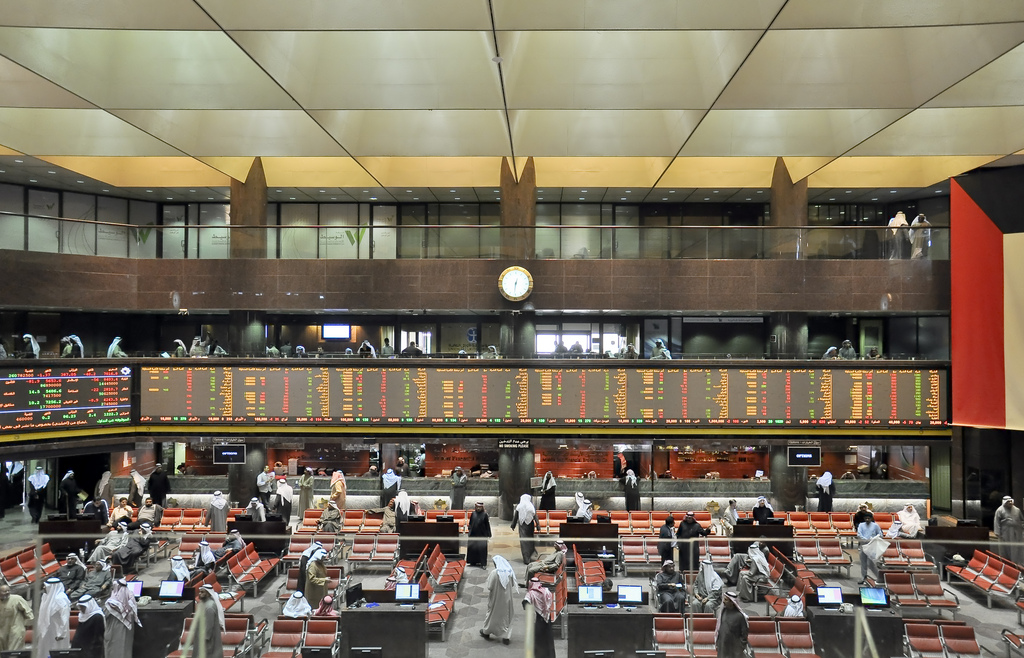
Stock ticker
Finance

Arab stock markets slow but steady

by Thomas Schellen May 5, 2014
written by Thomas Schellen

The transition from April to May saw Arab markets step back from their previous momentum. The indices for eight of the twelve security exchanges in the Middle East and North Africa recorded lower performance when compared with the previous week.

Stock indices, week 18

In terms of net weekly changes, two markets — Saudi Arabia’s Tadawul and Bahrain Bourse — were up; four markets were flat; and six dropped. Jordan’s ASE index, down by nearly 2 percent, and Abu Dhabi’s ADX, down by 2.2 percent, were the weakest performers. The Dubai Financial Market cooled visibly to a performance of minus 0.2 percent after its 6.9 percent gain last week. The Qatar Exchange switched from being the previous week’s second-best gainer to falling 1.7 percent and the Egyptian Exchange also stumbled from substantial gains to a weekly loss.

The Moroccan and Lebanese bourses showed small positive changes in their index movements. The MASI’s drop rate narrowed by 0.1 percentage point while the BLOM Index went from a minimal negative in week 17 to minimal positive in week 18.

Only the Omani and Saudi exchanges displayed clear upward energy. When compared with week 17, the Muscat Securities Market’s MSM30 narrowed its drop rate by 0.9 percentage points and ended week 18 practically flat while Tadawul’s TASI widened its gain by 0.7 percentage points for a 1 percent index gain. This made the TASI the top riser in MENA for the week.

The Bahrain Bourse Index, although gaining, advanced at a much slower speed than in the previous week. The Tunisian Stock Exchange’s Tunindex ended April sliding further in the downward trend that started in March. The index did, however, edge up on the first trading day in May.

The Amman Stock Exchange saw its index drop to the lowest reading since the first week of January but recovered slightly on April 30 before going into a long Labor Day weekend.

Movements of Lebanese equities were unremarkable. But curiously, although the Beirut Stock Exchange’s BLOM Index last week touched its lowest point since the resolution of the protracted government crisis in February, this weakening was reversed during the two sessions on April 30 and May 2 after it was actually confirmed that, as expected, no quorum for a vote on the presidency was reached in Parliament, just three blocks walk from the BSE.

Wider trends

While Arab markets were subdued in their index movements last week, pundits in international markets engaged in continuing debate over the fate of the current bull market in developed economies and the outlooks for the largest emerging markets. Their views being sharply divergent, bulls and bears appear about equally able to find followers. Main pro-bull theses include that only a recession will kill the bull and that no signs of such a recession are present; pro-bear theorists started May by pointing to the current high upside gap between core developed market indices and their long-term moving averages.

A single assessment where analysts are largely in agreement is that the Russian equities market, which has fallen more than 13 percent between the start of 2014 and the end of April, is set to drop further due to the country’s political course, and there is a broad assumption that the political crisis over Ukraine will reflect on emerging market equities.

In the view of many analysts, further risk elements for emerging market equities loom in the United States Federal Reserve’s determination to wind down its bond-buying support for the US economy. Both of these risks are seen as important for the top tier of emerging economies, such as China, India and Brazil, and the second tier emerging markets such as Mexico, Turkey, Indonesia and Nigeria.

On the other hand, correlations between fluctuations in developed markets and frontier markets are low, which gives some international retail investors an argument for diversification into frontier markets. Opponents of the concept point to the these markets’ comparatively low levels of liquidity and political risk factors as deterrents.

When viewed in the context of varied concerns over developed and emerging markets, Arab markets appear insulated from both global financial and political concerns for the time being.

In terms of index performances, MENA markets are all positive for the first four months of the year. At the end of week 18, the benchmark indices of the Kuwaiti, Omani, Moroccan, and Tunisian bourses were up between 1 and 5 percent. The index gains of the two Levantine exchanges were in the 5 to 10 percent range. The performances then stagger from the Tadawul’s 15 percent gain and Bourse Bahrain’s 19 percent to 21 percent for the ADX General Index; 23 percent for the EGX30; 28 percent for the QE Index; and finally almost 54 percent for the DFM General Index. Overall, it is a performance spanning everything from marginal or modest growth to strong and almost unrealistically large gains.

May 5, 2014 0 comments
0 FacebookTwitterPinterestEmail
An astronaut takes a selfie in space
The Buzz

Selfie mania

by Jasmina Najjar May 2, 2014
written by Jasmina Najjar

Ah, the selfie! The modern day self-portrait gone digital. #selfie #instagood #instamood

There’s nothing quite like it to spice up our Facebook newsfeeds and to make Instagram the unique photo shrine that it is. There are two main types of selfies that abound, in addition to endless sub-categories. The first is the ‘center of the universe’ selfie in which the photographer is the sole superstar of his or her photo even though nothing special is happening or really worth documenting. The second is the ‘make memories’ selfie which is taken with a group or solo to mark a certain special occasion or fresh experience.

The subcategories are even more fascinating. There’s the #aftersex trend (where, you’ve guessed it, people share selfies of themselves post-coital) which makes you question when intimacy got lost under the covers. Then there’s the rather pungent flow of inexplicable selfies taken in private bathrooms and in public restrooms. The totally pumped gym selfies in different poses and with various amounts of skin showing. The ‘I love my pet’ selfie which clearly demands that the observer love dear Felix or Fido too. The ‘I’m a lone traveler’ selfie and ‘here’s a monumental monument’ (I admit to being guilty of this). The ‘fashion follower’ selfie which is a tribute to high street looks and lack of individual style. The ‘Barbie fantasy’ selfie that doubles as an ad for plastic surgeons and cosmetics brands. And the list goes on.

All the rage at the moment, the selfie is surprisingly nothing new. The very first was taken in 1839 by Robert Cornelius, one of the trailblazers of American photography. And the rest is history! It wasn’t until 2005, however, that the word ‘selfie’ started to become widespread. Back then selfies reigned supreme on the then-popular social network MySpace. While MySpace’s hegemony disappeared into the unforgiving cyber-abyss, selfie fever only became stronger. In 2012 TIME Magazine included the term in its “Top 10 Buzzwords” of the year. And in 2013 the term was added to the Oxford English Dictionary.

While selfies were initially a fad that captivated the young and supposedly hip at first, today the practice reaches even the grandmothers among us. Selfies have even reached interplanetary proportions, going beyond boring earthly realms, with astronauts jumping on board the selfie rocket.

Celebrities, politicians and the Pope have succumbed to the temptations of selfie mania. Ellen DeGeneres’ selfie at the 86th Academy Awards, complete with 12 celebrities, was the most retweeted image in Twitter’s history. Samsung milked it for promotional purposes. And who can blame the tech giants when according to a 2013 poll, 30 percent of the photos snapped by 18 to 24 year olds are selfies. While some high profile selfies are successful like DeGeneres’, others are depictions of disaster. We all know about Obama’s selfie fiasco at Nelson Mandela’s funeral … but what about David Cameron’s telephone selfie that showcased his direct line with Obama to discuss the tricky situation in Ukraine? This prompted many to take parody selfies, including Sir Patrick Stewart (aka Star Trek’s Captain Jean-Luc Picard) who took a mocking selfie holding wet wipes to his ear.

.@robdelaney @David_Cameron @BarackObama I’m now patched in as well. Sorry for the delay. pic.twitter.com/elLQcKcV3w

— Patrick Stewart (@SirPatStew) March 5, 2014

But why is everyone a selfie lover? Is it sheer vanity? A manifestation of how we’re essentially narcissistic at heart and in need of the approval of others? Maybe. This hypothesis seems so plausible that the fake news that the American Psychiatric Association had classified obsessive selfie-taking as a mental disorder was thought to be real. But part of the charm of selfies is that they’re quick, easy and controlled. They allow us to show our best face to others. But a University of Birmingham study in 2013 revealed that sharing selfies on Facebook is actually linked to lower incidences of real connections with Facebook friends and less true support. Not exactly encouraging.

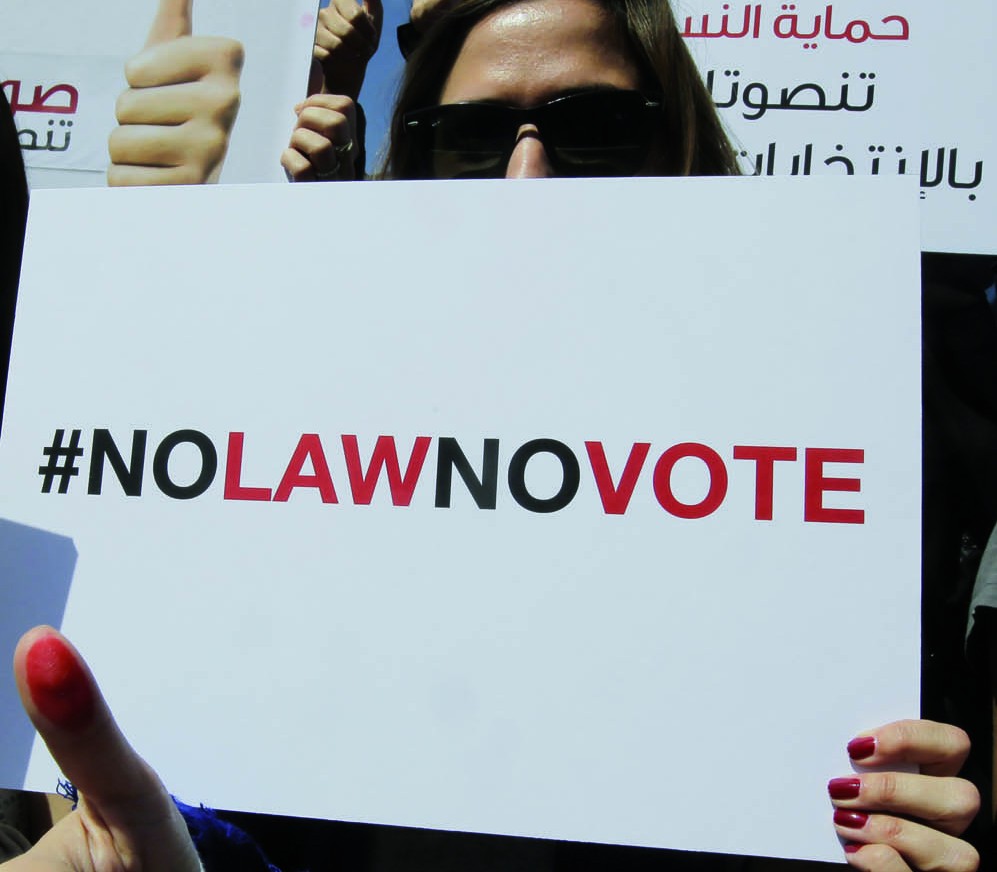
Of course not all selfless portray us at our best. Some are purposefully awful to entertain and make friends laugh. Some are meant as a satirical statement against the vanity of regular selfies. Some are a form of personal attack — ‘revenge porn’ is seeing a disturbing rise in parts of the world. And others yet are for a meaningful cause like the ‘no makeup’ meme which kicked off in March 2014 for cancer awareness and spread to sunny Lebanon, or the local born #NoLawNoVote campaign to end domestic violence.

Selfie mania is here to stay. Yet beneath the seemingly innocent surface of selfies, and supposedly harmless vanity of it all, lies something darker and more worrying. Nineteen year old Danny Bowman let selfies get the better of him. His two year obsession escalated to the point where he was wasting 10 hours per day taking photos of himself. In March 2014 he tried to commit suicide after taking 200 selfies that weren’t “perfect” enough. Such easy-to-use vehicles for vanity can produce tragic results for those with underlying psychological and body image issues. Let the self-photographer beware.

May 2, 2014 1 comment
0 FacebookTwitterPinterestEmail
This is an image of Eric Ries at the London Lean Startup conference. Flickr|betsyweber
Business

On topic: lean startups

by Livia Murray May 2, 2014
written by Livia Murray

Executive’s On topic column is a series covering startup concepts; bringing the field’s buzzwords to a broader audience and getting into the nitty gritty for those already familiar with the terms. As increasing activity and success stories begin to surface in Lebanon’s startup ecosystem, Executive sees this as an opportune time to bring these ideas to the business-savvy mainstream and anyone interested in following the sector’s development.

The lean startup method of product development is based on cutting out extraneous elements when building a product and testing it fast to adapt quickly to consumer reactions. It was proposed by Eric Ries, a coder, Silicon Valley entrepreneur and avid blogger, who first ventured the idea in a 2008 blog post and expanded it in his 2011 book titled “The Lean Startup”. The idea has roots in lean manufacturing, particularly in Japanese auto manufacturing company Toyota’s production system whose philosophy and management practices rely on eliminating expenditures that do not add value to the customer. The lean startup concept has been adopted by entrepreneurs worldwide and has become a best practice in startup ecosystems.

The pivot

Ries noticed that successful startups had something in common: they were all able to pivot quickly. Pivoting is what entrepreneurs do when they realize that their product isn’t receiving the traction they anticipated, and so they change directions, using what they learned to adapt and improve. Ries observed that startups that were successful know how to pivot fast. The idea is to learn and to pivot as quickly as possible between versions of the product so as to maximize a startup’s possibility of success before it runs out of money, turning the question from “How much money do I have to burn?” to “How much time do I have left to pivot?” It’s about starting fast, failing fast, and ultimately succeeding without expending a lot of resources.

Feedback loop

From his experience working in Silicon Valley, Ries noticed that a lot of entrepreneurs launched highly developed products that required major time commitments and lots of money only to find out that no one was interested in their product – something that happened with one of his own companies, IMVU,a 3D avatar instant messaging company created in 2004 when everyone thought instant messaging (IM) was the next big thing. To try to prevent this from happening, he proposes the feedback loop, a cycle of building, measuring, and learning which is done as quickly and with as few resources as possible. This cycle enables entrepreneurs to see if their product gains traction and whether their hypothesis and strategies are grounded in reality, allowing them to modify their product if they fail to meet their objectives and to not waste years developing a product that adds no value for customers.

buildmeasurelearn

For Ries, the critical aspect of the feedback loop is validated learning This is the process of learning and discovery about customer behavior by iterating versions of the product as quickly as possible. Because entrepreneurship is about creating something new in conditions of high uncertainty, no one knows exactly what customers want. The whole process should be geared toward learning what catches on with customers and what doesn’t. The unit of progress shifts from building on schedule to the amount of validated learning derived from the various iterations because even a prototype of a product that the founders consider likely to fail may not fail for the same reasons they initially thought it would.

Minimum viable product

Shifting the focus to validated learning means that startups only need to develop a basic version of their product for the purpose of testing through various iterations. This minimum viable product should be built in a way that provides only what is necessary to learn whether their plan is correct or not, and cut out all extraneous elements. By establishing how customers are behaving, they can incrementally experiment with the product to see how they can improve their metrics to hit their ideal. If they are unable to reach their ideal, it’s time to pivot.

The minimum viable product begs the question of what really needs to be in the first version, if they only need to build to test a hypothesis and the only real goal is validated learning. In a 2011 talk, Ries refers to his days as chief technical officer of IMVU. After having worked on the first version of the product for six months and after having written about 25,000 lines of code himself, customers refused to download the application. The product was flawed because it was based on false assumptions about its customers. Though the company pivoted and eventually created a successful IM network, they still threw out those six months worth of code and Ries laments that he could have been on a beach for all of that time and it wouldn’t have made a difference to the company. Time and energy could have been saved and the learning process could have been sped up had they, for instance, created a simple landing page with a download link to see if anyone would click on it.

The lean revolution

The ideas embodied in “The Lean Startup” have turned into a movement of people who want to change the way entrepreneurship is done. Because entrepreneurship is everywhere – not just limited to startups – and by Ries’ definition includes anyone who is working under conditions of extreme uncertainty, many lean startup methods can be applied to large companies to transform them from old dinosaur companies with steady revenues from a tested source of value to operations that are constantly creating new sources of value for the customer. Effective leadership can create a platform for the team to innovate, which is a break from the twentieth century management practices of planning and forecasting designed for companies whose metrics don’t change much from year to year.

May 2, 2014 0 comments
0 FacebookTwitterPinterestEmail
Syrian Kurds waving a Kurdish flag and image of Abdullah Ocalan in Aleppo
Comment

Are Syria’s Kurds headed toward autonomy?

by Gareth Smith May 1, 2014
written by Gareth Smith

Anyone who witnessed events in Iraqi Kurdistan in the 1990s will feel déjà vu as events in Kurdish Syria unfold. After Saddam Hussein withdrew from northern Iraq in 1991, due partly to a United States ‘no fly’ zone, the Kurds carved out a de facto autonomy that eventually became today’s Kurdistan Regional Government (KRG) in a federal Iraq.

Could this happen in Syria? So far, the similarities are striking. Like fellow Baathist Saddam, Bashar al-Assad withdrew his forces, in 2012, in a move calculated to conserve military strength, as well as sow discord among opponents and alarm regional governments with Kurdish populations. In neither case was withdrawal total. As in Iraq, the government in Damascus still pays some civil servants, and indeed Assad’s security remains in the main Kurdish city of Qamishli.

As in 1990s Iraq, there are two rival Kurdish parties, the Democratic Union Party (PYD) and the Kurdish National Council (KNC). And as in Iraq, they want autonomy but have taken tactical decisions reflecting political complexities around them. Indeed, Iraqi Kurdistan suffered civil war from 1994 to 1997 between the Kurdistan Democratic Party (KDP) and the Patriotic Union of Kurdistan (PUK), when the parties played on shifting alliances between Tehran, Ankara and Baghdad.

In Syria, the PYD and KNC have not as yet traded blows, which may reflect the strength of the PYD. They have, however, a different attitude to others in the Syrian maelstrom. The KNC have edged closer to the opposition Syrian National Coalition while the PYD leans toward the regime. What distinguishes the situation in Syria is the PYD’s close links with the PKK, the Kurdistan Workers Party, which fought for decades in Turkey in the name of pan-Kurdish nationalism embracing Kurds of all countries. The PYD’s contacts with the Assad regime have their roots before 1998 when Hafez al-Assad insisted PKK leader Abdullah “Apo” Ocalan leave the country (under threats from Turkey).

The PYD denies “operational links” to the PKK but makes no secret of being part of the Group of Communities in Kurdistan (KCK), a cross-border grouping of parties following Ocalan’s ideology that also includes Pejak (the Free Life Party of Kurdistan), which operates in Iran.

PYD fighters and party events, including funerals, display Ocalan’s picture and PKK symbols, including a red star recalling the party’s origins as a Marxist group. In addition, PYD terminology reflects the PKK, including Ocalan’s ideas of ‘democratic autonomy’ and ‘democratic confederalism’ — which does not preclude the PYD from being a tight organization that critics condemn as dictatorship.

The PKK’s past commitment to an independent Kurdistan carved out of Turkey, Iraq, Iran and Syria, while moderated in recent years, jars with the Iraqi Kurdish parties’ acceptance of self-government within international borders, and their efforts to calm the fears of Turkey and Iran over Kurdish autonomy by arguing Kurds should achieve their rights peacefully.

Wariness of the PYD is seen especially in the KDP, whose leaders recall the PKK’s attacks in the 1990s from northern Iraq on Turkish forces, which prompted Turkish military intervention and led Ankara to garrison troops inside Iraq.

Even with Ocalan mellowing in a Turkish jail since capture in Nairobi in 1998, his Kurdish opponents will have read February’s interview in Vatan, the Turkish newspaper, with Cemil Bayik, a PKK founder. “Whoever wins in Syria will gain a place in the Middle East, and even in the world,” he said. “For the Kurds to win there, or to lose, will impact all of Kurdistan.”

The PKK last year declared a ceasefire in their near 30-year conflict in which at least 40,000 died, but some commanders have threatened renewed violence unless Prime Minister Recep Erdogan moves to ease restrictions on the Kurdish language and accepts a degree of Kurdish autonomy in continuing talks with the PKK. A return to war would alarm the Iraqi KRG, which has attracted considerable Turkish investment and sees Turkey as an export route for a targeted oil production of 2 million barrels a day by 2019.

At a popular level, Iraqi Kurds welcome developments in Syria, and their leadership recognizes its example of autonomy has inspired Kurds elsewhere. But Iraqi Kurdish officials are watching Syria carefully, fearing the growing strength of the PYD could jeopardize the KRG’s balancing act.

May 1, 2014 3 comments
0 FacebookTwitterPinterestEmail
Solidere developed much of Beirut's downtown district
Real Estate

Solidere shifts from rents to sales in search for profits

by Thomas Schellen April 30, 2014
written by Thomas Schellen

Investors in Lebanese flagship developer Solidere this summer should see an improvement in the upcoming annual results, compared with the dismal year of 2012 and its 89 percent drop in net profits. Even as low confidence in the Lebanese market continues to impact the company’s sales, a better annual performance has been unfolding in 2013, General Manager Mounir Douaidy tells Executive in an wide ranging interview rich in hints and innuendo. In strategic terms, he confirms that Solidere is reprioritizing land sales and otherwise waiting out the crisis with cost-cutting  measures that include postponement of development projects and employee layoffs.

Anticipating improvement

The listed company has yet to release any numbers on the past year but Douaidy says that stabilized rental income and a near 20 percent reduction in company overheads will contribute positively to 2013 net income along with sales revenues from a number of land transactions.

“We don’t have the results yet but what I can say is that I anticipate that 2013 results will certainly be better than 2012 results in terms of profits,” Douaidy says, specifying that “when the figures come out we will see that there has been practically no change to rental income.”

[pullquote]Solidere is reprioritizing land sales and otherwise waiting out the crisis with cost-cutting measures[/pullquote]

Solidere’s rental income in 2012 was $58 million, up by almost 17 percent from 2011 and higher than 2012 revenues from land sales, which at $50 million which were down 79 percent from the previous year’s $242 million, according to the company’s Annual Report.

As to general costs, Douaidy says, “Results will show that overheads have dropped again in year 2013 by up to 20 percent. This applies to overheads as well as to other operating expenses that are related to rental income.” The company’s general and administrative expenses in the 2012 Annual Report came in at close to $38 million, two percent lower than in 2011.

In 2012 the impact of the 79 percent drop in land sales revenues could only, in a very small way, be compensated by the higher rental income because the company’s gross profit margins on land sales — 85.6 percent in 2012 — are always much higher than the margins on rental income.

Additionally, Solidere’s 2012 profits were subdued by the allocation of $18 million to provisions, leaving merely $17.5 million as bottom line net.

Mounir Douaidy is general manager of Solidere Mounir Doueidy is general manager of Solidere


Although Douaidy anticipates continual improvement in rental income from, among other things, a new cinema and entertainment complex inaugurated in 2013, the company is refocusing back onto land sales and away from a course set several years ago when it decided to diversify its revenue mix by directing funds and energies into development of Solidere-owned rental properties.

As Douaidy reveals to Executive, this strategy is not pursued anymore. “Had things continued to boom as they did in the past, I think we would have continued with the same strategy, but today we cannot but stop thinking about rental income, at least for the time being, and instead focus on selling land to generate bigger revenues,” he says.

Remaining hopeful

Land sales in previous years had generated even more significant revenues than 2012, to the tune of $305 million in 2009 and $337 million in 2010.

However, the manager concedes that the chase for investors willing to pour funds into a Solidere plot in the current domestic and regional climate is difficult to the point that the company saw “no significant property transactions as such” in 2013 and the first quarter of 2014.

Despite this admission Douaidy enthuses, “Nevertheless we have been able to record a number of land sale transactions in 2012 and also in 2013 and are continuing our efforts to sign hopefully one or two more deals during the current year.”

Reducing Overheads

Asked if the reduction in overheads was partly due to layoffs, Douaidy vaguely concedes that a certain share of the cutting of overheads “will be attributable to staff reductions.” He does not give numbers on how many employees have been affected but calls layoffs “inevitable” for Lebanese companies in the current economy.

According to him staff reductions were linked to the management’s decision to defer Solidere-owned developments with already completed designs.  Three such projects, including a department store and a boutique hotel, have been in the pipeline for a while and were supposed to kick off during 2014, but, Douaidy says, “circumstances have made us reconsider our decision to start construction until we have a better vision of what is going on. We are going to hold on for construction and it is unlikely that we will start any of them this year.”

Strategic shifts of the company also appear to involve the 2010-established hospitality unit; part of the company’s diversification program, highly touted at inception but reported net losses that widened to $16.3 million in 2012.

According to Douaidy, Solidere is leasing a newly delivered property affiliated with the entertainment complex out to restaurants but its fully-owned hospitality subsidiary BHC Holdings will not operate any of the outlets in the building that abuts the north side of the new cinema and entertainment annex.

Solidere International

The company’s top subsidiary, Solidere International (SI), is on the other hand emitting new signs of activity. The launch of an SI residential project, Golden Tower, has been scheduled for April 28, according to Randa Armanazi, Solidere’s communications and public relations director. It is one of five active projects that SI is pursuing in Saudi.

Established in 2007, SI was negatively affected in its infancy by the burst of the Gulf property bubble. Its first mega project, the Al Zorah joint venture with the emirate of Ajman, was put on hold for about four years and the joint venture company has not put out any recent news on the project after announcing its re-launch in December 2011.

Douaidy says that the Ajman project is “back on track,” adding that it and the Saudi projects will, at a future stage, feed increasing contributions into the profits of the Lebanese parent company. However, he admits that Solidere International has dissolved a project partnership in Egypt and also stopped prospecting for opportunities around the Mediterranean and in Eastern Europe.

Strong fundamentals

Arguing the slump in demand for downtown Beirut was caused by regional uncertainty and the political environment, not correlated to cyclicality of the real estate business, Douaidy is set on maintaining Solidere’s position. “We have to limit our activities of Solidere Lebanon to what is necessary, waiting until the situation gets better while trying to preserve all cash resources and all other resources, but the fundamentals of the company are very strong,” he says, reiterating that the company’s land bank and property assets “together represent about $8.5 to 9 billion,” and  in comparison to the company’s assets, the low stock price of Solidere “is linked very much to the political situation,” implying stock is poised to move up immediately after any political improvement.

Between the exhausting search for new land buyers and the wait for political improvements that could reinvigorate Solidere’s core business, it is a sparkle of welcome news that the bright new entertainment complex in the Beirut Souqs has started to attract visitors and now complements the downtown’s attractiveness for staging cultural events.

The demand from event companies and various organizations for holding music festivals, art exhibitions and cultural events in the Beirut Central District is up at least by 25 percent this year when compared with 2013, according to Aramanzi. This is particularly laudable, given that Solidere’s mission was originally conceived as one of restoring the urban soul of Beirut and not just one of marketing land plots with an eye to optimal shareholder benefit.

An added benefit is that the downtown culture flood does not create any cost to shareholders, Aramanzi says, “None of the cultural activities that we do costs the company any money and to the contrary, they generate a lot of revenue for the company.”

April 30, 2014 0 comments
0 FacebookTwitterPinterestEmail
FATCA is due to come into force on July 1
Finance

FATCA – Region preparing for Uncle Sam

by Paul Cochrane April 30, 2014
written by Paul Cochrane

The four-year build up to the Foreign Account Tax Compliance Act (FATCA) going live is nearly over, with just eight weeks left until financial institutions have to be compliant. But the act, which is intended to rein in tax evasion by United States citizens abroad with accounts above $50,000, involves such a complex reporting and withholding regime that much of the Middle East and North Africa (MENA) will likely not be ready by the July 1 deadline, experts believe.

Such an extraterritorial law puts the onus on foreign financial institutions (FFIs) to act, in essence, as unpaid agents for the US Internal Revenue System (IRS), or face a 30 percent withholding tax on US account holders. Further impetus to comply is the possibility of being cut-off from the US financial system and not being able to deal with FATCA compliant institutions. “If a country is not FATCA compliant it will be financially sanctioned in a new way, ‘the FATCA way’, and the readiness in the MENA is not sufficient in my opinion for a FATCA go-live situation,” said Camille Barkho, chief compliance officer at Lebanon and Gulf Bank.

The potential sanctioning of the Lebanese banking sector is a grave concern in Beirut, given the high degree of the economy’s reliance on banking. Fortunately, Lebanon is ahead of the regional curve in getting to grips with FATCA. “At a FATCA Q&A session at a conference in March, some of the questions asked were very basic. You still hear regional banks asking questions about FATCA that Lebanese banks dealt with two years ago,” added Barkho.

Understanding FATCA at an institutional level has been one of the main stumbling blocks to compliance. The initial FATCA document was over 500 pages long and a further 500 pages have been released since. The starting date for reporting had also been delayed multiple times – the last one gave a further six months, to July this year – which has sent mixed signals as to how serious the deadlines are, while implementation on the US side has been badly handled.

“There are not sufficient IRS platforms to assist FFIs in better understanding the regulations. Recently the IRS released the ‘Temporary and Final Regulations,’ but how to go live with something ‘temporary’? And the W8 form was released in March, and other documents released this month. How can you prepare for an exam if the teacher doesn’t provide enough course material?” said Barkho.

Two options

The biggest stumbling block is the lack of agreement between governments and Washington. To provide information to the IRS, inter governmental agreements (IGAs) are needed, or alternatively central banks can allow FFIs to file directly to the IRS, which is what Lebanon is doing.

Other MENA countries are considering the same reporting mechanism as Beirut. With the exception of Oman and Kuwait, the rest of the Gulf Cooperation Council (GCC) countries have indicated they will opt for an IGA, although with just over two months to go before FATCA goes live time is ticking. “In the UAE an IGA is getting close but institutions are not sure if it will be wrapped up in time,” said Ranjith Kumar, Director at Keypoint, a financial services consulting firm in Bahrain.

Elsewhere in the region it is a similar story, from Turkey to Morocco. “Egypt said it will participate without an IGA. Tunisia and Libya are considering IGAs, but they’ve not progressed significantly,” added Kumar. “Institutions could register directly, but with disclosure of customer information to a government outside their jurisdiction, they are looking to regulators for guidance to decide how to go ahead with disclosure. In Algeria for instance, some of the banks have highlighted that they would get ready but will register for FATCA only after regulatory guidance.”

In Iraq, no IGA has been signed, but the Central Bank of Iraq (CBI) is pushing banks to comply. “There will be a lot of teething problems about disclosure and transparency, and lots of Iraqis are dual nationals so it will have an affect,” said a source at the CBI who requested anonymity.

Curiously Syria, in the midst of a conflict and international sanctions, is considering playing ball with the US. “The central bank has formed a FATCA committee to decide what to do, but I’m not sure if they can sign an IGA due to [US] sanctions,” said Dr Paul Morcos, founder of the Justicia law firm and President of the Banking Commission at the Beirut Bar Association. In Iraq, no IGA has been signed, but the Central Bank of Iraq (CBI) is pushing banks to comply. “There will be a lot of teething problems about disclosure and transparency, and lots of Iraqis are dual nationals so it will have an affect,” said a source at the CBI who requested anonymity.

On a global level, the MENA is not lagging behind. Only 26 countries have signed IGAs, while 19 countries have in the words of the IRS “reached agreements in substance” with the US this year, of which Qatar is the only MENA country listed.

The lack of IGAs is raising question marks. “I don’t know how they will be able to go live on July 1, with so few IGAs signed. I am not saying they should delay again, but is the market ready? Where’s Russia? Where’s China, Europe and Australia?” asked Barkho.

Three areas of impact

The lack of assistance from the IRS is a major gripe of financial institutions, especially as implementing FATCA requires major initial investment within an institution, estimated at $25,000 for smaller institutions, to $100,000 to $500,000 for most institutions and $1 million for larger firms. While a boon for the financial consultancy and IT industry, it is an extra cost that institutions would rather not have. As such, FATCA may well have a knock-on effect on banks to cut costs elsewhere. “International challenges can lead to the restructuring of the banking sector. So FATCA poses a question – will we have to restructure the banking sector here?” said Morcos.

More pressing in the immediate term is the issue of privacy and the safety of American citizens. “One thing the Treasury has not thought about is how do you protect US citizens? In a country like Lebanon, with Hezbollah and other US designated terrorist organizations, banks will identify US citizens, which could put them at risk,” said the BDL source.

Dual citizenship is a related concern, as in many MENA countries it is not allowed. “It will be a challenge as some citizens are known to have US citizenship, but now they have to explicitly declare if they have US citizenship or not,” said Kumar. “How institutions use the information once clients waive their right of confidentiality could be an area of concern for customers.”

The regional and global impact of FATCA has also not been addressed. With so few IGAs signed and banks not ready or willing to file directly to the IRS, will they be cut off from the US financial system? There is the assumption that the IRS will have to be pragmatic in the first year to prevent major reporting issues. Indeed, the IRS reported 2.7 million filing errors – out of 60.5 million tax returns – in the US in 2011. “Imagine the number of errors by FFIs reporting to the IRS? Even the most compliant banks will have high levels of errors,” said Barkho.

How will banks implement the withholding of tax, and how will compliant FFIs deal with non-compliant FFIs? Answers are also not clear.

While FATCA is likely to go ahead, it is not a 100 percent given, with members of the Republican National Committee voicing concerns recently, and the possibility of the Democrats losing the Senate to the Republicans in the fall. More questions about the viability of FATCA will no doubt arise, such as the returns versus the outlays. Indeed, in the IRS’ 2013 Annual Report to Congress, it notes that the Congressional Joint Committee on Taxation estimates that FATCA “will generate additional tax revenue of approximately $8.7 billion over the next 10 years,” while private sector implementation costs could “equal or exceed” the amount FATCA may raise.

Further questions may arise if there is a dawning realization about negative economic impacts on the US itself. “What happens when we start shorting payments on our Treasury bonds (TBs) by 30 percent? A sovereign holder is not subject to withholding, but for a private institution, what if the interest payment is done through SWIFT to a commercial bank that has not signed an IGA? Treasury will take the interest,” said Jim Jatras, Manager of RepealFATCA.com, which is lobbying against the law in Washington. “This is the kind of thing that could promote dumping TBs, and affect interest rates and the dollar as a global currency, which are issues nobody has thought out.”

April 30, 2014 0 comments
0 FacebookTwitterPinterestEmail
Corporal punishment is common in Lebanese schools
Comment

Time to ban corporal punishment for good

by Diana Semaan April 29, 2014
written by Diana Semaan

Many people in Lebanon reacted with outrage after YouTube footage surfaced in March showing a man in an office beating three children on the soles of their feet with a wooden stick. Media outlets later identified the man as Moussa Daher, principal of the Makassed School in the village of Daiat al-Arab in southern Lebanon. In the video, Moussa is heard saying to one of the children, “Every time you put your feet down I will beat you more.” The children are crying and pleading for him to stop.

Media reports said that Moussa was punishing the students for failing their exams. While the head of the Makassed School Association condemned Moussa’s violence, he justified the acts as “momentarily losing control” and said that, “the parents asked the principal to be harsh with their children.” Education Minister Elias Bou Saab dismissed the principal, but the parents of the children who were beaten defended Moussa’s actions, and a member of the parent’s committee at the school called on the minister to revoke his decision.

A 2012 study by Saint Joseph University found that nearly half of Lebanese students surveyed had experienced disciplinary violence at school. The study called on authorities to respect Article 19 of the United Nations’ Convention on the Rights of the Child, which Lebanon ratified in 1991, by taking “all appropriate legislative, administrative, social and educational measures to protect the child from all forms of physical or mental violence.”

https://www.youtube.com/watch?v=fW7U_GbhZnM

This disturbing video led to the school principal’s dismissal

Lebanon’s penal code, and specifically Article 186, has long permitted corporal punishment of children in schools and homes. The education minister rejected violence in the name of discipline in a memorandum issued to all public schools in 2001. While some private schools introduced anti-corporal punishment regulations in response, others did not.

On April 9, parliament voted to revoke article 186, but a day later, following complaints by religious figures, Parliament adopted an amended version of the article to criminalize corporal punishment at school but allow “non-violent disciplinary” acts at home so long as they do not lead to physical or psychological harm. The article does not, however, clearly define “non-violent disciplinary” measures or “physical or psychological harm”.

In a radio interview, Mohamad Hajar, a member of parliament who voted against revoking Article 186, argued that the article in its amended form protects family unity. “It does not make sense that every time a parent slaps his child on his hand the child would file a complaint,” he said.

While the amendment to Article 186 is an important step toward protecting children from corporal punishment in schools, it fails to provide children with adequate protection from violence in the home. Conditioning a child’s protection from violence on family status apparently would mean that Lebanon will still be in violation of the Convention on the Rights of the Child. That international treaty requires Lebanon to “ensure that the child is protected against all forms of discrimination or punishment on the basis of the status, activities, expressed opinions, or beliefs of the child’s parents, legal guardians, or family members.”

Repealing the article would bring the penal code in compliance with Law 422 for the Protection of Juvenile Delinquents and Endangered Juveniles, adopted in June 2002, which protects children from violence and mistreatment. Bassma Roumani, a lawyer working for anti-child abuse campaigners Himaya, said that the organization will continue its work toward repealing Article 186 and ensuring that children are fully protected under the law.

In a society where violence remains socially acceptable, members of Parliament need to send a clear message that all forms of violence against children will not be tolerated. The best way to do that is to repeal Article 186 outright.

April 29, 2014 1 comment
0 FacebookTwitterPinterestEmail
  • 1
  • …
  • 200
  • 201
  • 202
  • 203
  • 204
  • …
  • 685

Latest Cover

About us

Since its first edition emerged on the newsstands in 1999, Executive Magazine has been dedicated to providing its readers with the most up-to-date local and regional business news. Executive is a monthly business magazine that offers readers in-depth analyses on the Lebanese world of commerce, covering all the major sectors – from banking, finance, and insurance to technology, tourism, hospitality, media, and retail.

  • Donate
  • Our Purpose
  • Contact Us

Sign up for our newsletter

[contact-form-7 id=”27812″ title=”FooterSubscription”]

  • Facebook
  • Twitter
  • Instagram
  • Linkedin
  • Youtube
Executive Magazine
  • ISSUES
    • Current Issue
    • Past issues
  • BUSINESS
  • ECONOMICS & POLICY
  • OPINION
  • SPECIAL REPORTS
  • EXECUTIVE TALKS
  • MOVEMENTS
    • Change the image
    • Cannes lions
    • Transparency & accountability
    • ECONOMIC ROADMAP
    • Say No to Corruption
    • The Lebanon media development initiative
    • LPSN Policy Asks
    • Advocating the preservation of deposits
  • JOIN US
    • Join our movement
    • Attend our events
    • Receive updates
    • Connect with us
  • DONATE